Abstract
This thesis investigates my relationship with the Rhône and Arve rivers in Geneva to understand what attracts me to their confluence. More broadly, it examines how we can connect, re-connect, and remain connected with nature within built environments, and how such connections might foster deeper appreciation. Through an expanded research question that considers sensory, conceptual, and media-based modes of engagement, I explore how nature is perceived, represented, and mediated. To contextualize these questions, I briefly make an incursion into the philosophy of technology to bring attention to how we view nature through inventions and interventions. The research combines case studies, interviews, and experiments through the lens of Environmental Aesthetics, with the goal of identifying new ways to appreciate nature and to help us sense vitality even in non-biological entities.
Introduction
“We have ourselves become
foreign to our everyday”
— Ronald W. Hepburn1
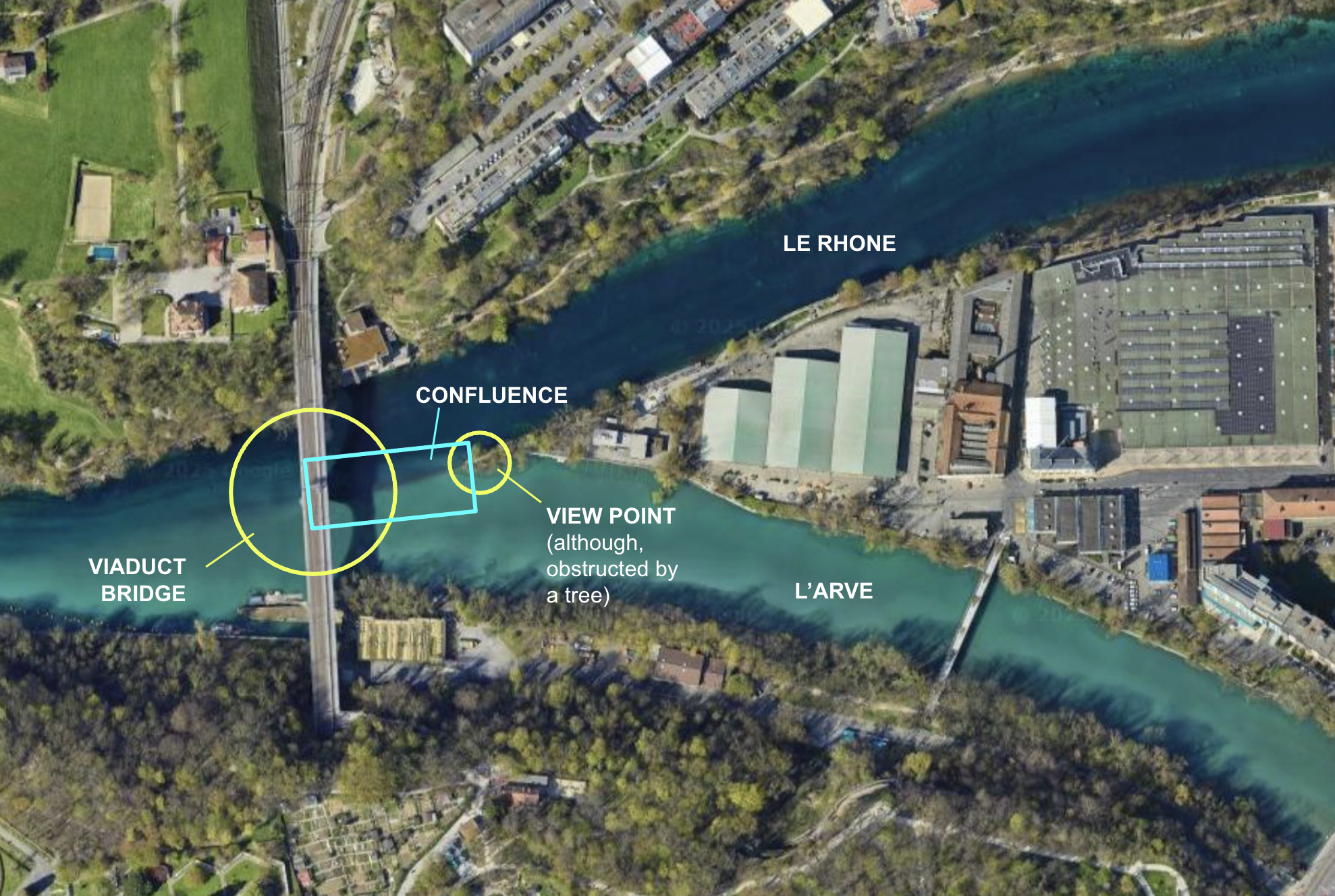
Since moving to Geneva in September 2024 for this master’s program at HEAD—Genève, I’ve walked over the viaduct in La Jonction over 400 times. This is the perfect spot to view the confluence of the Rhône and Arve rivers. Standing high above from a bird’s eye view and seeing this natural phenomenon for the first time, I was immediately in awe. My first encounter with the confluence was on a sunny afternoon, bringing out the teal of the Rhône and the white, milky qualities of the Arve.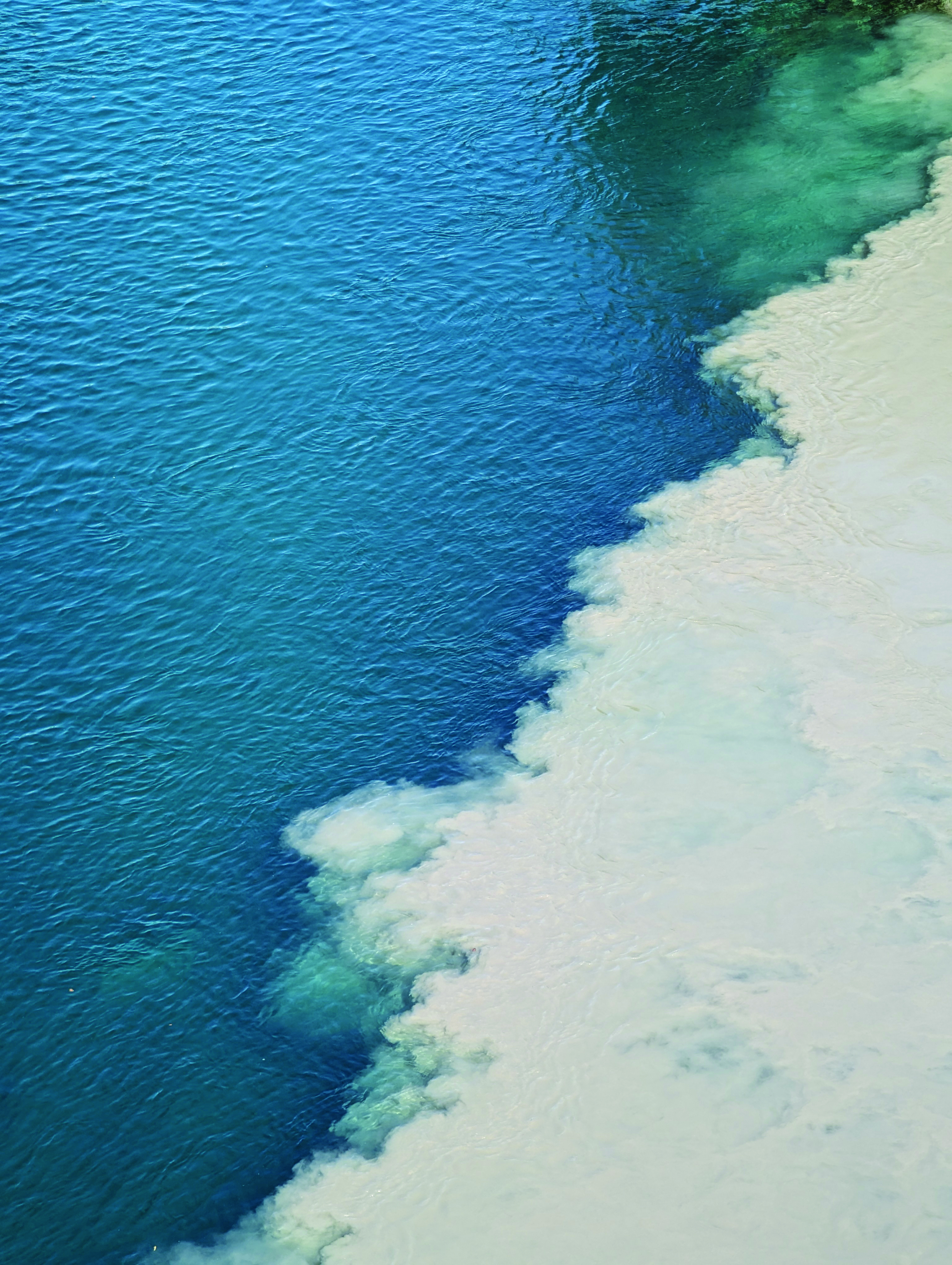 First photo taken on September 10, 2024 The waters of the rivers swirled before merging downstream.
After walking over this bridge many times, I’ve witnessed the confluence in different conditions. On some days, there’s an imbalance of the rivers where one extends over the other, or a grey, cloudy sky dulls the colours. Looking back, I was lucky with my first impression of this sight. By walking this path repeatedly, I am able to appreciate my first experience because I have a frame of reference to compare it to. Walking was not only a means of getting from one place to another, but it also helped me connect with this place.[fig
In the context of art, walking has been explored as a medium of expression. Richard Long, a British land artist, creates artworks with nature. He performs with nature through the simple act of walking. His piece from 1967, A Line Made by Walking shows a visible straight line in the grass field of Wiltshire, England. The end result is a black and white photograph of the field with no animals or humans, just the landscape and a trace of the path. There’s a stark contrast between the wild and the line. Although there is no one visible in the photo, it serves as a reminder of a human presence. As time passes, we can imagine the line fading away and nature persisting.
As Spanish philosopher Marta Tafalla notes, “[Richard Long]’s relationship with nature is that of one who passes through it, who recovers old, little-used paths or who opens up new ones.”2 This points to our need to create our own paths, metaphorically and physically. Even in a built environment like a city, there are countless examples of paths designed by urban and landscape designers that are subverted by their walkers. We will look for the quickest and shortest path to our destination, often referred to as a “desire path”. You can see this right outside HEAD—Genève, where paths are created in the landscaped area around the main building. In contrast to Long’s meandering walks, these desire paths in an urban environment are a by-product of our need to efficiently arrive at our destination. We are trying to save time, but Long is taking his time.
I’m somewhat in the middle. I walk across the bridge as a means to arrive at my destination, but I am also there to enjoy the rivers intermingling and Mont Salève and the Jura Mountains in the distance. I try to strike a balance between getting there and taking it in. Walking along the Viaduc de la Jonction, I have no option but to go in a straight line, but this does not mean I cannot appreciate what surrounds me. Although I have to admit, as time goes on, my initial fascination with the confluence blunts. The honeymoon fades and as I start to live my life in Geneva, it becomes part of my everyday. Occasionally, my romance with the site is rekindled.
This is my starting point and the inspiration for my thesis—to explore this relationship I have with this location and understand why I’m drawn to it, despite having no prior connection to Geneva before my arrival. An underlying and more general concern is to examine how we can connect, re-connect, and stay connected with nature in our built environment, fostering a deeper appreciation for it. More specifically, how might sensory, conceptual, and mediated engagements with the natural world in urban environments foster aesthetic appreciation and lasting ecological relationships?
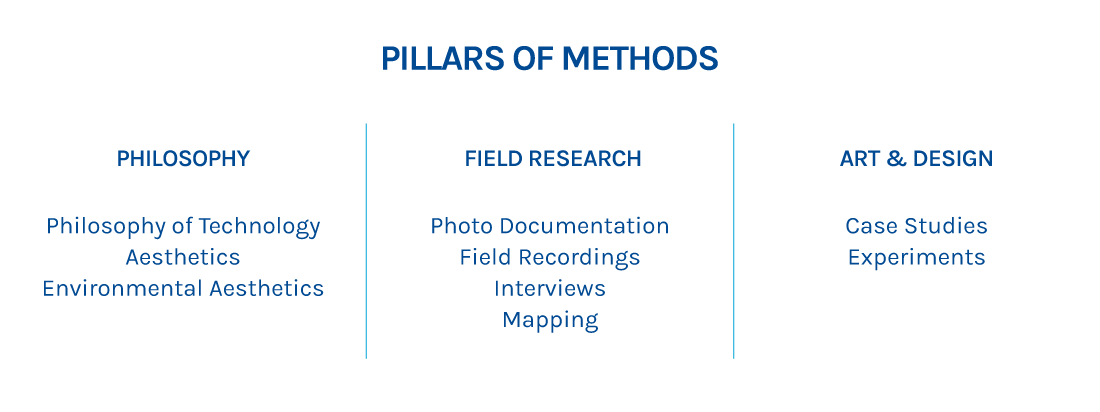
My methodology integrates two core dimensions: theoretical and practical. I will briefly make an incursion into the philosophy of technology to bring attention to how we view nature through inventions and intervention. However, the primary focus here will be on Environmental Aesthetics, a sub-branch of Aesthetics concerned with how we appreciate both natural and human-made environments. In this thesis, I will concentrate specifically on natural environments. Environmental Aesthetics first emerged in the 18th-century and re-emerged in the 1960s, driven partly by a shift away from viewing nature through the lens of art and toward recognizing it as an aesthetic experience in its own right. This renewed interest was also fueled by growing public concern for the environment and the need to make informed decisions about its preservation and use.3
Drawing from Environmental Aesthetics makes sense considering the context of this Master’s program, as design can afford aesthetic experiences. But more importantly, it aligns with the concept of mediating between nature and art. Environmental Aesthetics will provide a framework for analyzing my research and guiding my practical outcomes. Furthermore, by examining relevant case studies, I will de-centre my perspective and allow myself to take a broader view in approaching my main concern. I also interviewed sound artists to gain insight into how they perceive and engage with the natural world through sound, which will serve as a foundation for my diploma project.
I have produced a collection of photos which will serve as a basis to examine the visual aesthetic of the rivers, and I have been mapping the soundscape of La Jonction to understand the acoustic and sonic characteristics of the place.4 My goal is to understand how to appreciate nature through various sensing channels and media and to develop my practice of field documentation and recording.
I’ve narrowed down on a specific site for my field research. I purposefully want to work with a location that is close to home, literally. The confluence is just around the corner and is accessible to me at any time of day. Besides being a convenient location, this contributes to my goal of building a situated practice. I want to be able to interact wholeheartedly in the site of investigation to understand it, to embody it, to thoroughly grasp its variations and nuances. I have tried to approach my interviews in a similar spirit. In a world where everything is accessible by a mouse click, we can conduct interviews online with anyone around the world. However, spontaneity and magic are lost when we are not face-to-face, just as when we view nature only through the mediation of a screen.
My thesis unfolds in Chapter 2, inquiring into key concepts from aesthetics—such as beauty, the picturesque, and the critiques offered by pioneers of Environmental Aesthetics—to determine how we learn to appreciate nature beyond inherited visual conventions. Chapter 3 turns to photography, exploring how this everyday medium can continue to contribute to our perception and appreciation of the rivers. Chapter 4 then shifts toward more ‘scientistic’ modes of representation, examining data-driven approaches and the tensions between measurement and aesthetic value. This analysis leads into a discussion of mapping, from cartographic flatness to psychogeographic and sound mapping practices. Finally, in Chapter 5, the inquiry extends into sound, attentive listening, and the question of how diverse voices—human, technological, or natural—might allow the rivers to be revealed differently.
Before exploring the appreciation of nature through the lens of Environmental Aesthetics, I start with a few remarks about our relationship to technology and its connection to the natural world. I think it’s essential to set this context, especially because of technology’s ambivalence: while it can help us appreciate nature, it can also be detrimental to it.
Three Models for Technology-Nature Relation
A brief incursion into the philosophy of technology
There is a conventional contrast between technology and nature. One being a product of human invention and everything else that is not human. One that feels rigid and the other organic. One that is orderly and the other wild. However, this dichotomy, separation, and distance have contributed to the current problematic state of our relationship with our planet. But what if we thought about our relationship differently?
Mimesis
The ancient Greeks understood technology to be a form of mimesis, that is, “technology learns from or imitates nature”.5 This positions nature as a teacher, helping us find solutions to our human development. We can see instances of this with biomimicry and our desire to fly. From the first attempts of flapping our arms to studying the aerodynamic properties of birds.6 By learning from nature, we improved our flying techniques.
Air is not the only element we’ve conquered. We’ve built dams for various purposes such as irrigation, hydroelectricity, water supply, flood control and recreation. Dams date back to 4th century B.C.E. in Mesopotamia.7 They were constructed to supply water for crop irrigation, thereby sustaining a growing population. There’s no evidence of such dams based on animal inspiration. However, there is a recent development of looking to nature’s engineer, the beaver, to construct small dams. These small dams are aptly named “human-built beaver dam analogues” where they mimic beaver dams to use local materials and allow for permeability.8 Here, we are not only looking to nature for a solution to control the flow of water in a river, but also to rehabilitate the ecosystem.
Reserve
According to Martin Heidegger, traditional or pre-modern technology is poeisis (bringing something into presence). For example, the windmill draws on wind to produce energy. We are not controlling the element but instead using the wind as is to produce energy.9 On the other hand, modern technology forcefully attempts to reveal nature through extraction, and in this sense, nature is seen as a standing reserve. The world is subjected to the grip of technology and is reduced to a reserve of raw material. We are challenging what nature is capable of.
For example, we have altered the landscape of rivers and figured out that we can produce energy through hydroelectric power plants. There are 24 dams in total along the Rhône, with 19 located in France and 5 in Switzerland, which regulate the river’s flow while generating electricity. The Seujet dam located in Geneva’s city centre accounts for 1% of the city’s electricity consumption.10 In comparison to large hydrodams, this is a relatively small amount as it primarily serves as a way to regulate water flow. However, this small amount illustrates that technology will maximize a resource while revealing what it can do for us.
Prosthetic
The last model is based on the idea that technology is rooted in our human bodies. For Ernst Kapp, technology can be viewed as “organ projection”11 and in Marshal McLuhan’s words, “technology is an extension of man”.12 Where Kapp refers to bodily functions, McLuhan means the senses. These distinctions perhaps convey the same concept, because if we say “our eyes”, we are simultaneously referring to the organ and to our sight. For example, cameras, telescopes, and microscopes are all technologies that enhance our ability to see on different scales. Even though Kapp and McLuhan arrive at the same idea, I prefer Kapp’s concept of “organ projection” because it foregrounds a relationship to the body, connotes vitality, and connects technology operating as a system.
Without necessarily rejecting the first two models, I would like to propose that we attempt to rethink our relationship to nature through the prosthetic model. What if we saw nature through this lens, and instead of extraction, we are trying to view non-biological entities like a river as full of life with its own internal organs? The concept of viewing nature as alive with organs is not new. Ancient mythologies personified natural entities as deities and gods. The personification of nature is a clear example of human projection, as we shape non-biological entities into a human form.
The act of personification is an attempt to empathize with nature and to relate to the natural world around us through stories. In contrast, to view a natural entity through Kapp’s technological concept is to understand it and in a way that not only amplifies its function, but also potentially allows the entity to benefit from this understanding. This requires us to attempt to see nature as it is. However, I do wonder if this is even possible since we will view nature through our human perspectives and experiences. This idea of nature = nature is also one of the reasons that gave rise for the field of Environmental Aesthetics: how to appreciate nature separately from our appreciation of art and to view nature on its own terms. I am also hesitant about this separation, since the philosophy of art and Environmental Aesthetics belong in the same branch, and Environmental Aesthetics is often discussed in relation to art.
To conclude, attempts to control rivers have had detrimental environmental consequences. Instead, we should view rivers as a source of inspiration and design collaboratively with them. In the 1960s, the polluted Cheonggyecheon stream in Seoul was converted into an overpass highway. Thinking this would solve issues of people commuting into the city, it caused people to be displaced, increased air pollution and caused economic turmoil through the closure of businesses.13 It’s only recently that the river has been restored. The effects have been positive by allowing for floods to be managed in the urban environment while providing a public space for people to gather. Even if it’s human-made, it demonstrates that we should look to nature and to work with it before making drastic interventions.
The Picturesque View of La Jonction
An introduction to environmental aesthetics through paintings
That’s So Aesthetic!
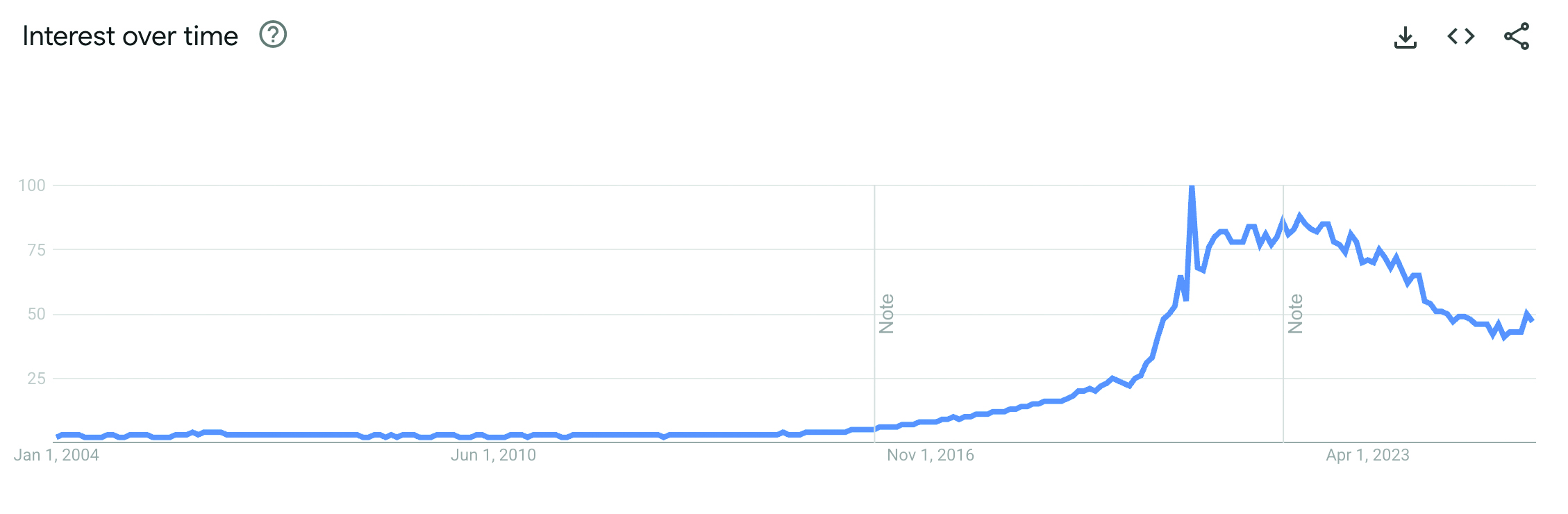
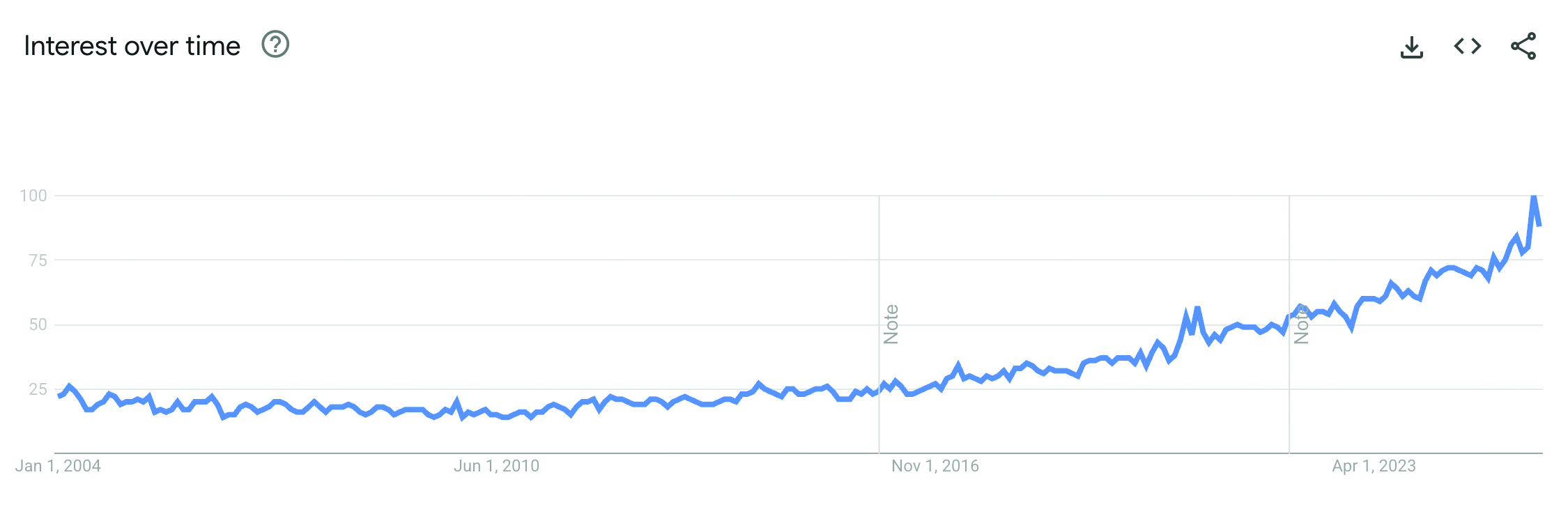
The word “aesthetic” has been co-opted by people on social media to refer to something stylish or pretty, very often reducing what we see to the purely visual. Instead of saying, “that looks nice!”, we now proclaim, “that’s so aesthetic!”.[fig
Nature’s Beauty
In the 18th century during the Golden Age of Enlightenment Aesthetics, beauty was understood objectively through the concept of disinterestedness. This was a shift “from its classical associations with love, possession, and desire, emphasizing instead its disinterested character”.15 Philosophers such as David Hume, Arthur Schopenhauer, and Francis Hutcheson, while they didn’t all agree on all parts of aesthetic theory, they did “share the central idea of disinterested pleasure as independent from personal interest”.16 In other words, viewing an aesthetic object disinterestedly meant to view an object independently from one’s own interests, such as personal, religious or economic gains. For Immanuel Kant, disinterested pleasure also meant that an object’s genesis is irrelevant to the aesthetic judgement.17 To focus on the system in which an object is made is not attending to the object itself. For example, to aesthetically contemplate a flower is to examine its form instead of its biological processes and growth mechanisms. Essentially, Kant emphasized that aesthetic judgment requires attending solely to the object and its immediately perceived qualities. Therefore, to talk about our aesthetic judgments, we adopt an aesthetic attitude, appreciating its formal properties (colour, shapes, composition, texture, etc.) through disinterested contemplation.18
%20%20-%20(MeisterDrucke-138880).jpg)
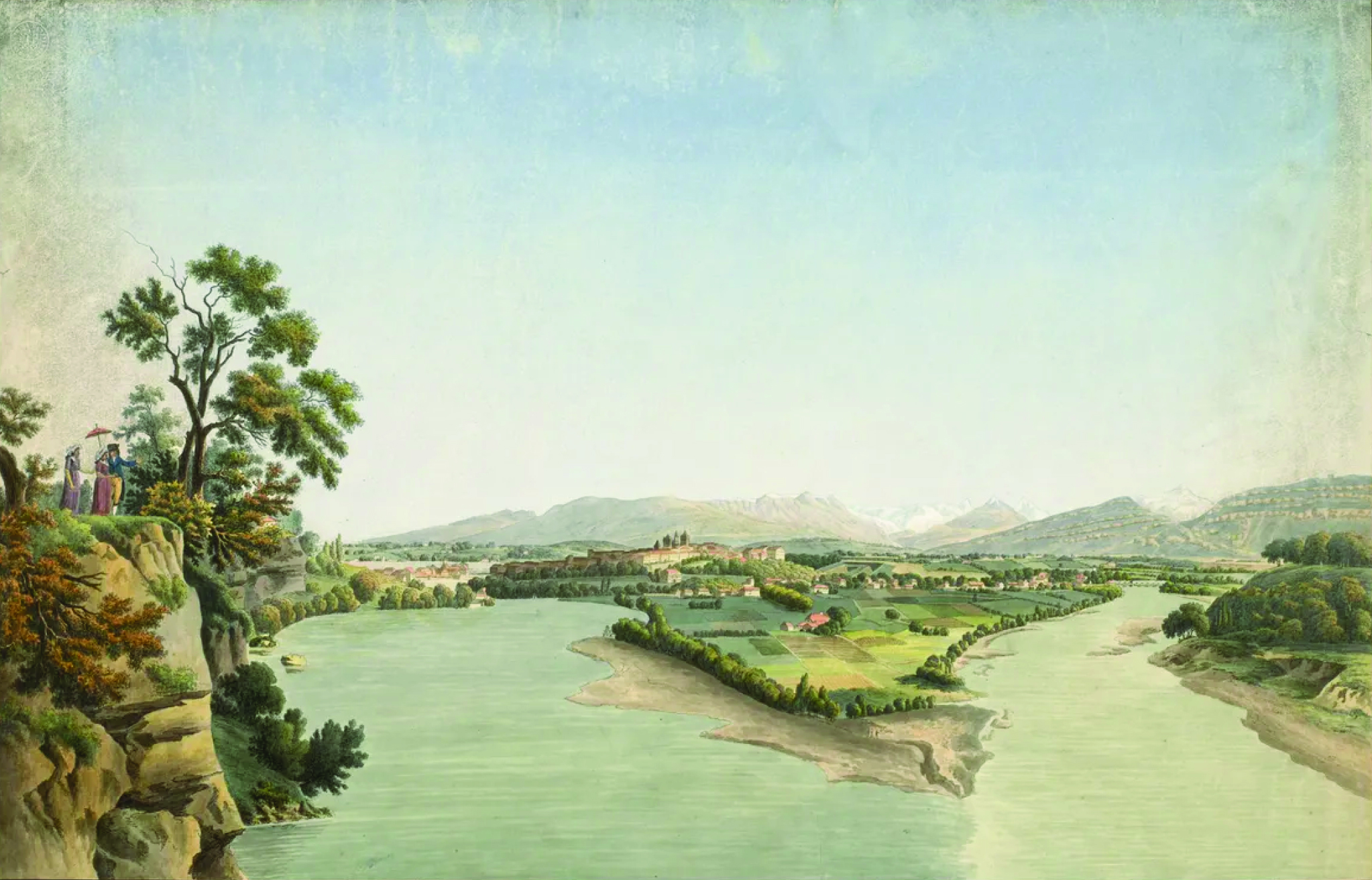
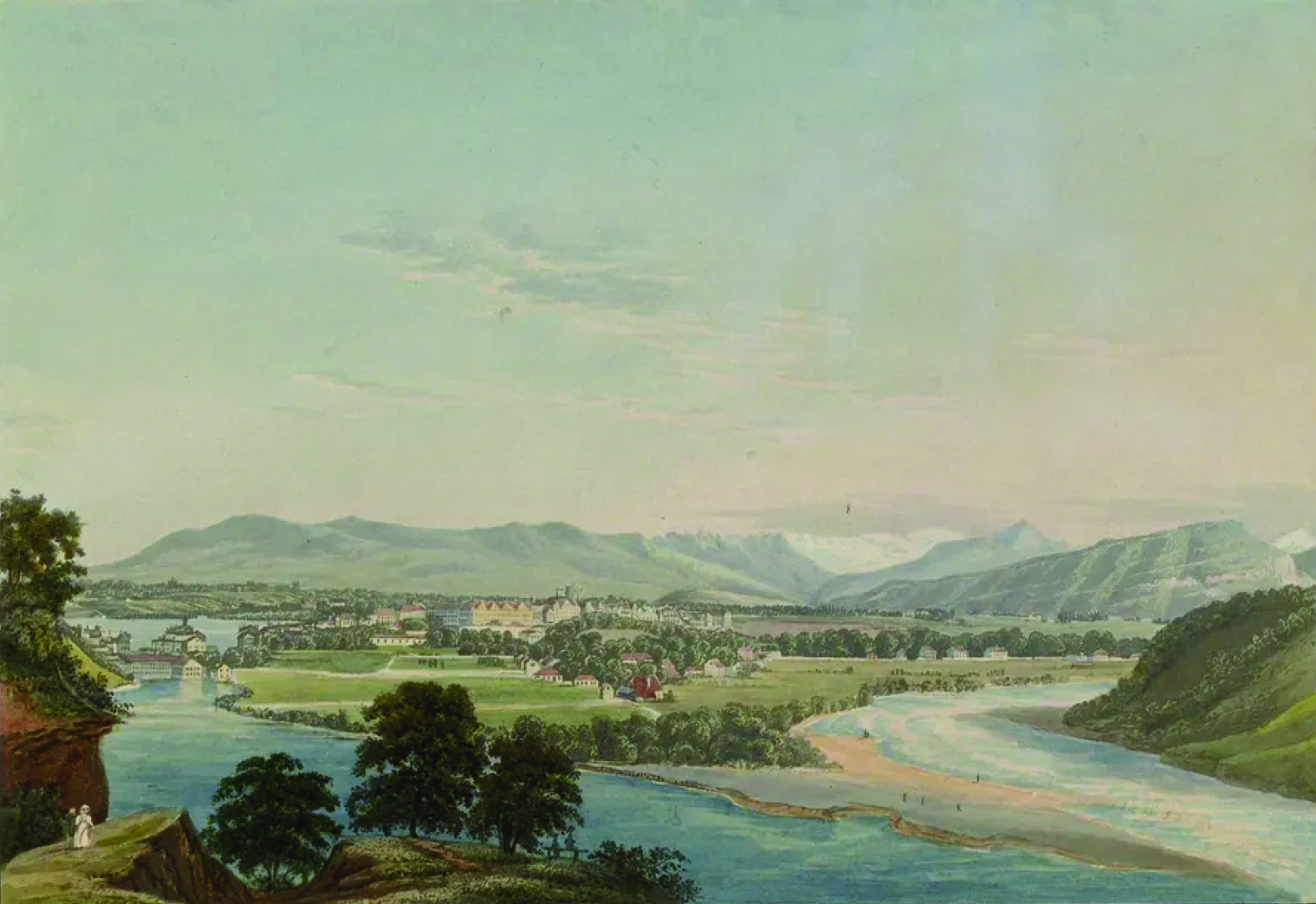
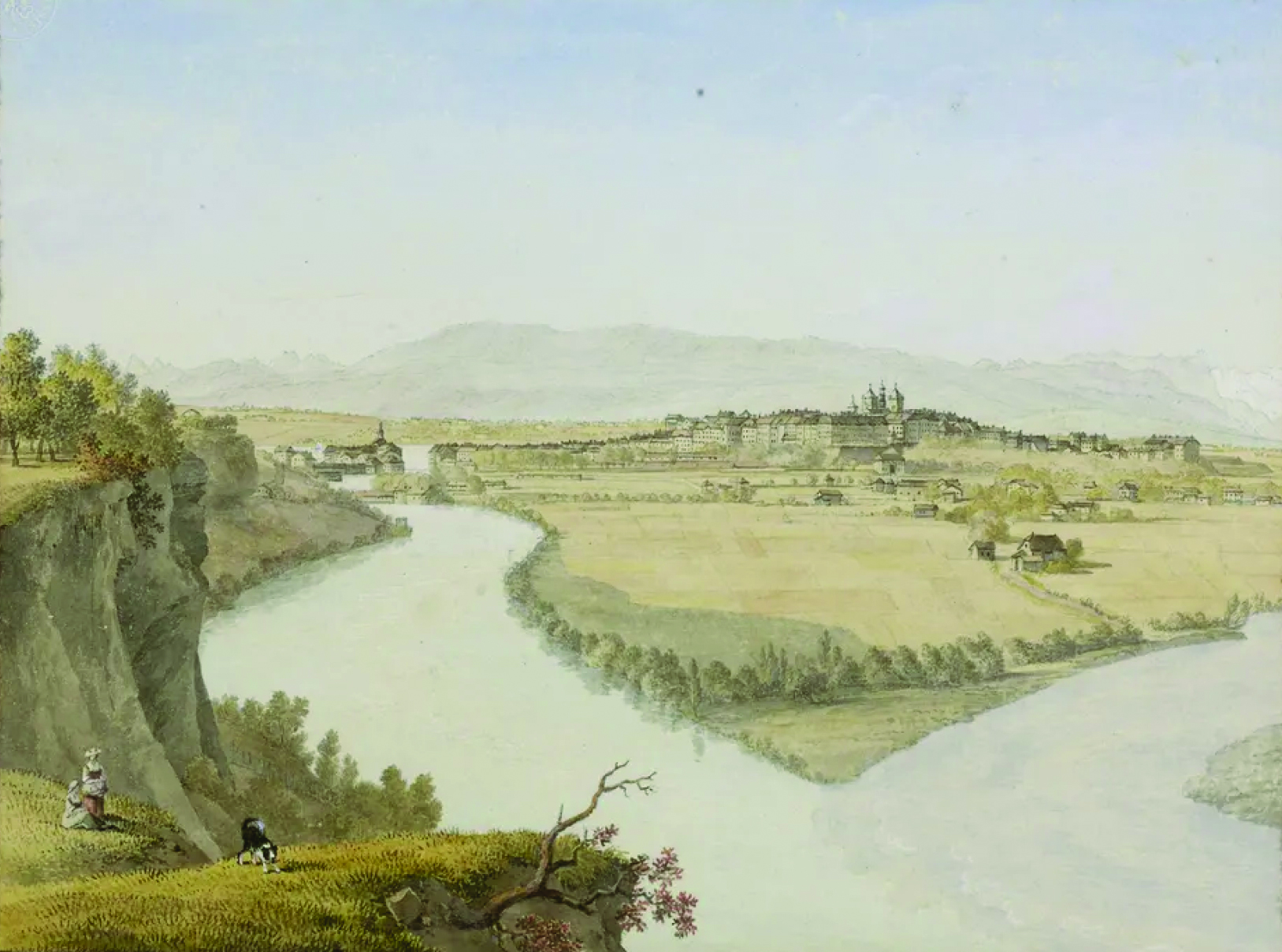
An analysis along the lines of an Enlightenment Aesthetics is to advert to the pictorial properties of a coloured engraving titled View of Geneva From The Confluence Of The Rhone And The Arve. For example, the composition utilizes the rule of two-thirds to balance the sky and ground. There’s a contrast between the vast sky and the detailed foreground. The soft colours and yellow undertones create a warm morning atmosphere. The inclusion of people in the painting also serves to establish a sense of scale. By now, we are familiar with formal descriptions and their legacy in art and design.
Perception of nature’s beauty also extends beyond mere description and is associated with the “picturesque”. Historically, this term acted as a label to simply communicate “the sort of landscape painted by artists” that had a balanced composition of a large outdoor view and is often a way to say “picture-like”.19 The concept of the picturesque influenced how we perceive nature, but it also motivated human behaviours. For example, beautiful views are often what we try to protect environmentally. This is also evident in scenic tourism, where the allure of natural beauty pushes travellers to destinations near and far.20 Historically, this is reflected in paintings featuring people in the foreground against natural backdrops, and today, in similarly situated selfies. Even if we regard nature’s beauty as objective and share broad agreement about what is beautiful, our appreciation often remains tied to self-interest, at least in terms of the hedonic dimension.
Landscape Model
Landscape paintings modelled our understanding of concepts like beauty and the picturesque, and contributed to the development of art criticism and theory. They also served as important aesthetic objects that fashioned our perspective on nature. Allen Carlson, a prominent figure in Environmental Aesthetics, noted that the way we appreciate nature is similar to how we appreciate landscape paintings:
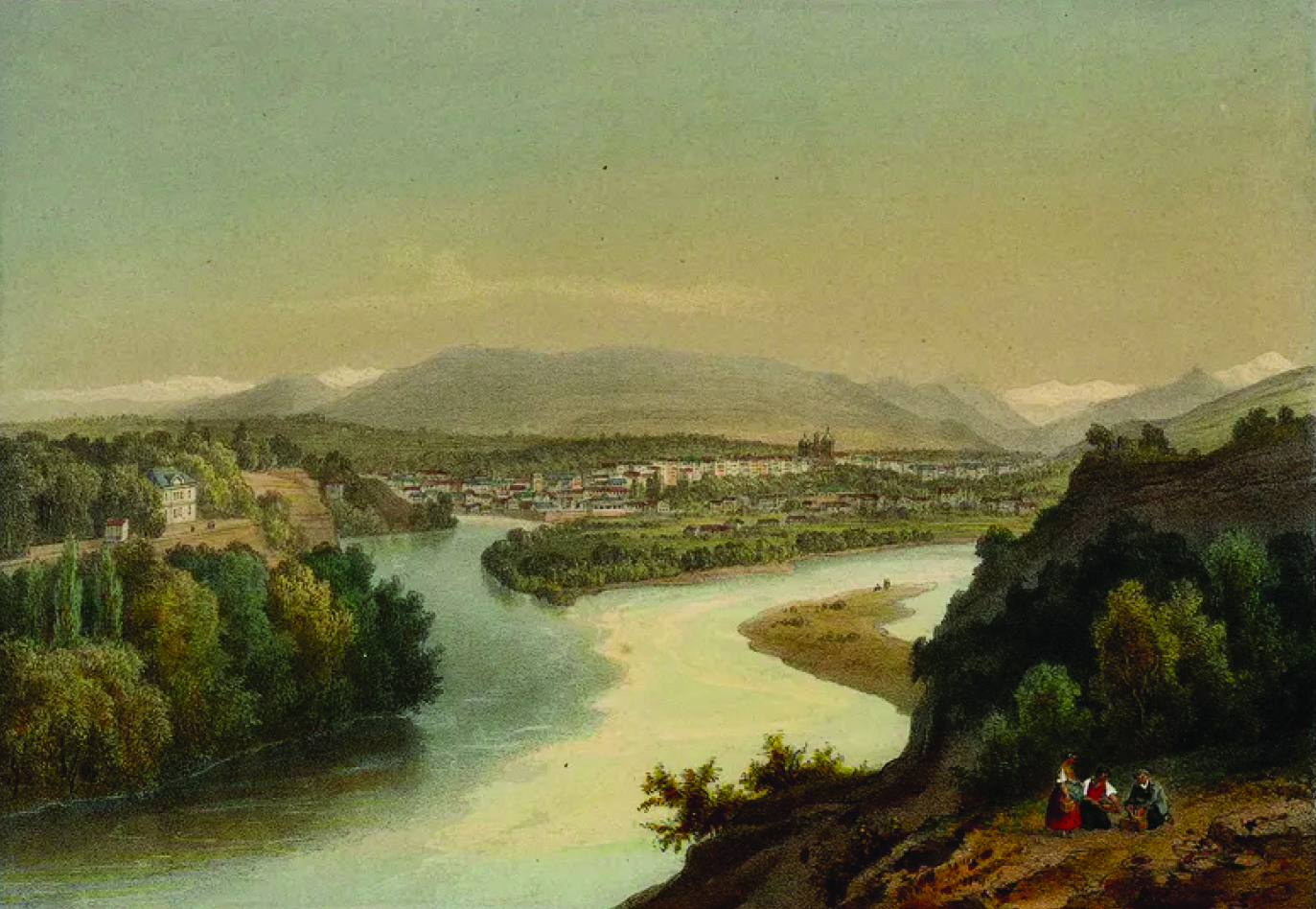
When aesthetically appreciating landscape paintings … the emphasis is not on the actual object (the painting) nor on the object represented (the actual prospect); rather it is on the representation of the object and its represented features. Thus in landscape painting the appreciative emphasis is on those qualities which play an essential role in representing a prospect: visual qualities related to coloration and overall design.21
For example, in the landscape paintings of La Jonction[fig
The Landscape Model for the appreciation of nature brings up another key point mentioned by Ronald Hepburn: art is framed and nature is unframed.22 Paintings and other art forms are framed because they are bound by their dimensions, selection of scene, descriptions and curation around the artifact. In contrast, nature is unframed since it’s constantly changing from moment to moment, season to season, year to year. When we stand in a fixed point, we direct our attention which can be in multiple directions, and as we move through the environment, the horizon line of the landscape changes. In other words, art is contained, and nature is wild.
Given this brief historical context, we can now examine how to move beyond the picturesque and the frame, which can be particularly challenging within a visual culture that is increasingly shaped by screens in general and social media in particular. Hepburn and Carlson, along with many others in the field of environmental aesthetics, have answers to this question. I’ll apply their claims in discussing works produced by other artists, designers and myself with the goal of arriving at comprehensive models of appreciation.
A Photographic Study of the Rhône and Arve Rivers
Exploring the medium while also considering how it can deepen our appreciation of nature
 Stack of printed photos | 2025
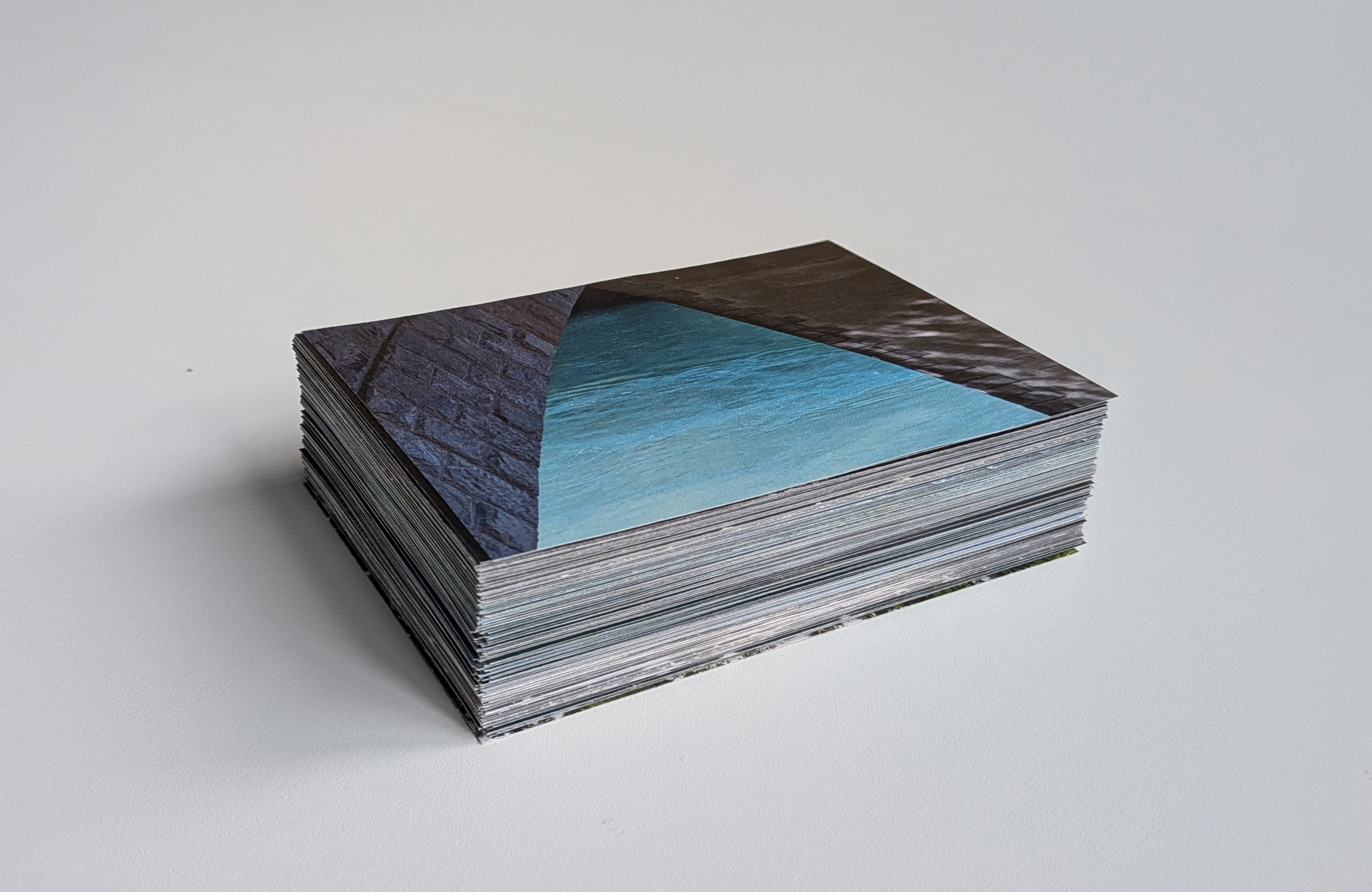
Over the three-month period from April to June 2025, I documented the Rhone and Arve rivers with a Nikon Z 6II with a 24–70mm f/4 S lens. The photos are of the rivers from various vantage points around the confluence, primarily from the viaduct. Initially, the photos served as image documentation and field research, but after printing and viewing them outside of a screen, I was drawn into a reflection on the medium of photography and how it can facilitate an appreciation of nature.
Stack of printed photos | 2025
Over the three-month period from April to June 2025, I documented the Rhone and Arve rivers with a Nikon Z 6II with a 24–70mm f/4 S lens. The photos are of the rivers from various vantage points around the confluence, primarily from the viaduct. Initially, the photos served as image documentation and field research, but after printing and viewing them outside of a screen, I was drawn into a reflection on the medium of photography and how it can facilitate an appreciation of nature.
Format and Display
 Preparing stack of printed photos
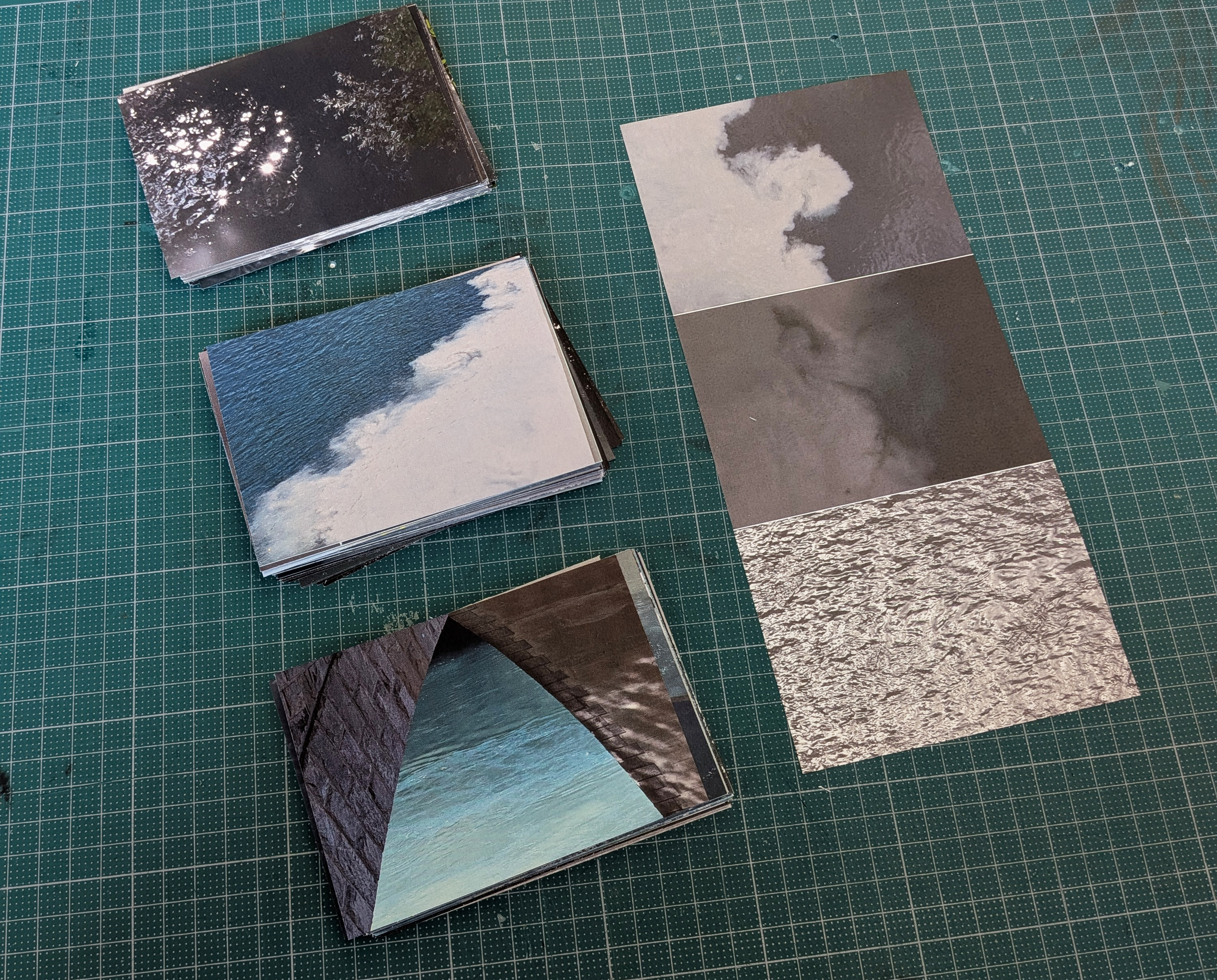
A photograph immediately frames nature. This encompasses everything from hardware to post-production and how the photos are displayed within a space, as well as the most obvious, the photo frame. The photographic act is also rooted in framing. There are multiple steps that guide our decision before pressing the shutter button, known as “previsualization”. As Daniel Pinkas notes in “Santayana at the Harvard Camera Club”:
Preparing stack of printed photos
A photograph immediately frames nature. This encompasses everything from hardware to post-production and how the photos are displayed within a space, as well as the most obvious, the photo frame. The photographic act is also rooted in framing. There are multiple steps that guide our decision before pressing the shutter button, known as “previsualization”. As Daniel Pinkas notes in “Santayana at the Harvard Camera Club”:
[F]raming and shooting encapsulate the very essence of the photographic act, an act that culminates indeed in the “pressing of the button” but under the guidance of a conscious and sophisticated perceptive operation. The expressions “instant recognition of subject and form”, “spontaneity of judgment” and “composition by the eye”, are some of the ones used to designate what precedes and determines the decision to “press the button”.23
The photographic act can be described as the art of framing, a throughline that runs from the moment of composing an image to the way it is ultimately presented. Having a mental frame, however, does not only need to apply to taking a photo. As Stolnitz notes:
[T]he scene in nature lacks a frame and therefore cannot be grasped and comprehended by the eye and the mind…[A]lthough nature lacks a frame when it simply exists, apart from human perception, this is not true when it is apprehended aesthetically.24
The concept of the “frame” appears to be valuable not only in art but also in the aesthetic appreciation of nature. Without mentally framing nature in its presence, we might perceive it as wild and chaotic. This raises the question of how we might engage with the idea of framing and unframing in photography, and how such an approach could contribute to our aesthetic understanding of nature.
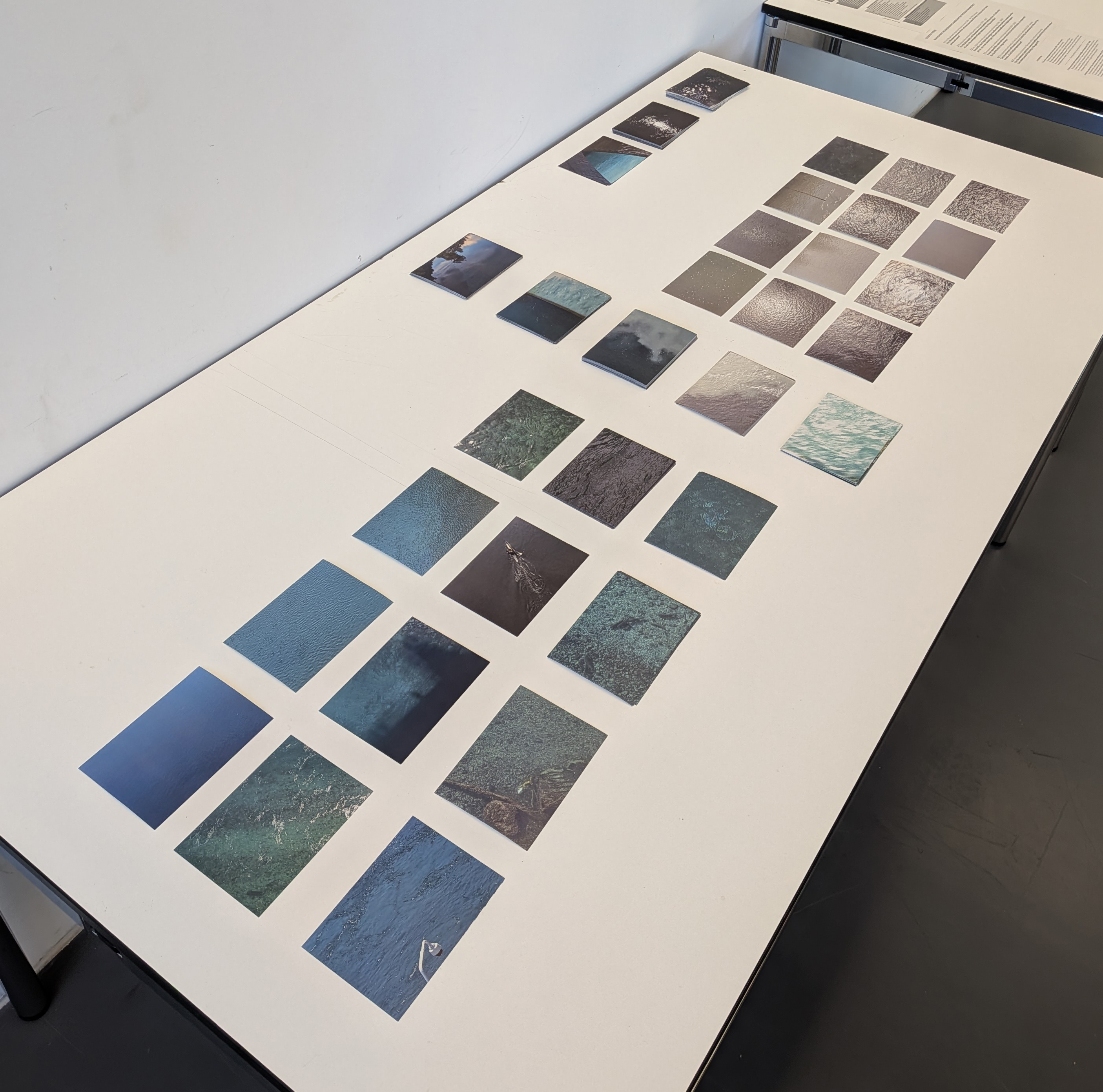 Photo display
This exercise or arrangement attempts to address the frame issue. The photos printed are 12.6 cm x 9 cm on regular printer paper. The quality of the paper was less important since I was concerned with how to organize the photos in a coherent display. The focus was on how to present the final image once it is produced. Faced with multiple photos, the viewer can see beyond just one moment and perspective; more specifically, they can see a season in its entirety. This is reminiscent of David Hockney’s photographic collages, where he arranges photos from different vantage points and assembles them to create a new scene. In contrast, I’ve created an orderly display to represent the location of the confluence. There’s a clear horizontal axis with the viaduct, and a vertical axis with the dyke separating the rivers that leads to the lookout point.
The reproduction of the location is an attempt to address one of Carlson’s points about appropriately appreciating nature:
We must experience our background setting in all those ways in which we normally experience it, by sight, smell, touch, and whatever. However, we must experience it not as unobtrusive background, but as obtrusive foreground!25
Carlson argues we shouldn’t view nature simply as a backdrop. Instead, by actively engaging and directing our attention and letting nature disrupt us, we can then fully appreciate it. Of course a photo cannot replicate smell or touch. I’ll attempt to address what the medium of photography can achieve momentarily. The dimensions of the individual photos are small but the overall display could be huge if there were many photos. This would offer the viewer an approximation of being on the viaduct. There are close-ups to see details as if you were face-to-face with the rivers, which addresses Carlson’s point about the landscape model and the limitations of only viewing nature through colour and form.
One key aspect of nature is that we move through it. We are surrounded in it which brings us closer to nature and reduces the distance that is present in art.26 However, is it necessary to replicate nature as if you were there to appreciate it through photos?27
Collection of Evidence
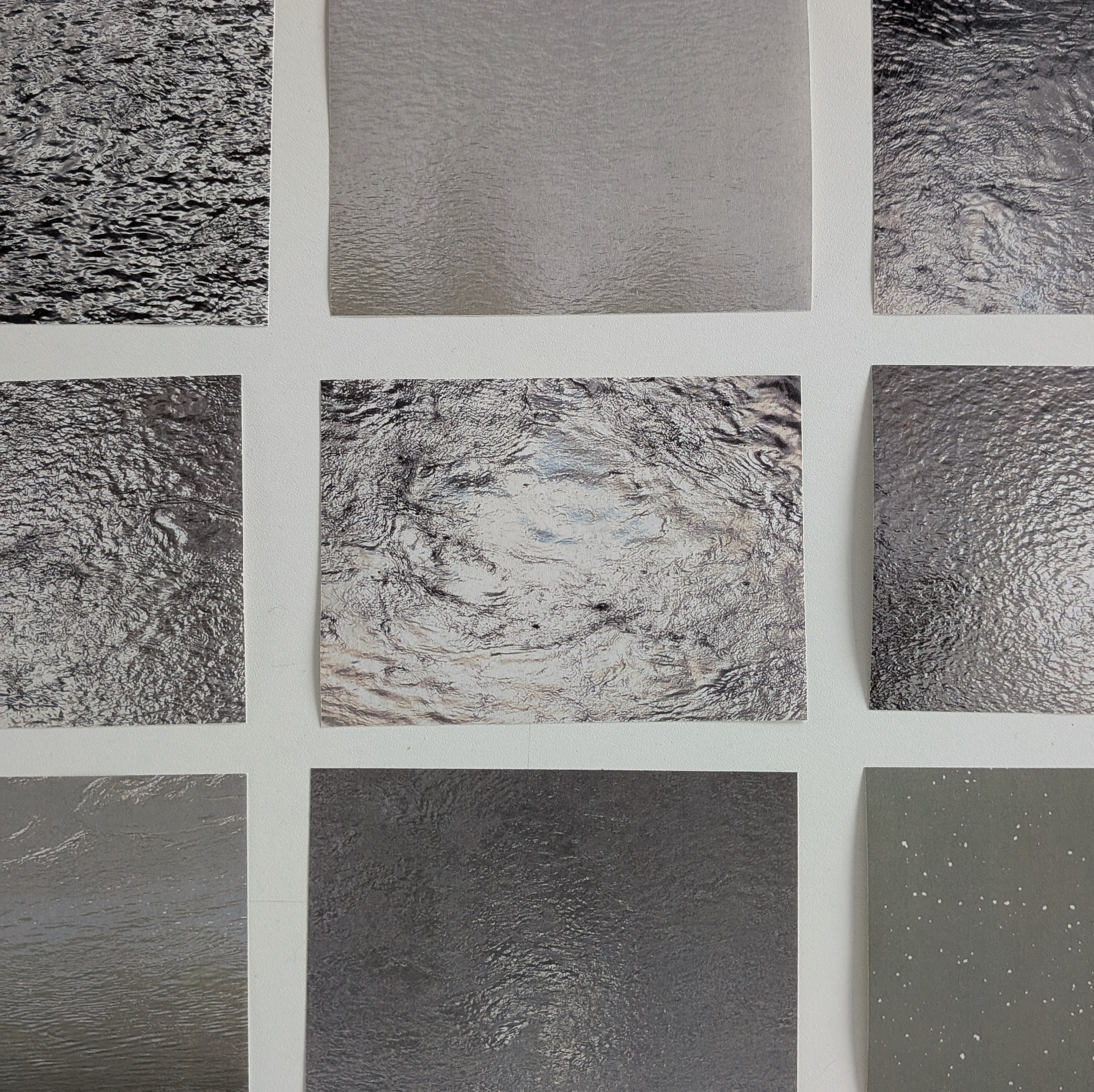 Photos of the Arve River
According to Laura T. Di Summa in “Collecting What? Collecting as an Everyday Aesthetic Act”, “with the act of collecting, there is a sense of adventure and discovery.”28 In her paper, she refers to the collection of mundane objects, but this notion can also apply to our everyday environments—in my case, the confluence I pass by daily. I would often look forward to reaching the bottom of Bois de la Bâtie, catching the first glimpse of the rivers through the bridge archway. Before choosing this thesis topic, I took photos casually on my phone, mostly for myself and the occasional post on social media. I would look forward to the new formations of the confluence; even though my path was always the same, the adventure unfolded within the confluence itself. Once I committed to this research, my vision became more focused. I began carrying my digital camera, intentionally seeking various aspects of the confluence to photograph on my way to and from school.
This growing collection soon led me to reflect on the nature of digital photography itself. With digital photography, we are no longer constrained by the economic limits of film. This freedom allows us to document over a period of time and enables us to generate a series of photos at ease. Yet, with this abundance comes a new challenge: we can photograph anything, but we must ask whether we are truly capturing, collecting, curating or simply just amassing data. When digital photos are stored on our devices (mobile, computer or hard drives), they can easily become a “dark archive” where collections are forgotten or rarely accessed and enjoyed.29 This kind of “digital forgetting” mirrors the way we relate to nature in contemporary life: ever-present, yet too often overlooked.
It also becomes difficult to decide which photographs are “the best.” In this exercise, by presenting the images as a collection that viewers can pick up and rearrange, I invite them into the artistic process itself. As Thi Nguyen notes, “we often cherish the making of aesthetic judgements, for they require us to put our own efforts into it.”30 I intentionally give agency to the viewer, allowing them to organize the collection according to their own sensibility and invite them to work on their aesthetic judgement. In doing so, the work not only deepens their aesthetic engagement with the photos but also with the rivers. This also mirrors the constant change of the environment itself—each interaction changes the top photo of each stack, leaving them different for the next person.
A specific aesthetic experience occurs when we see a set of photos as a collection. We can view the object in multiple instances and appreciate it across different time periods and points of view. Through repetition, certain visual qualities are amplified, creating rhythm and intensity that a single image cannot achieve. When organized thoughtfully, this accumulation becomes a powerful visual form. With each new image, we are given a new element that contributes to our overall aesthetic judgement of the object. This is evident in Instagram carousel images, which allow users to post a series of related photos, as well as in monolithic coffee table photo books that highlight one object, or a museum curating a collection. This can be extended to a series of photos of the same subject matter in nature. It’s the diversity and variation that draw us in.
This diversity of photos, I would argue, acquaints us with the landscape. This implies that we appreciate learning about the environment, whether it’s the changes within a season or the appearance of the water’s surface at different times of day. As Hepburn puts it, “Nature is not a ‘given whole, ’ nor indeed is knowledge about it”.31 This suggests that nature cannot be aesthetically experienced as a whole but rather individually through its parts. Necessarily, through the appreciation and coordination of its parts, it also implies a “cognitivist” view that we appreciate nature through knowledge about it.32
Expressive Qualities
The preceding paragraphs may suggest that I believe in the transparency theory of photography. Photographic transparency is a recurring topic in writings on photography, and although the theory is questionable—since it claims that we are actually looking at the very object in the photo—it continues to shape how we discuss the medium.33 To briefly summarize the counterarguments to the transparency thesis: the bodily orientation argument claims that a photograph doesn’t allow us to spatially locate the depicted object or orient ourselves around it as we would in real space. The optical discontinuity argument, on the other hand, draws on scientific reasoning, pointing out that the light emitted from the photographed object is altered by the medium of display—whether on a screen or on paper—thus breaking the direct connection between the viewer and the object.34
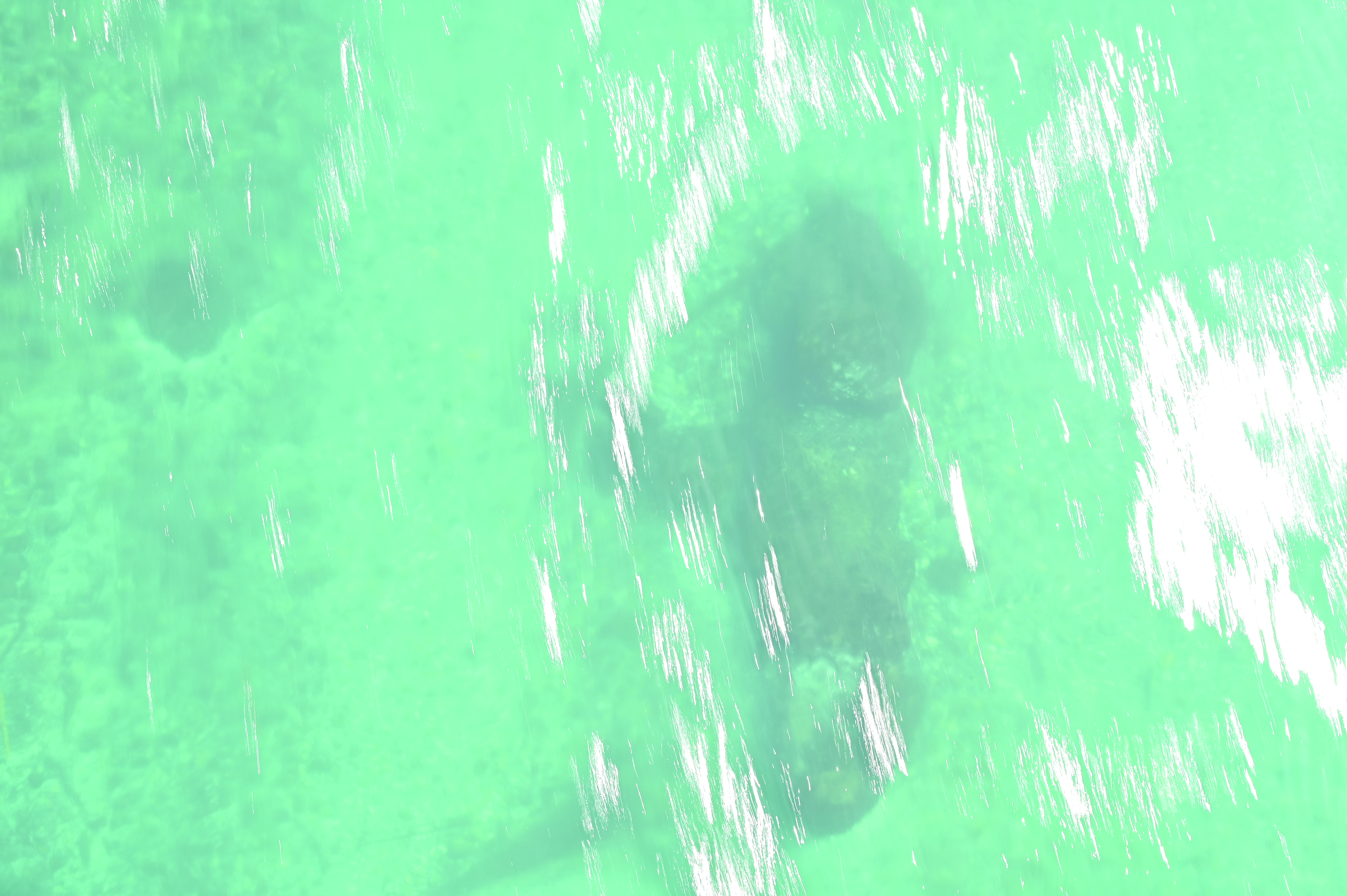 Long exposure photo of the confluence
In “Looking at Nature through Photographs, Jonathan” Friday uses mirrors to support the transparency thesis. He states, “Mirror images have the same counterfactual dependence upon the appearance of the world that photographs do.”35 In other words, mirrors and photographs operate similarly: if you were to wave at yourself in a mirror, the reflected image would change accordingly, just as a camera would capture that change in a photograph. Friday continues:
Moreover, we treat mirror images as means by which we can see objects in the world that could not otherwise be seen given our position. For example, we can use mirrors to see what is behind us or around corners.36
Friday introduces mirrors to reinforce the transparency theory. He argues that they enable us to see things beyond our direct perspective. This idea opens an intriguing avenue for thinking about photography. Like mirrors, cameras can reveal what lies beyond our immediate position or attention. The notion of “blind spots” becomes a compelling concept, and I wonder what the camera renders visible that our eyes alone might miss?
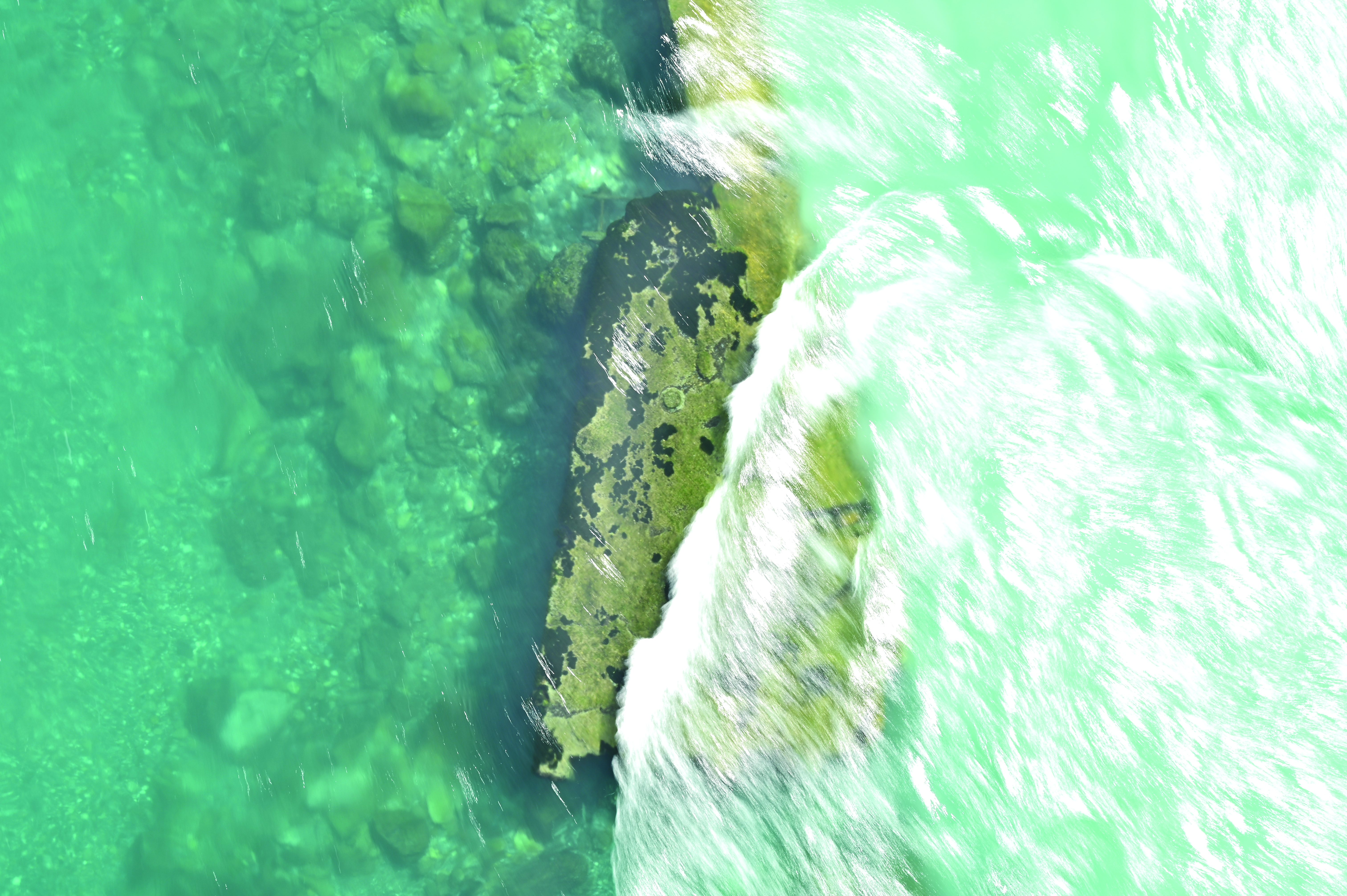
One example is long exposure photography. This technique has the ability to capture motion and light over an extended period of time. In this photo, the aim is to document the aesthetic quality of confluence waves. While shimmering light offers a sense of movement in person, the naked eye cannot perceive the continuous, interwoven lines of water flowing in different directions. This distinctive and dynamic pattern is solely revealed and rendered by the photographic process.
Friday argues that the unique capability of photography lies in its power to isolate and capture nature’s expressiveness, offering viewers an aspect of that experience they cannot attain through direct, unmediated engagement.37 This goes beyond documentation and not presenting exactly what we see in person. We could say that this photo conveys a tranquil feeling due to the soft whisper-like waves and the calming blue-teal tones. But what exactly do we mean by “expressive”? According to Noël Carroll, this is how expression is understood generally and within the context of art:
At root, all expression theories maintain that something is art only if it expresses emotions. “Expression” comes from a Latin word which means “pressing outward”—as one squeezes the juice out of a grape. What expression theories claim is that art is essentially involved in bringing feelings to the surface, bringing them outward where they can be perceived by artists and audiences alike.38
Carroll goes into greater depth, but the key idea to take away is that something within the artist is transferred into the artwork, allowing audiences to perceive and extract that emotion—eliciting a corresponding feeling within themselves. However, since nature is not created by humans, how is it possible that we still experience emotional responses toward natural objects?
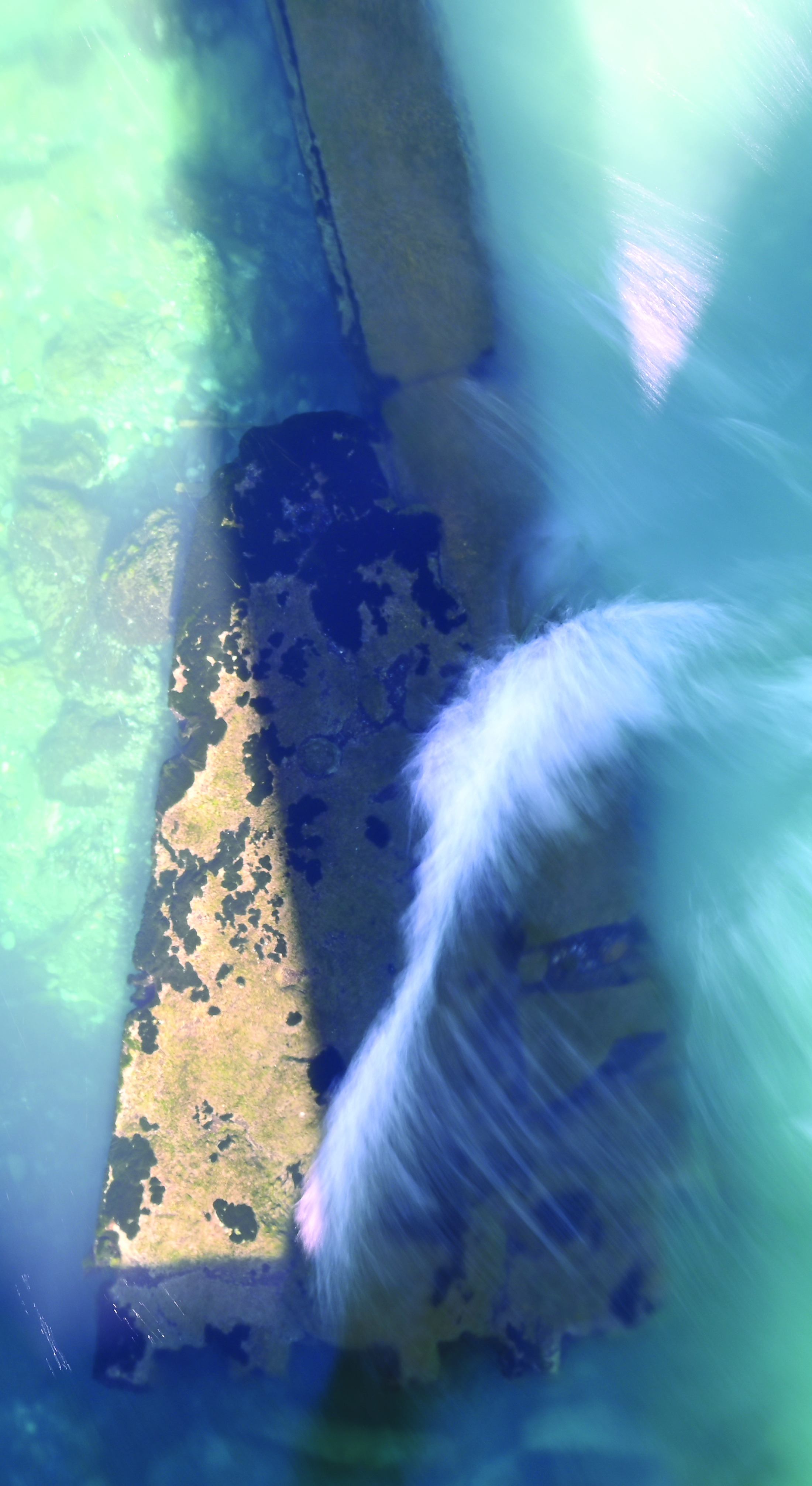 Whispers of the confluence
One might argue that the expressive qualities of a photograph stem from the depiction of a natural object, yet we also project our own feelings onto nature. For example, we call a tree a weeping willow. According to Hepburn, when we aesthetically contemplate nature, a rapprochement occurs between the viewer and the natural object—in other words, a sense of unity forms.39 This is what we mean when we say “to be one with nature.” For Hepburn, such unity emerges through a process of humanizing nature, attributing it human emotions.
Expressive contrast in a photograph also shapes our aesthetic experience. In design, we understand contrast as a key principle that helps us perceive and organize visual information. But what about in nature? For Hepburn, contrast in nature takes the form of a “paradoxical union” where opposing qualities coexist.40 His example is a boulder tumbling down a hill: a massive, seemingly immovable object suddenly in motion. Witnessing this contradiction produces an aesthetic experience that captivates us precisely because it defies our expectations of how such a natural object should behave.
In viewing long-exposure photographs, we might experience a similar paradox. The soft teal tones of the converging waves convey tranquillity, yet the visible motion of the water introduces a sense of vitality and excitement. This suggests that we appreciate multiple aspects of nature simultaneously—and that when these qualities are captured in a photograph, they evoke our aesthetic appreciation of both the photo and the natural world it depicts.
Fluvial Data
The tension between quantitative measures and the aesthetic qualities of landscapes
Scientistic Scenes
Attempts have long been made to translate what we find visually appealing into numbers. A simple example is the rule of thirds, where a composition is divided into nine equal parts by two horizontal and two vertical lines. By following these guides and positioning the subject at any intersection, the image becomes balanced through the contrast between the empty space and the focal point. Proportion, ratio, and symmetry have likewise been subjects of fascination since antiquity, notably in the Canon of Polykleitos, as an effort to define the ideal proportions of the human body.41 Beneath these systems lies a tension between perception and measurement, questioning whether the experience of beauty can ever be fully captured by numeracy.
The notion of disinterestedness invites us to view beauty objectively; therefore, the question of whether beauty itself can somehow be determined scientifically—from the perspective of a discipline grounded in objectivity—becomes one worth considering. A study conducted in 1969 by the Forest Service of the U.S. Department of Agriculture tried to determine which landscapes people preferred. They did so by showing participants sets of photos and had them rank seven landscape images. The researchers quantified the image by dividing the landscape into 8 weighted zones.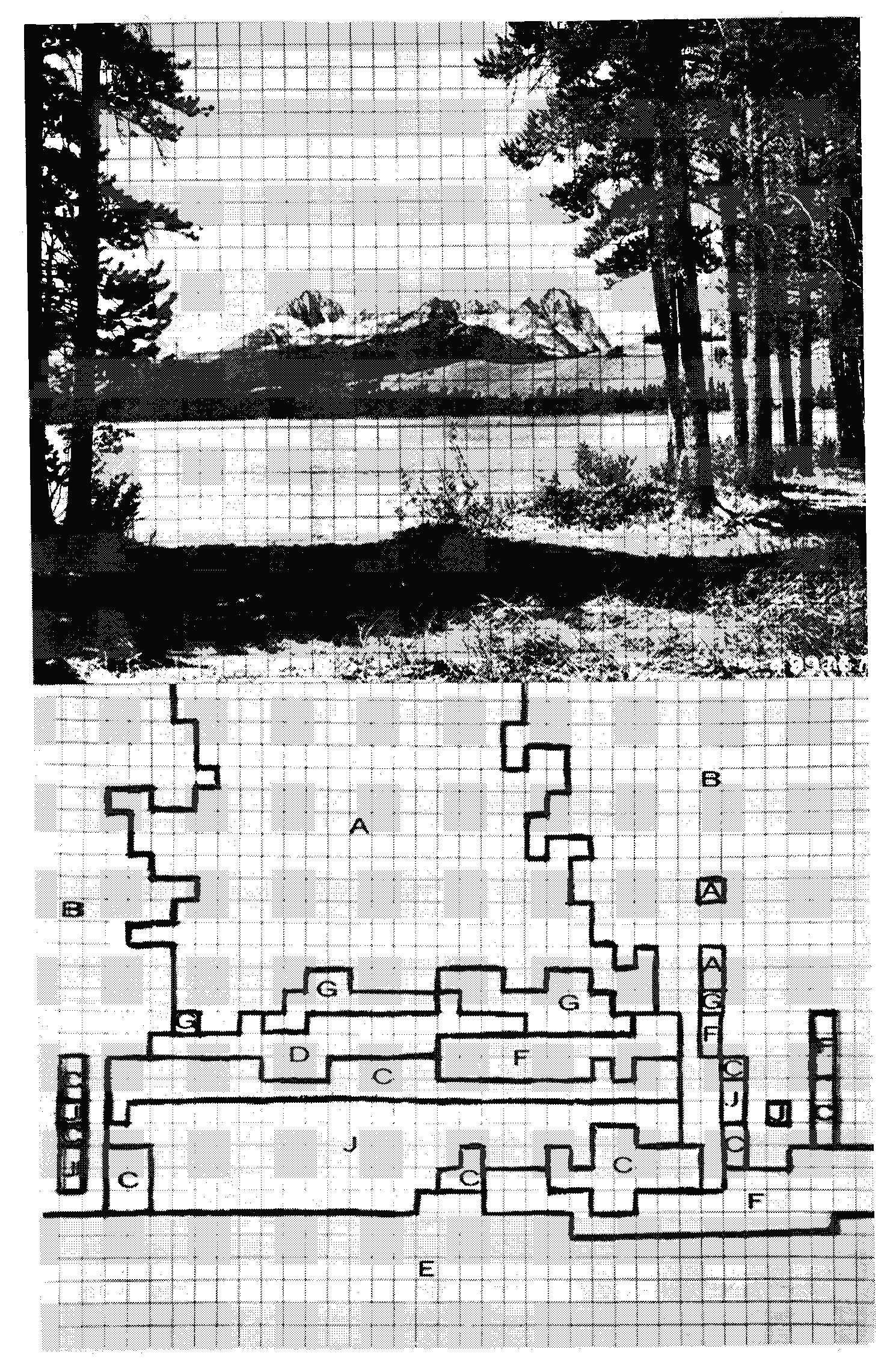 A plastic grid is overlaid on the photo to outline various parts of the landscape.42 The top-ranked image featured a combination of a waterfall, stream, and lake. Perhaps the most obvious flaw in this study is the fact that participants are viewing photos rather than seeing the actual landscape. The authors of the paper are aware of this and state that, “research is needed to test how well preferences for photos of landscapes compare with preferences for those same landscapes when viewed on the ground.”43 In other words, to test and confirm the study’s results, the researchers would need to observe how the same participants rank landscapes when experiencing them in person. This would be an interesting follow-up study, though perhaps a considerable undertaking, not least because nature is in constant flux.
With obvious ironic intentions, artists Vitaly Komar and Alexander Melamid conducted a similar study in the 1990s to determine what people wanted in a painting.44 They surveyed the american public, using the results of a poll to inform their painting choices. The findings revealed that the public preferred blue landscapes with water, people and animals. When the survey was conducted in other countries, it yielded remarkably similar results.
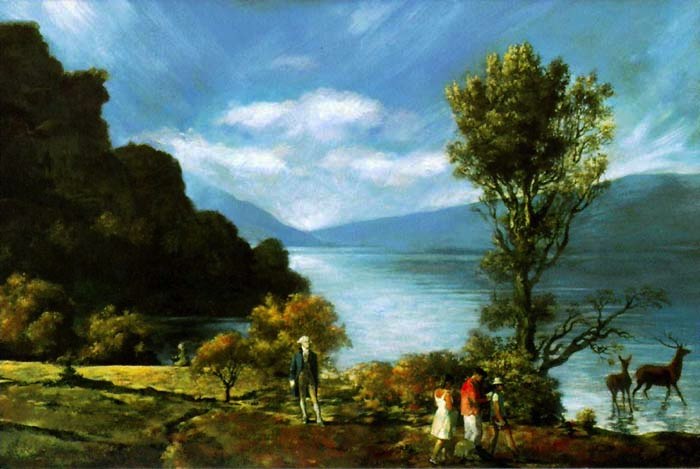
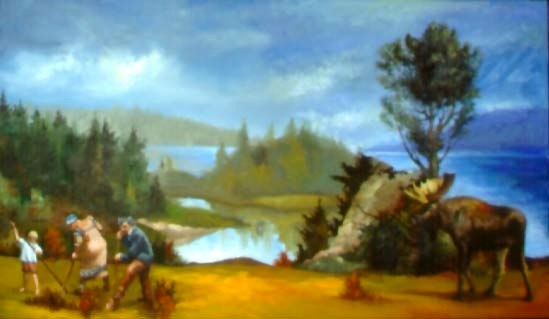
One might be skeptical of the project itself, but the point was never simply to paint what people want in a painting. One of the survey questions asked, “If you had unlimited resources and could commission your favorite artist to paint anything you wanted, what would it be?”45 The most common answer, perhaps unsurprisingly, was family portraits. Additionally, Holland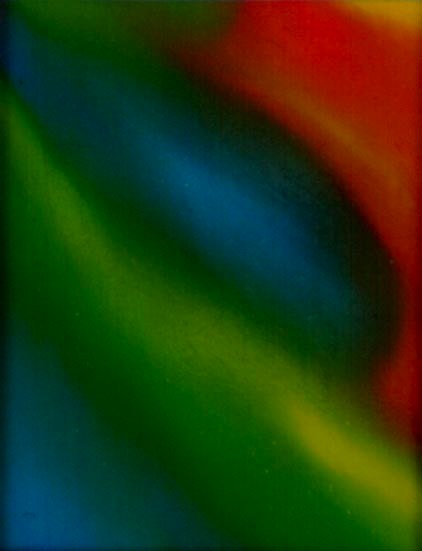 Most Wanted Painting, Holland was the only country to prefer abstract paintings which also suggests that universal truths are unlikely when it comes to aesthetic preferences. This data, however, was ignored in favour of the project’s broader objective: to identify what the public desires collectively, rather than what individuals want personally.[fig
There was still an element of interpretation in how Komar and Melamid chose to realize the final outcome. Although the end result took the form of a painting, it can also be understood as a kind of data visualization—a central theme of their project, which was based on a public poll. In their travelling exhibition The People’s Choice, they also displayed three-dimensional data visualizations alongside the paintings. These data visualizations had a significant impact on their assistant at the time. In an interview, Komar remarked:
[O]ur assistant, a young architect, said that in his view these graphs are the most aesthetic part of the show, that behind beauty and design of these abstract works, we see some truth, some actual fact of life.46
Here, instead of applying numbers to determine what is aesthetically pleasing, the numbers themselves have turned into an aesthetic object through visualizations. The paintings, data visualization and exhibition are all means to answer the question that Komar and Melamid set out, which is, what do people want in a painting? It appears that Komar and Melamid have found a (tongue and cheek) solution to their problem by employing a quasi-scientific methods. However, if taken literally, their approach would align with scientism, the idea that science can solve all problems. As described in Scientism: Prospects and Problems, scientism is
the view that only science can provide us with knowledge or rational belief, that only science can tell us what exists, and that only science can effectively address our moral and existential questions. As Alex Rosenberg says, scientism “is the conviction that the methods of science are the only reliable ways to secure knowledge of anything, ” the view that “science provides all the significant truths about reality”.47
While scientism suggests that science alone can yield a complete, objective understanding of the world—including our aesthetic experiences—this is not the position held within environmental aesthetics. Carlson’s Natural Environmental Model (NEM)48 is often associated with a cognitive approach, but he does not claim that scientific knowledge is the only valid way to appreciate nature. Rather, he argues that certain kinds of knowledge—drawn from natural history, ecology, geology, and related fields—can contribute to our aesthetic appreciation by helping us perceive natural environments more accurately and on their own terms. For Carlson, he makes a comparison to art-historical categories and how this could also be how we approach appreciating nature:
[A]s in art appreciation, in these cases, to appropriately appreciate the objects or landscapes in question aesthetically—to appreciate their grace, majesty, elegance, charm, cuteness, delicacy, or “disturbing weirdness”—it is necessary to perceive them in their correct categories. This requires knowing what they are and knowing something about them—in the cases in question, something of biology and geology. In general, it requires the knowledge given by the natural sciences.49
This comparison to art and using it as an analogy is criticized by Glenn Parsons:
[A] given natural thing will fall under a myriad of different categories, some more general and some more specific. In the case of art categories, it seems natural to employ the more specific categories, as when we view cubist portraits as a certain kind of work (cubist, say), rather than simply as paintings in some more generic sense. Presumably, we do this, in large part, because this is how their creators intended them to be viewed. But in the case of nature, the matter is less clear: can we view a Venus Fly-Trap merely as a plant, or ought we view it as a very specific kind of plant (carnivorous), with specific needs, traits and environment?50
The challenge here is that we can view art in a specific way due to context and the artist’s intentions. To expand on the cubist painting, we wouldn’t judge it from a contemporary lens because the painting was not created during this time (although, our knowledge about art now does influence how we talk about art in the past). With nature, there are many different disciplines to approach it as Parsons has pointed out, so then how do we choose which natural science to apply our aesthetic judgement?
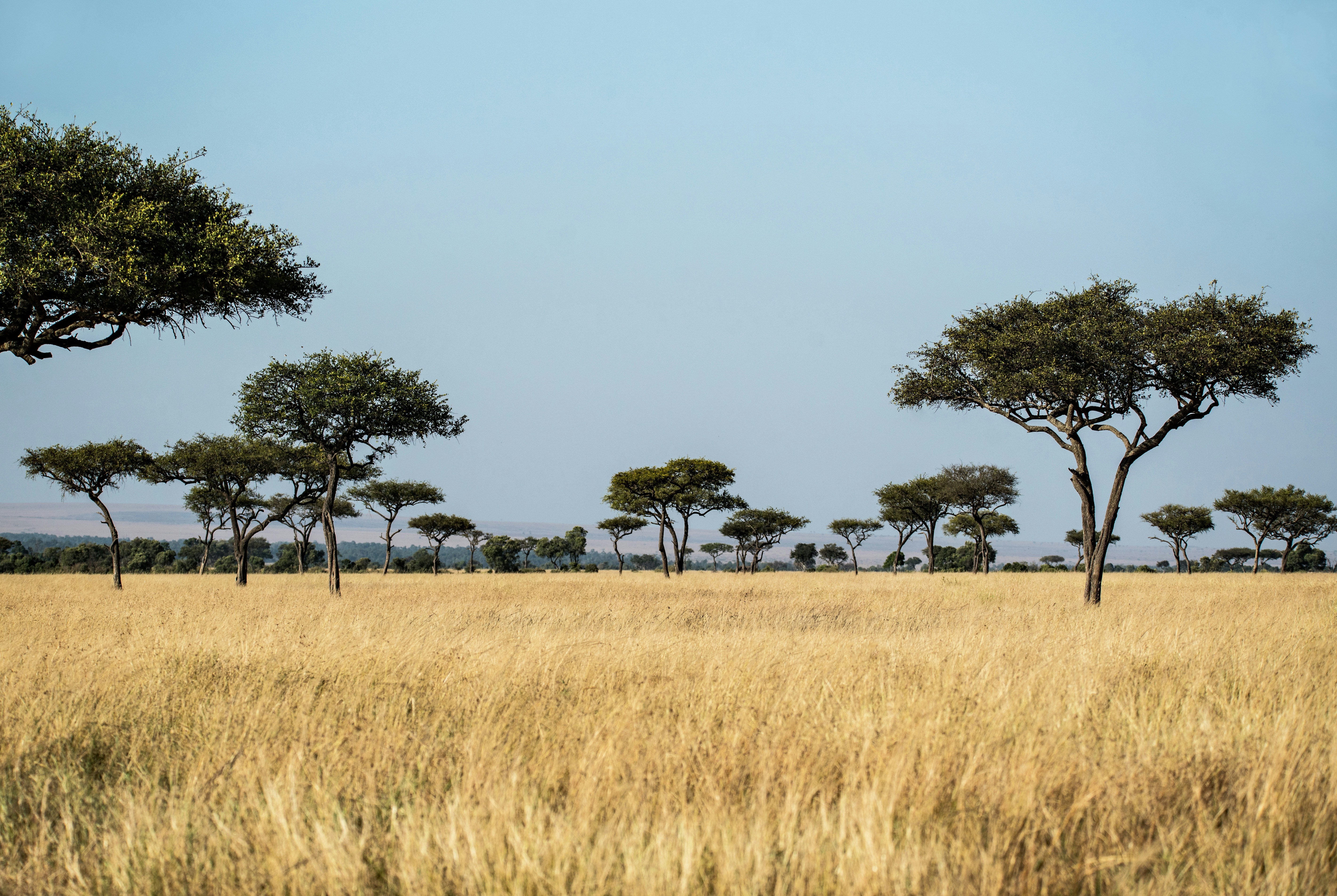
One possible approach would be to draw on behavioural ecology, which examines the evolutionary foundations of animal behaviour in relation to environments of evolutionary adaptations (EEA).51 As Steven Pinker notes in How the Mind Works:
The biologist George Orians, an expert on the behavioral ecology of birds, recently turned his eye to the behavioral ecology of humans. With Judith Heerwagen, Stephen Kaplan, Rachel Kaplan, and others, he argues that our sense of natural beauty is the mechanism that drove our ancestors into suitable habitats. We innately find savannas
Tropical Savanna Taita Hills Wildlife Sanctuary, Kenya | Photo by Christopher T Cooper beautiful, but we also like a landscape that is easy to explore and remember, and that we have lived in long enough to know its ins and outs.52
To confirm this point, an experiment was conducted by George Orians with american children and adults who were shown various landscapes and asked to indicate how much they would like to visit or live in the depicted places. No one liked deserts and rainforest but everyone preferred savannas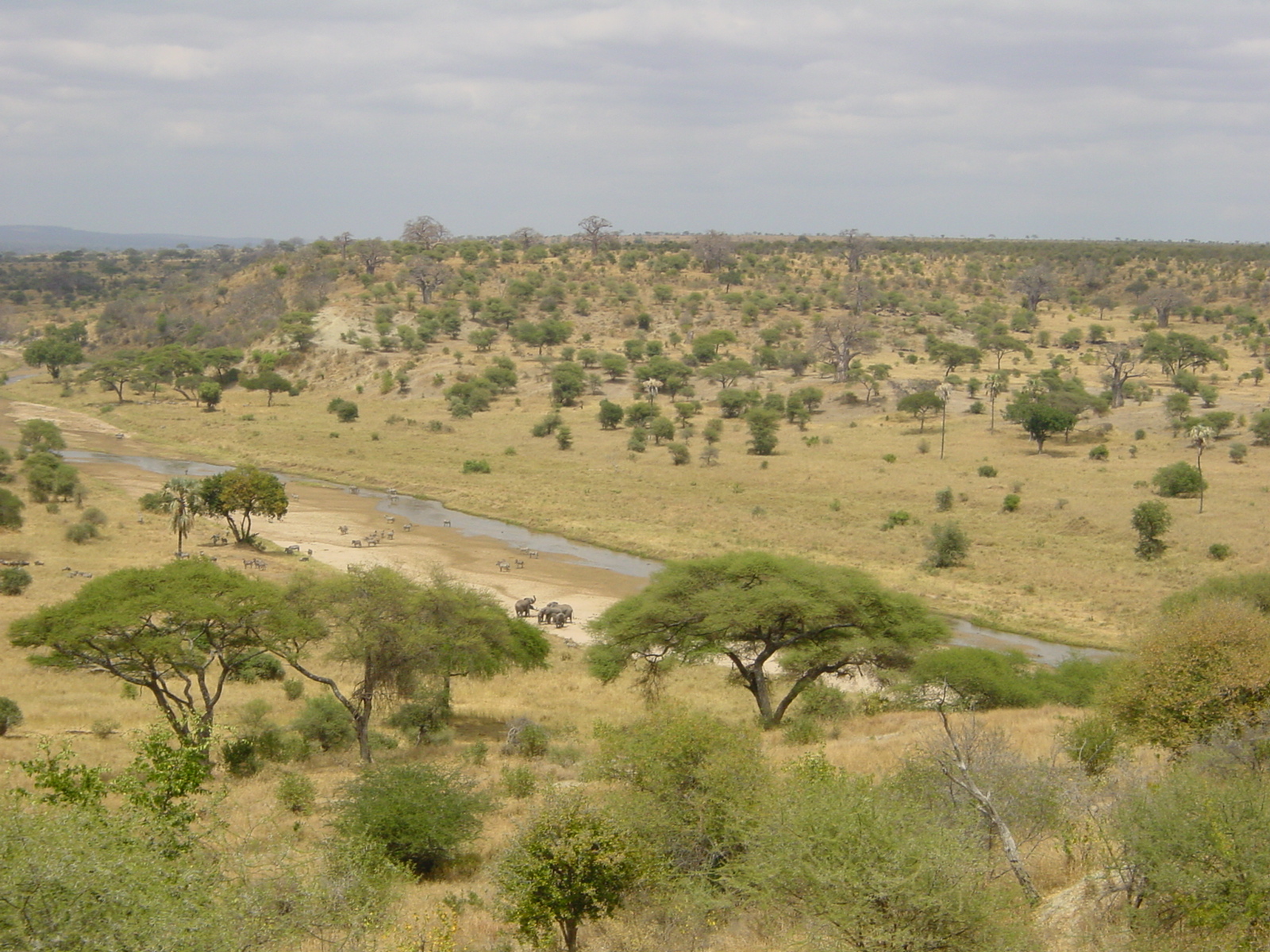 Tree Savanna Tarangire National Park, Tanzania | Photo by ProfessorX.53 The author points out that savannas allow us to survey the land at a glance for predators and for resources, while offering safety. There are important methodological limitations to Orians’ experiment. First, the study surveyed only an american population, making it difficult to support any claim of universal preference without cross-cultural comparison. Second, adults in the study also showed strong preferences for deciduous and coniferous forests—the very landscapes common across the United States. As Pinker notes, this suggests that people may simply feel at ease in environments that resemble familiar habitats. Rather than pointing to a “mystical longing for ancient homelands, ”54 these findings imply that our attraction to certain landscapes may arise not only from their aesthetic qualities but also from their perceived functionality.
Pinker goes on to say: “The geographer Jay Appleton succinctly captured what makes a landscape appealing: prospect and refuge, or seeing without being seen.”55 Appleton is not making an evolutionary claim about ancestral environments, but rather highlighting the practical qualities that can make certain landscapes appealing to us. The point is not that we possess an innate longing for any specific habitat—otherwise we might all feel compelled to return to savannas (which, personally, I do not, nor had I ever considered until encountering this study). Instead, Appleton suggests that certain spatial conditions—vantage, openness, shelter—can structure how safe, oriented, or attentive we feel within a place.
When I consider my own attraction to the confluence from this practical perspective, the relevance becomes clearer. My habitual vantage point is high above on the viaduct, where I gain a bird’s-eye view of the rivers. The city lies in the near distance, the mountains beyond. Perhaps it is this openness—similar in some respects to a savanna—that draws me in. There is also something compelling about being elevated yet slightly concealed: people below cannot easily see me, while I can survey the landscape at a glance. This perspective affords both prospect and refuge, echoing the structure of a map in the way it provides an immediate overview of the terrain.
Mapping the Land
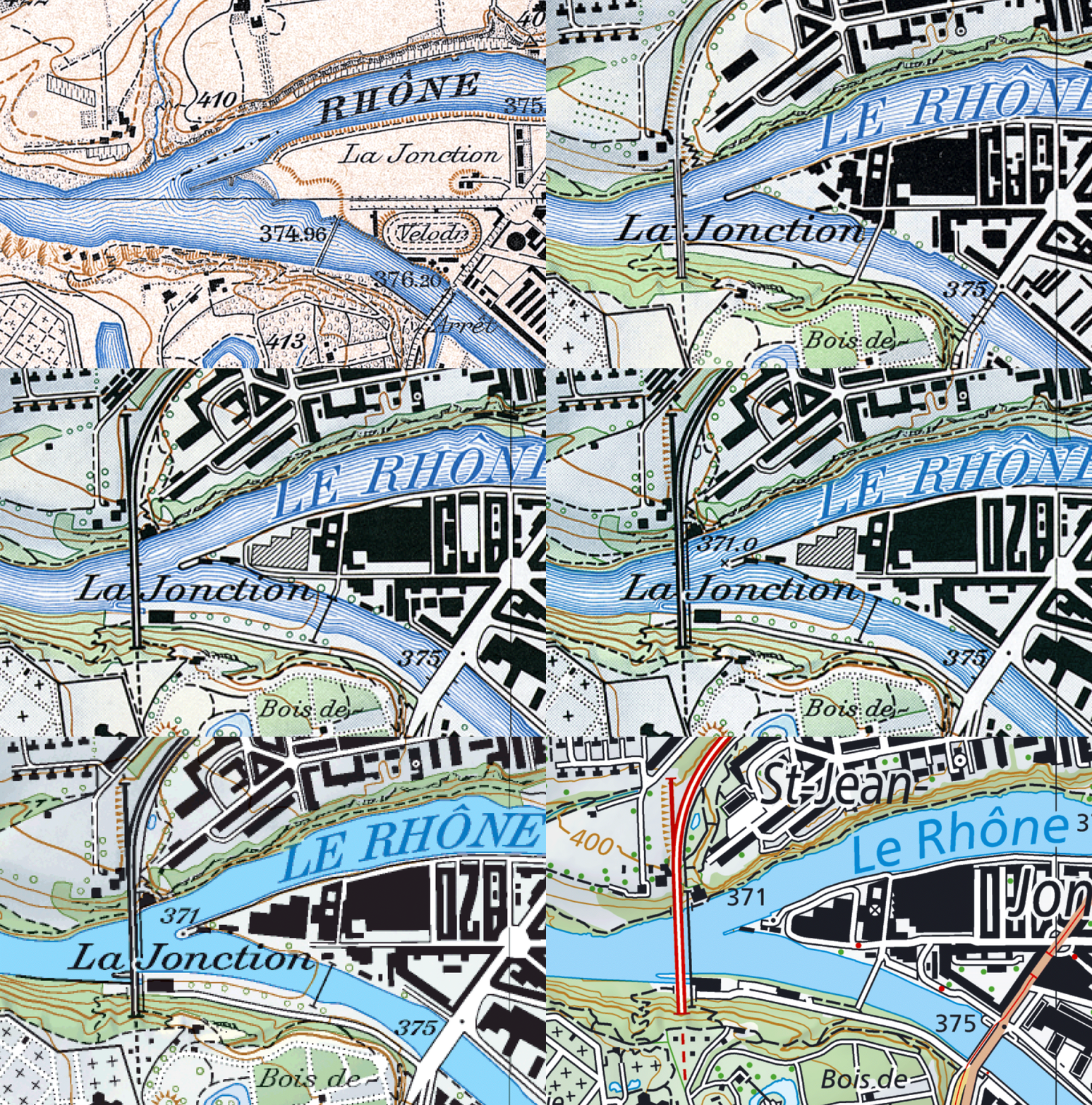
Mapping can help us make sense of the world around us, but at what cost? We take 3D space and collapse it into 2D through translation and distill only the relevant information for the viewer so that we can orient ourselves on the map, but also in the actual 3D space. Of course challenges arise from this dimensional reduction, and as Alan Henrikson aptly noted, “All maps lie flat; all maps lie”.56 One reason is that we are representing the world in a 2-dimensional space and, depending on the objective of the map, the cartographer chooses which aspect—shape, area, distance or direction (acronym: “sadd”)—to focus on.57 If one incorporates three fundamental components in a map, it’s inevitable, because of the complex nature of the world, that a fourth will be lost.58
Beyond the technical aspect and the challenges they pose, there are also biases from the cartographer. Ruben Pater states in The Politics of Design:
The notion that maps provide an objective or scientific depiction of the world is a common myth. The graphic nature of maps simplifies reality, giving makers and users a sense of power without social and ecological responsibilities.59
To add to Pater, the issue is not only a sense of power, but also, according to the critical framework developed by Peter A. Hall and Patricio Davila in Critical Visualizations: Rethinking the representation of data, it’s how “data assemblages enhance and maintain the exercise of power”.60 A classic example is the Mercator map projection, which emphasizes the Northern Hemisphere by excluding the poles and visually lowering the equator.61 This distorts our perception of the world by exaggerating the scale of landmasses in the upper hemisphere. The effect isn’t only due to size distortion, but also to our tendency to interpret elements placed at the top of an image as more important within a hierarchical structure. In doing so, the projection also reinforces historical power structures rooted in European colonialism.
The last issue I’ll address is the idea that the cartographer renders what is out of sight. Henrikson observed:
Unlike a photograph or a painting, a map represents its subject schematically. Because the areas it shows are too large to be seen in their entirety, and may include regions that have never been explored, some principle of extrapolation—from the known to the unknown—is needed.62
This means that when a cartographer creates a map, we might assume they have personally explored every area they depict. In practice, this is impossible—not only because of the sheer scale of the territory, but also because some regions may be inaccessible. As a result, the cartographer must rely on what is already known through exploration and then extend their knowledge, using the logic and conventions of the mapping system, to imagine how the unknown areas should appear.
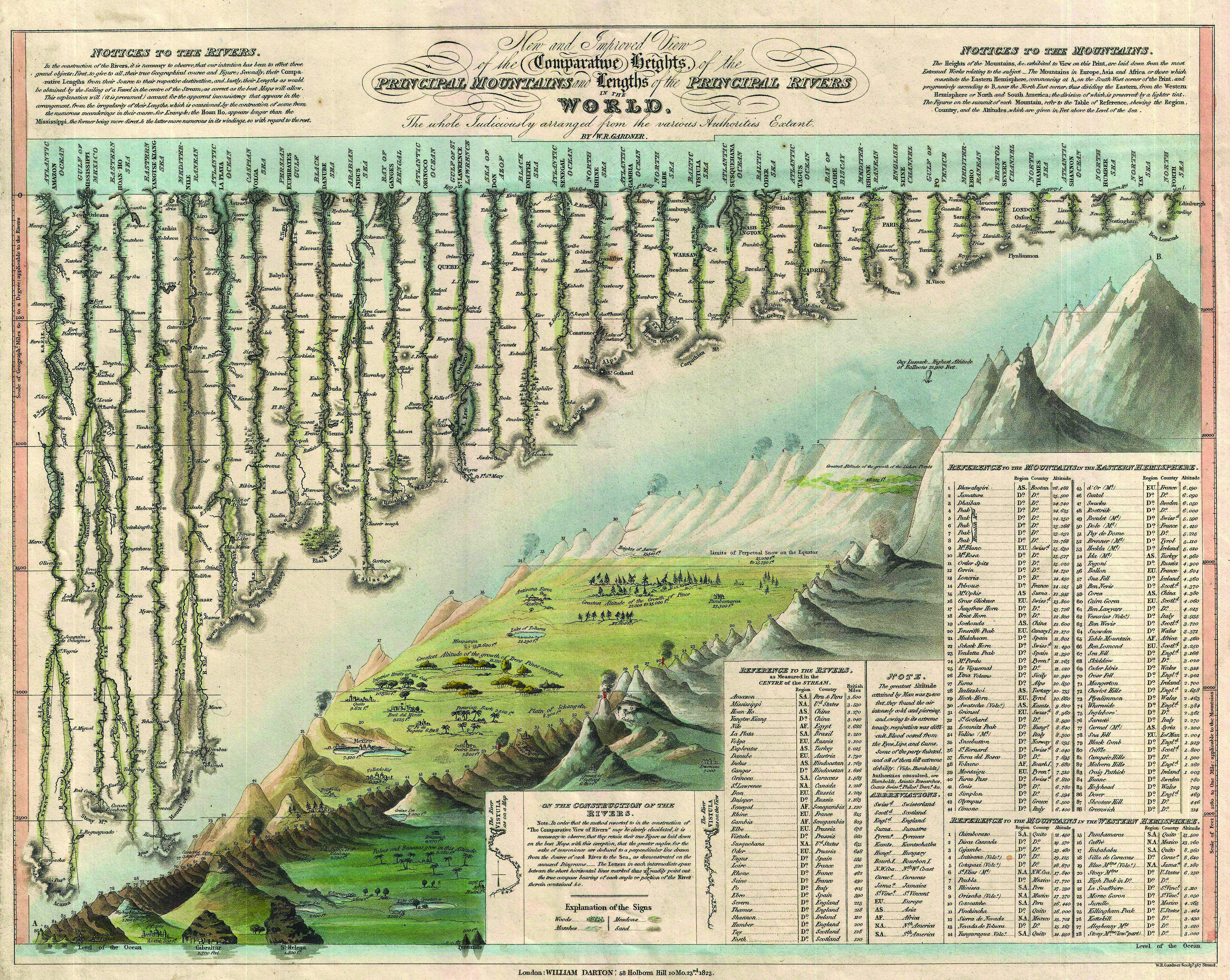
Thus, maps can be problematic because they incorporate technical limitations, the cartographer’s biases, and the tendency to depict unknown areas as if they were fully known. In addition, they attempt to freeze landscapes that are constantly changing. Geography illustrates this instability through the coastline paradox: the edges of landmasses can never be precisely measured because coastlines, rivers, and other bodies of water continuously shift over time.63 Yet this did not prevent Darton and Gardner from producing their Comparative Chart of World Mountains and Rivers[fig
When it comes to maps, size inevitably plays a role because of the translation of scale, but what other qualities should we attend to, and how might they shape our aesthetic experience of maps and in extension, nature? In Envisioning Information, Edward Tufte introduces the notion of “flatland” to describe how the vibrancy and complexity of the living world become compressed into two-dimensional diagrams:
All communication between the readers of an image and the makers of an image must now take place on a two-dimensional surface. Escaping this flatland is the essential task of envisioning information—for all the interesting worlds (physical, biological, imaginary, human) that we seek to understand are inevitably and happily multivariate in nature. Not flatlands.64
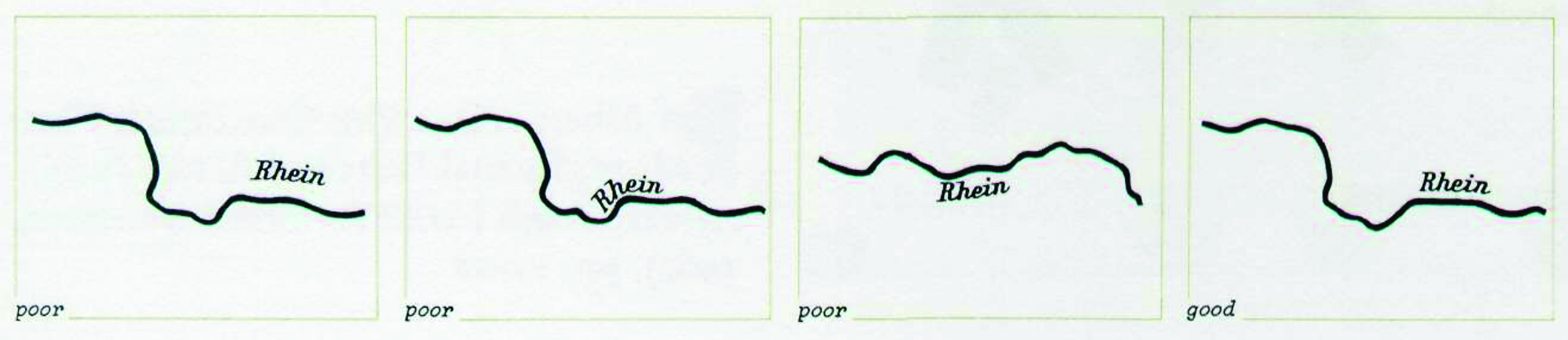
Incidentally, Tufte’s interventions are relatively modest, grounded in a commitment to representing
information as accurately and legibly as possible by offering practical strategies. For example, positioning labels[fig
Tufte considers the Tiber River to be a tranquil area, but the use of black linework against dark surroundings—undercuts this sense of calm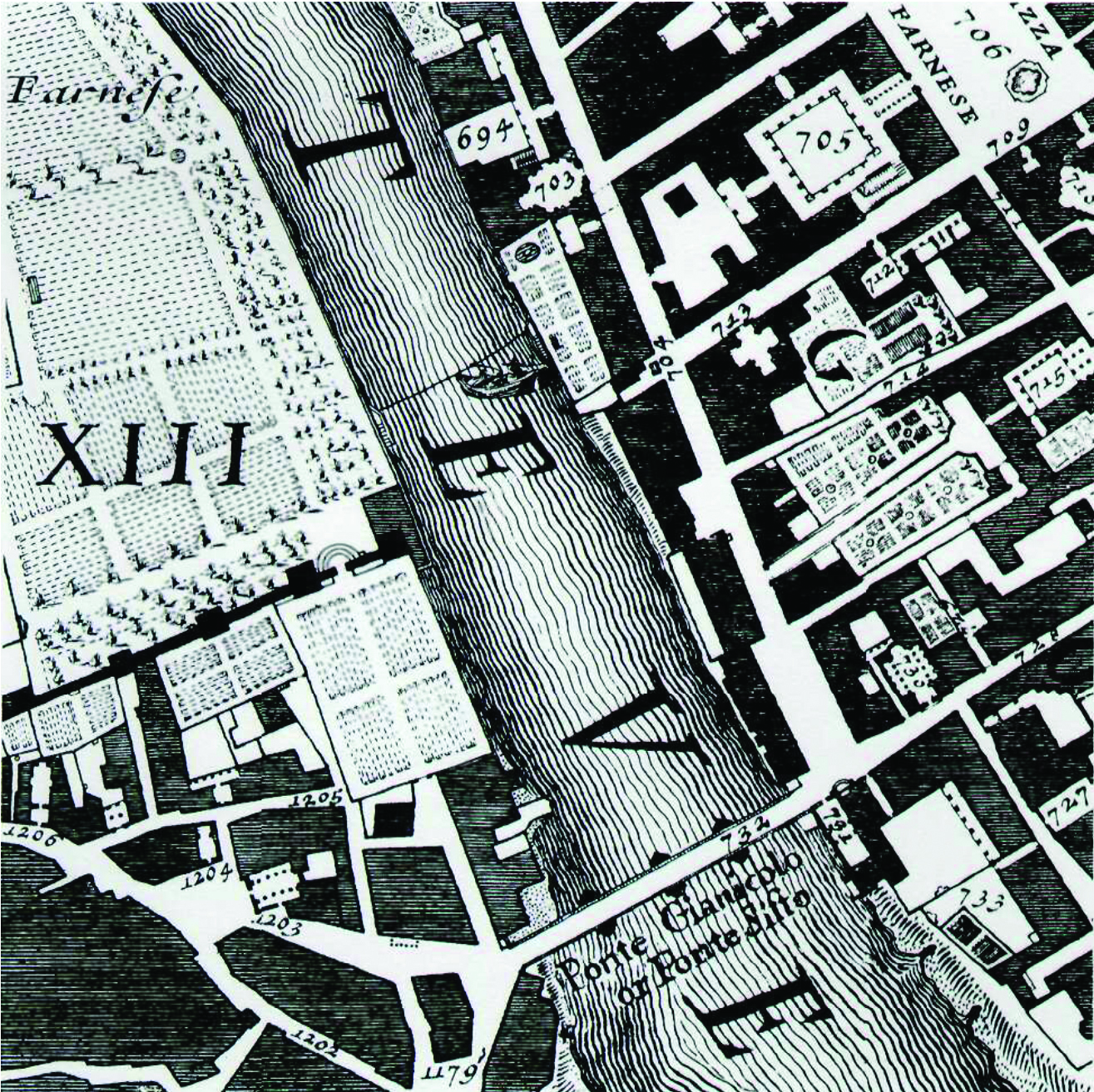 Map of Rome by Giambattista Nolli 1748. Still, it may be a stretch to expect a map like this, even with adjusted shading
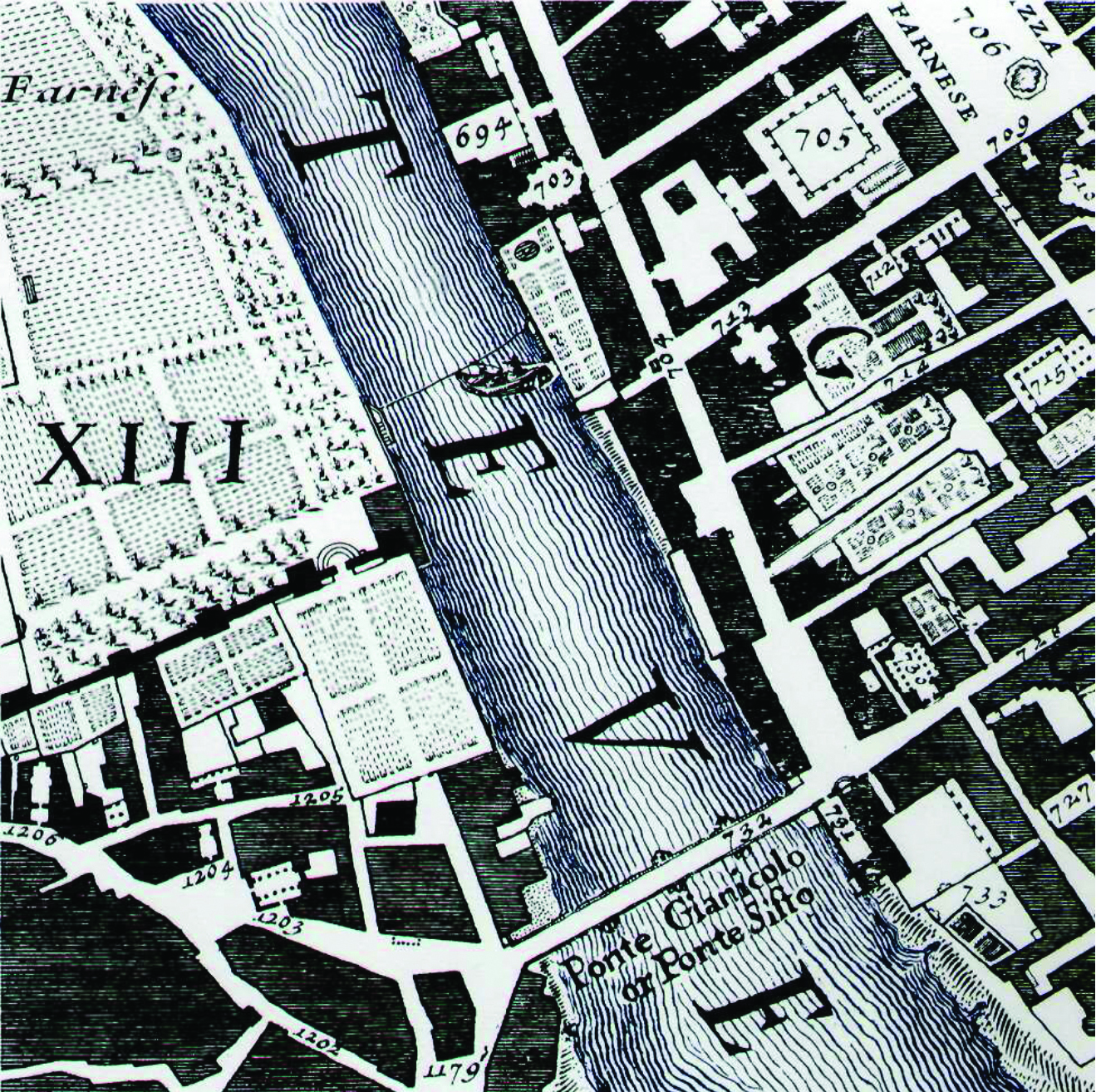 Tufte Redesign, to convey tranquility when its primary purpose is to represent the topography of Rome rather than evoke an atmosphere. Moreover, the dense shading of the river lines creates a subtle three-dimensional texture, more reminiscent of tree-bark illustration than of a serene waterscape.
While Tufte’s interventions are modest, the concept of “flatland” and trying to escape it, is worth considering further. When Harold Fisk, a geologist and cartographer, was working for the US Army Corps of Engineers, this is what he had in mind: to explore the ever shifting nature of the lower Mississippi River through time and space.66 To do this, he separated the river’s movements into different time periods, each represented by a distinct colour[fig
Although the Mississippi River appears to have shifted course on its own, many of its changes were driven by European settlers, who reshaped the landscape by digging new channels, clearing logjams, and installing floodgate systems.68 These interventions point to a broader issue of land control and our separation from nature, especially when considering the context in which they were produced—namely, a government report on “the nature and origin of the Alluvial Valley of the Lower Mississippi River.”69 As Vanessa de Oliveira Andreotti notes, “The first thing that separability does is that it turns the land, in its broader sense, into property.”70 Her observation demonstrates how from a colonial perspective, nature has been treated as something to be owned, managed, and controlled.
In Imagine, authors François et al. quote Alfred Korzyski, “the map is not the territory” and proceed to pose a series of questions:
What landscapes await beyond our vision? What relationships remain uncharted? What ways of knowing lie just beyond our grasp?71
Psychogeography
To address these questions, we might turn to psychogeographic maps as a way to extend our relationship to the environment. As Merlin Coverley notes, “psychogeography, as the word suggests, describes the point at which psychology and geography collide, a means of calibrating the behavioural impact of place.”72 In essence, it considers how environments affect our mood and how we engage in a space. The concept has roots with the Situationist movement in France, where wandering and drifting without a destination becomes a method for re-orienting oneself within the urban landscape and cultivating personal connections to place.73
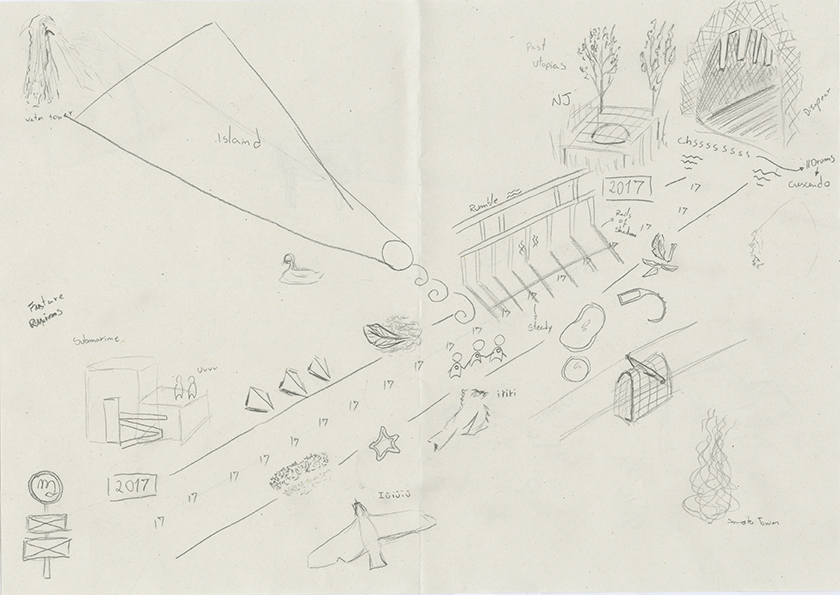
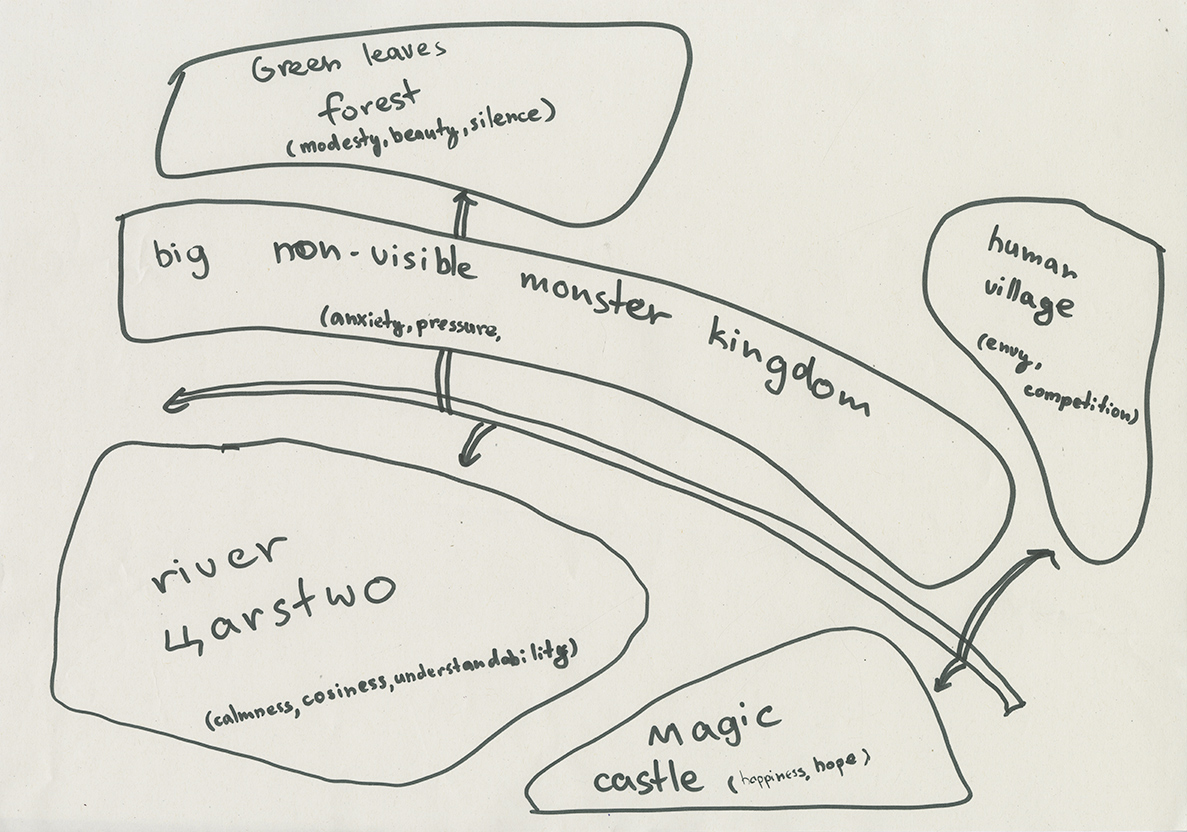
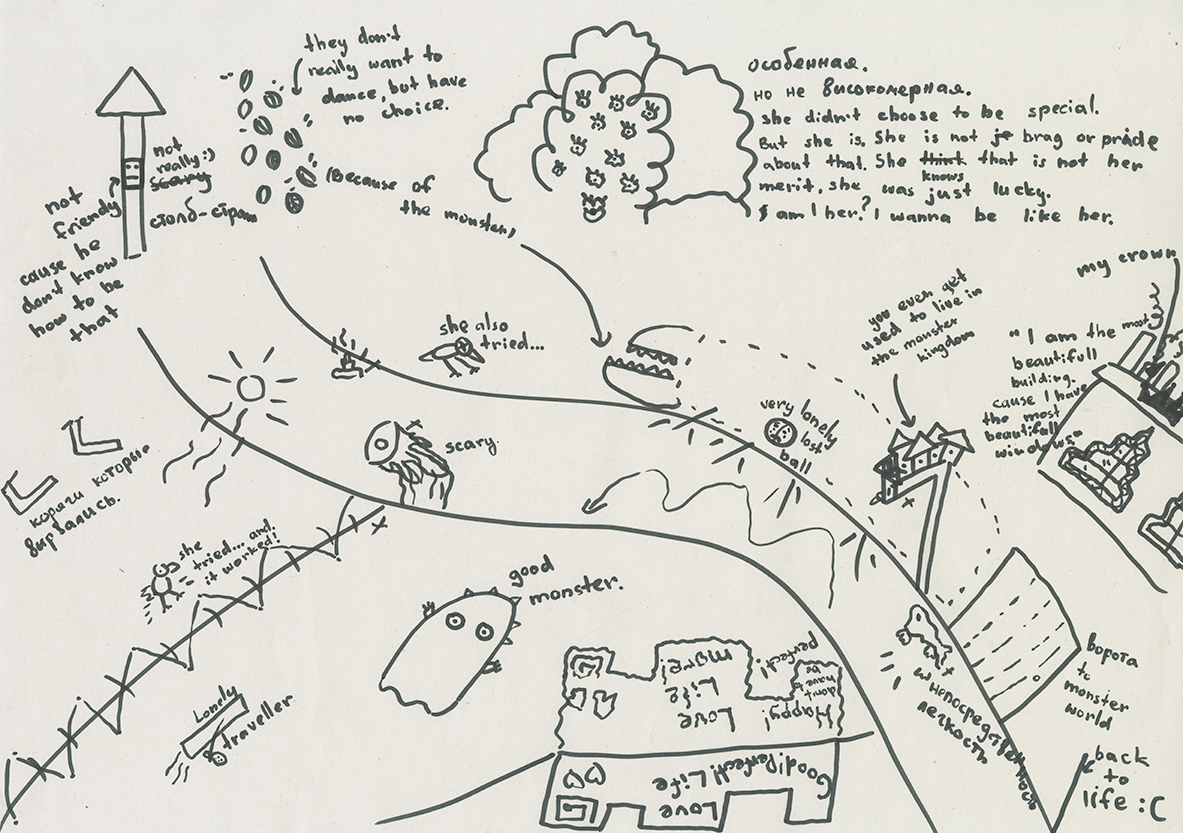
This approach inspired “Exercice #4: Arpentages” in Exercise d’Observation by Nicolas Nova, in which the readers are encouraged to observe an environment through drifting and attentive noticing. Nova suggests focusing on objects, people, smells or sounds and then creating a map based on those observations.74 A similar method informed an exercise given by Sabrina Calvo in our Media Design program during a virtual-reality workshop. Calvo’s goal was to have us deepen our awareness of the environment so that we could design virtual spaces with greater sensitivity.
We carried out the exercise by walking back and forth along the Viaduc de la Jonction twice without any technology, taking only mental notes. Moving slowly, we tried to remain fully attentive to the surroundings. Afterwards, we went down toward the Rhône, near the cliffside, where a small rocky beach offered a place for focused listening. Calvo guided us to close our eyes and attend to the layers of sound—from the waves on the river to the incessant metallic pounding of machinery across from us. Afterwards, we went back to the classroom to produce our maps.
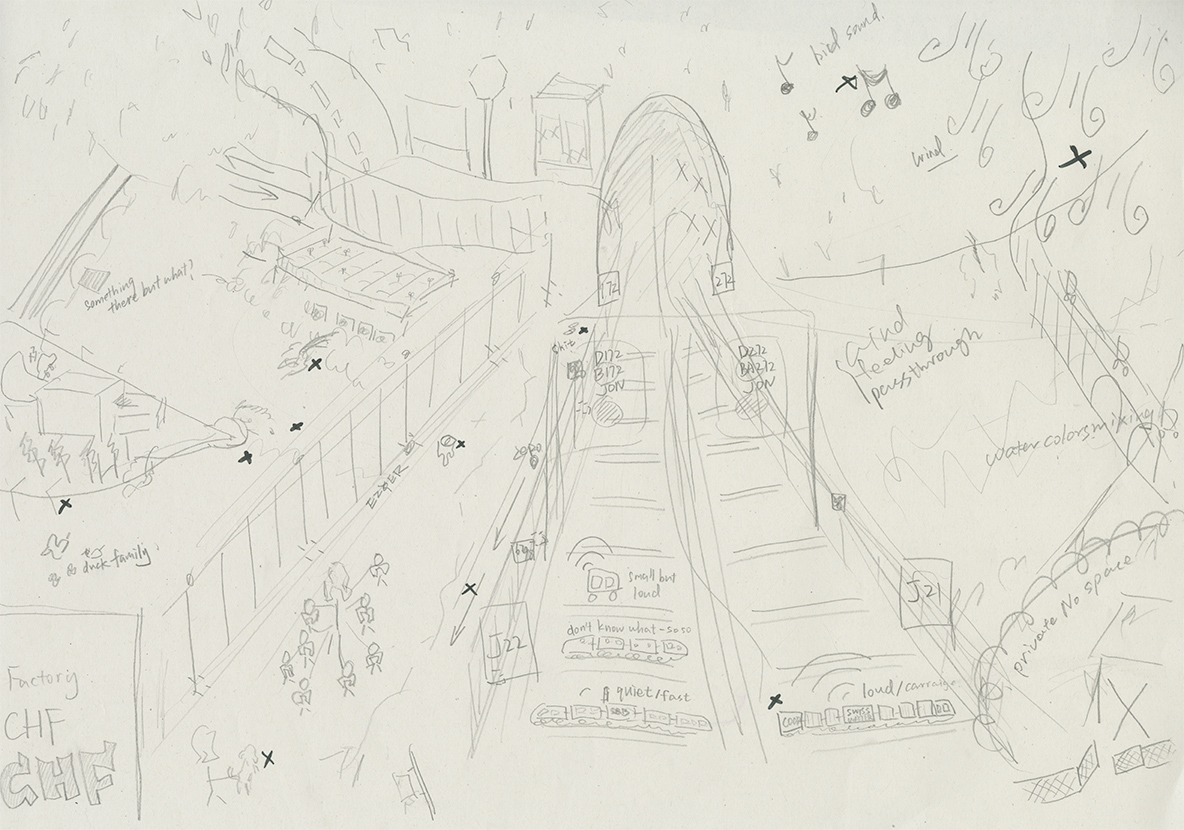
What I found remarkable in the maps produced by my peers was the diversity of perspectives. Not everyone had grown up in Geneva or had known the location. For some, it was their first encounter; for others, like Antonin Ricou[fig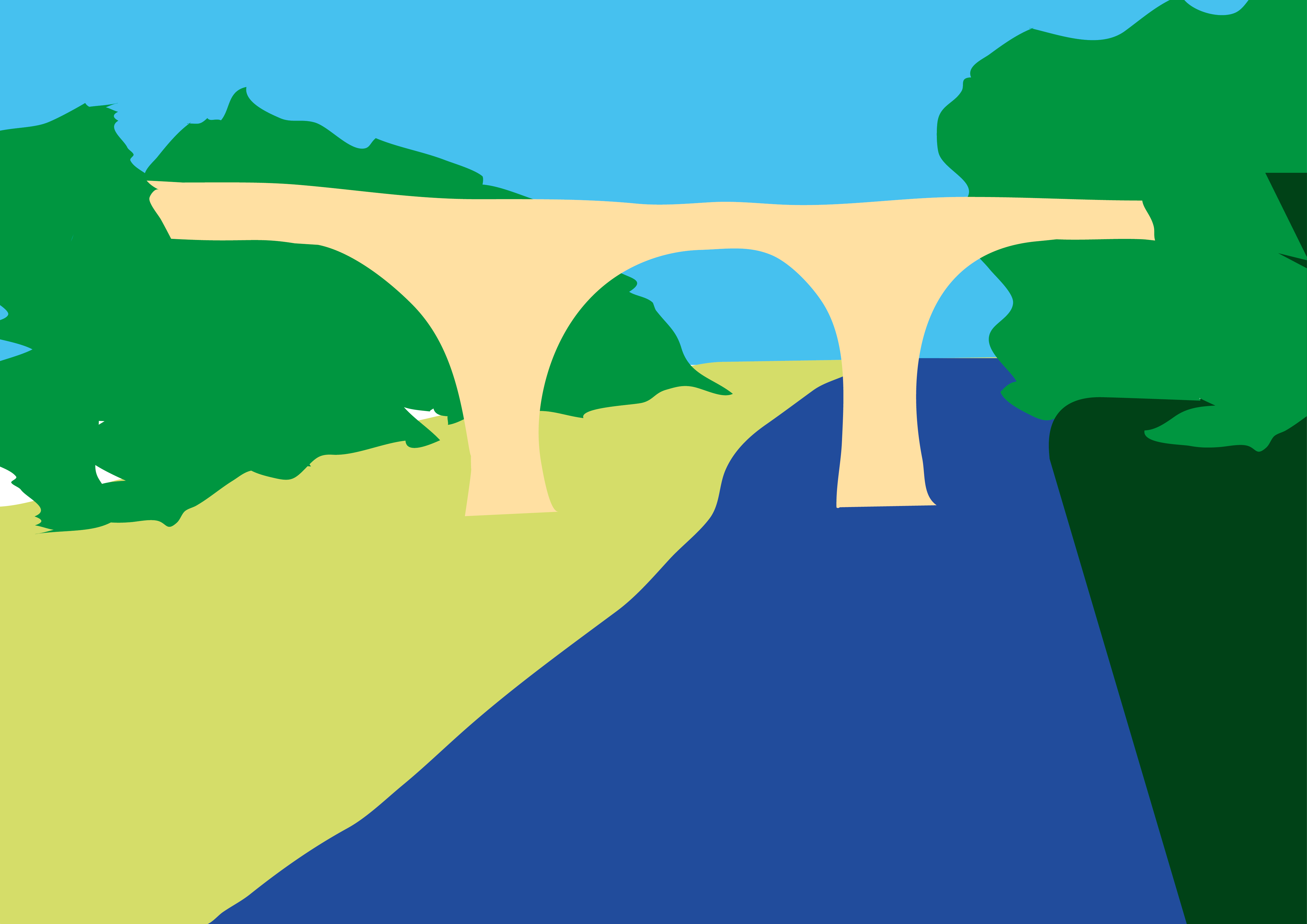 Illustration of Le Viaduc de la Jonction by Antonin Ricou and I, it was familiar terrain. Yet even as a regular visitor, I discovered new details—such as noticing cargo train instead of the passenger train I normally see. It was also nice to share a collective moment of seeing a swan swim downstream and then fly back upstream.
Since each person notices different things and brings a unique aesthetic sensibility, the resulting maps inevitably diverge.[fig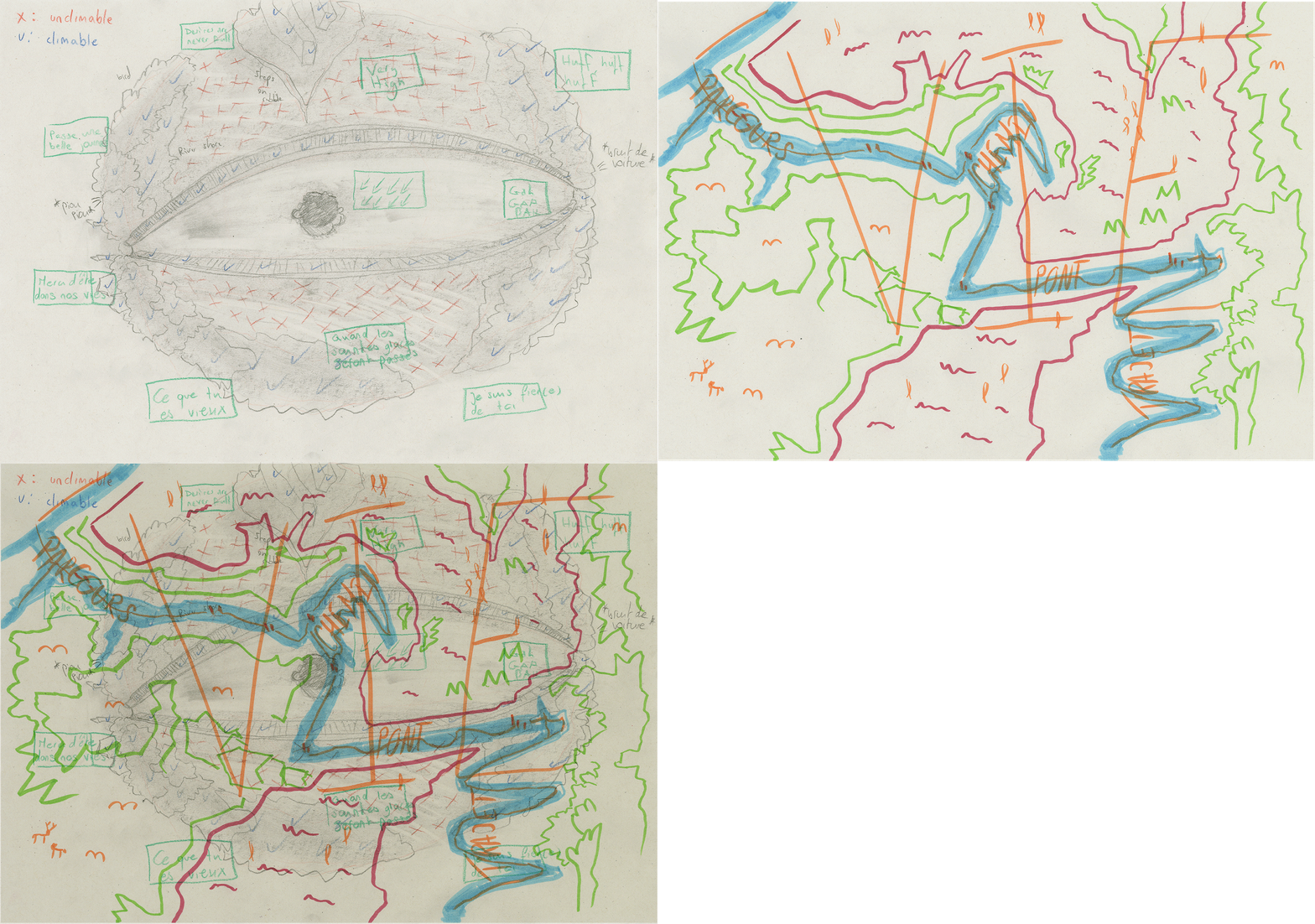 Overlaying Maps by Chakir Ali. As Thomas Heyd, critiquing Carlson’s Natural Environmental Model, observes:
[S]cientific knowledge may be neutral, or even harmful, to our aesthetic appreciation of nature, because it directs our attention to the theoretical level and the general case, diverting us from the personal level and particular case that we actually need to engage.75
If we had been instructed to focus on scientific or cartographic accuracy in order to produce a legible map, we might have missed the immersive, attentive experience the exercise was designed to foster. Interestingly, although Carlson is known for his cognitivist view, he also emphasizes the importance of bringing nature into the foreground through full sensory engagement. His model does not deny our sensual relationship to nature; rather, it argues that perceptual richness and scientific understanding can reinforce one another when directed appropriately. In this spirit, allowing each participant to approach the task in their own way fostered a more personal connection to the environment—and therefore a deeper appreciation—since we tend to remember what is experienced directly and personally more vividly than what is abstract or general.
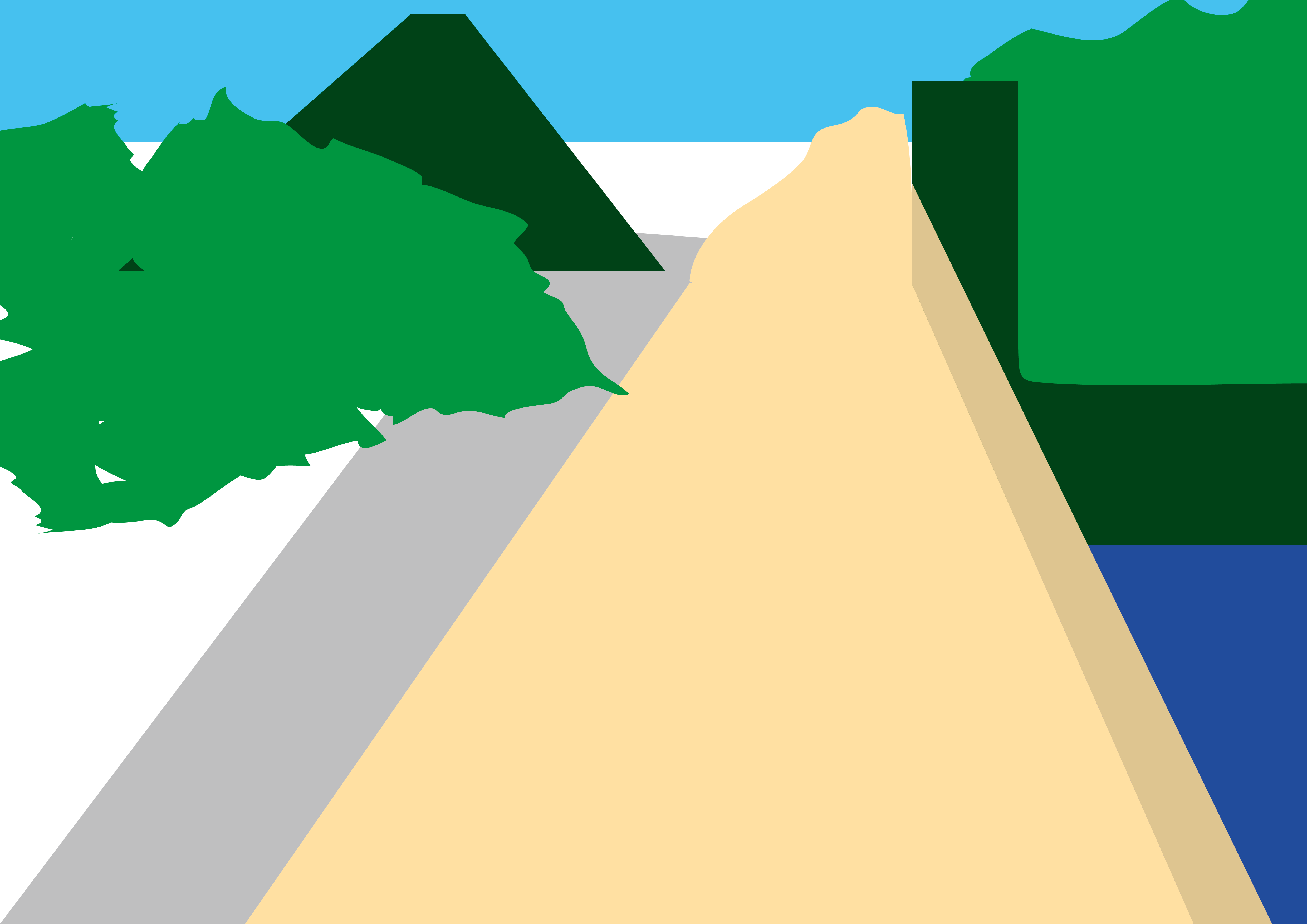
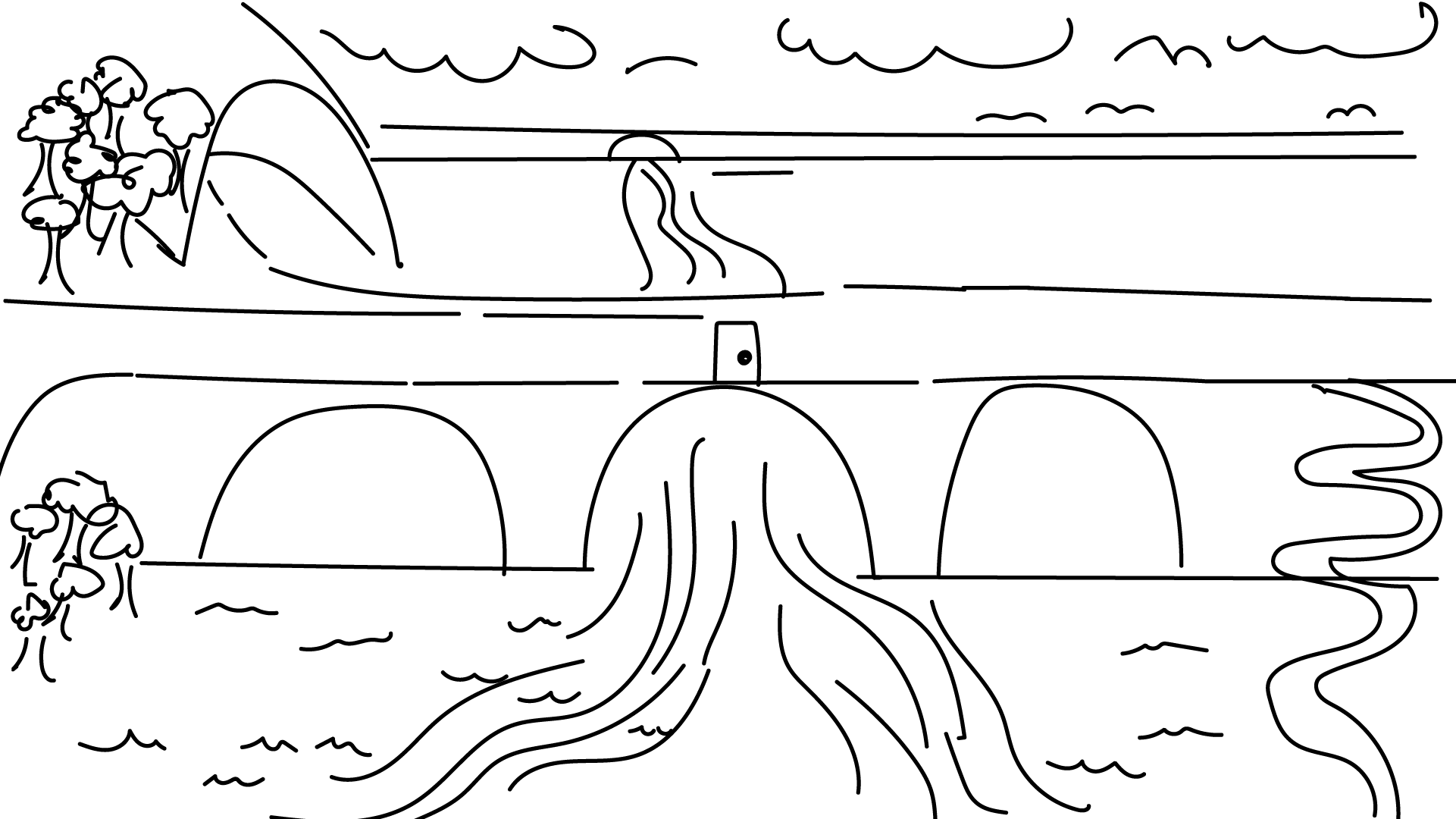
Similar from Ricou’s approach, I created a series of simple illustrations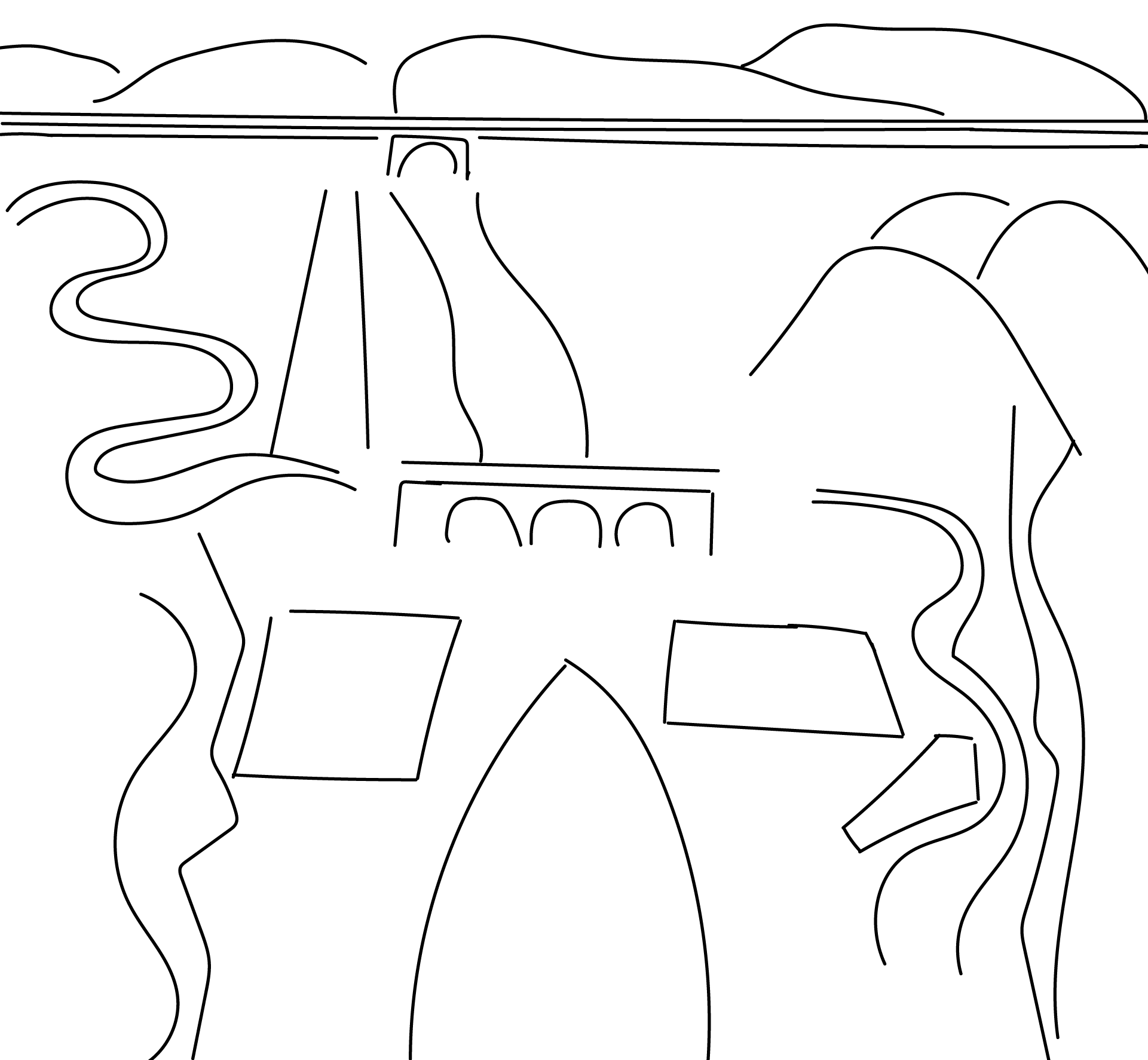 Line drawing of the confluence and the surrounding area by Peter Ha
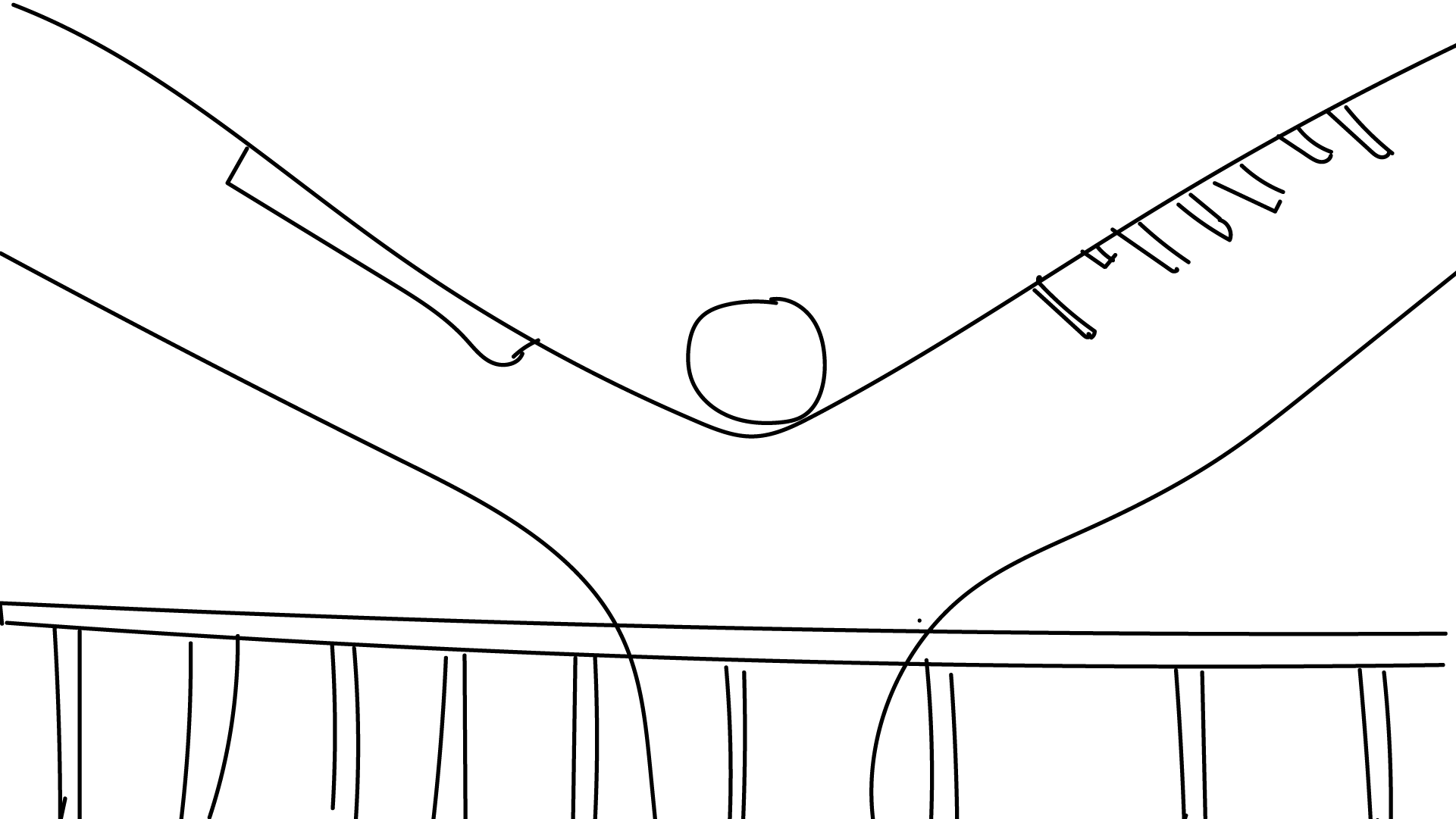 Line drawing of the confluence by Peter Ha to reconstruct the location from multiple viewpoints and to draw on the cartographic language that reduces a place to lines. My aim was to identify and depict the landmarks that remained vivid in my memory—such as the viaduct, the rivers, the distant mountains, and the surrounding buildings.
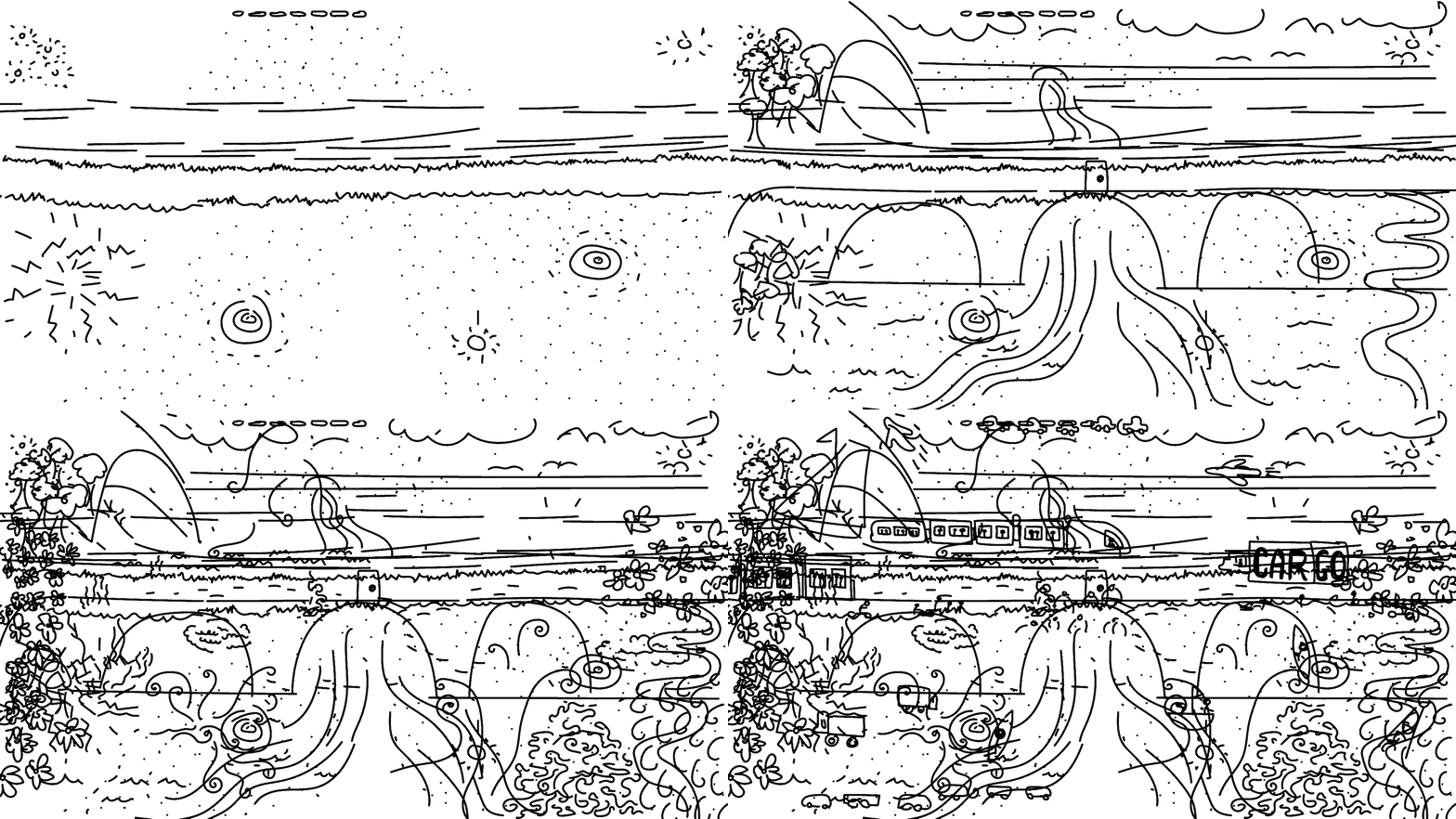
From there, I created several maps based on different categories—landmarks[fig
Of course, going through the exercise and producing a visual output of my own was satisfying, but it also sharpened my observation skills and deepened my recollection of the location. Now, when I pass by each time, I find myself looking for new details rather than becoming hyper-focused on the confluence alone.
To extend the sound map and move beyond the purely visual, I also recorded the soundscapes of La Jonction at different times of day and uploaded the field recordings to Aporee, a platform that hosts environmental sound recordings from around the world. According to Bernie Krause, a pioneer of soundscape ecology, these sounds can be grouped into three categories: biophony, the sounds of living organisms such as birds or dogs; anthropophony, sounds produced by humans; and geophony, non-biological natural sounds like wind or waves hitting the bank.76 When I listened back to my recording Pointe de la Jonction 21.09.2025, I noticed a persistent high-pitched sound, which the spectrogram also made visible. Blips appeared at regular intervals around the 6000 Hz frequency, drawing attention to patterns in the soundscape that I had not immediately perceived on site.

Going through the process of putting on headphones, using a high-quality recorder, and editing the sound file in Audacity sharpened my attunement to sounds in the environment that I had not noticed before. When I later revisited the location, I was able to listen for this particular sound more intentionally, and I believe it may be a bird.
When I was uploading my recordings—particularly those made on the viaduct—I found myself instinctively labelling them as the “entrance” and “exit” of the bridge. This reflected my own routine: the south side marks the beginning of my day and feels like an entrance, while the north side feels like the exit. Yet, a bridge is fundamentally a passage, where entrance and exit are interchangeable, depending on one’s direction of travel. This personal bias shaped how I perceive the area, and it’s also evident in my line-drawing map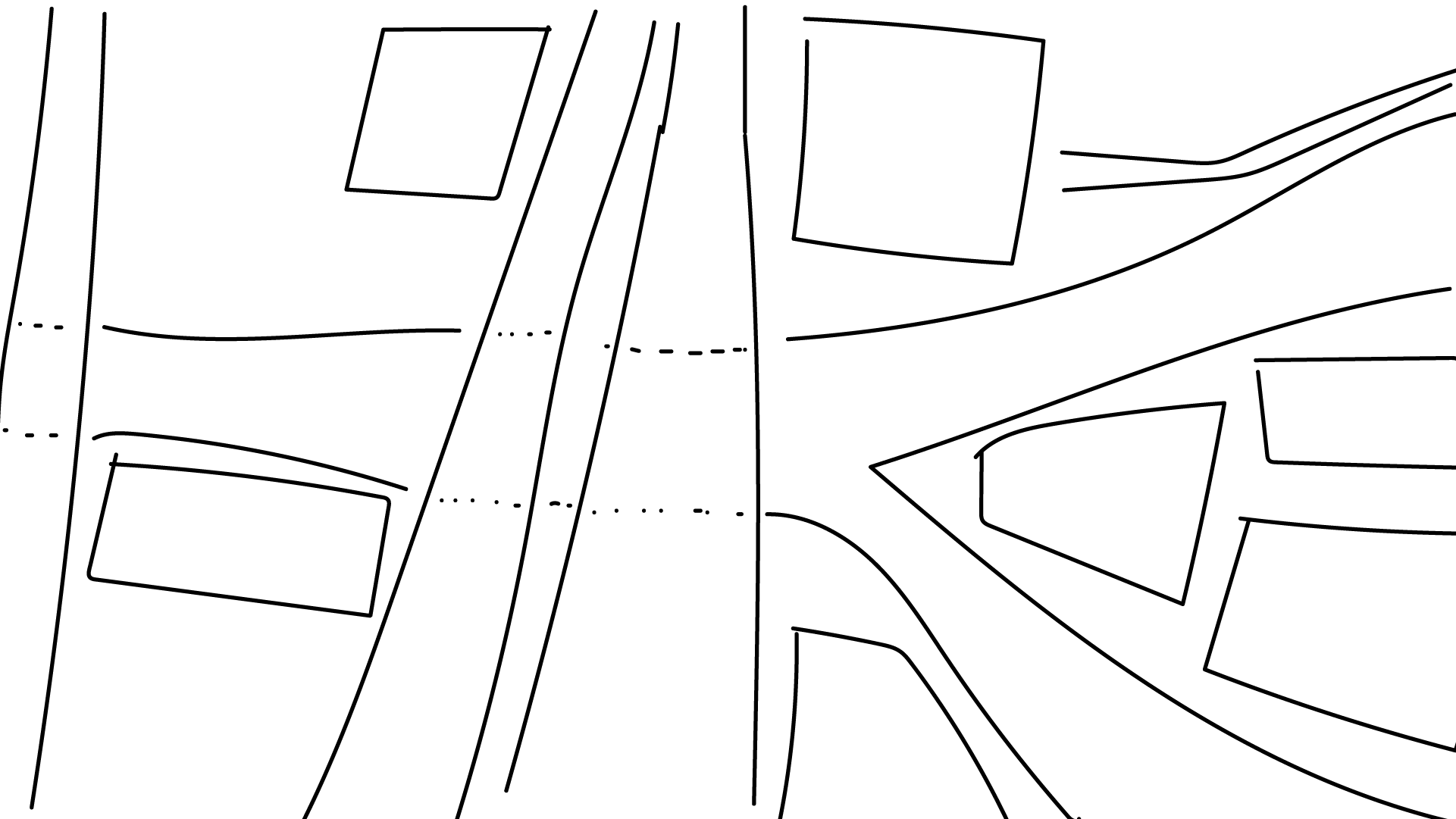 Aerial line drawing of the viaduct by Peter Ha, where I rendered the south side larger because it is where my daily journey begins.
After discovering Aporee, I wondered whether anyone else had created recordings around this area. This led me to an interview with Flavien Gillié, a Belgium-based sound artist and active Aporee contributor, who had also recorded the Arve. For Gillié, recording is not driven by a specific intention; he does it primarily for his own personal archive. During his visit to Geneva, making a recording was simply part of his habitual routine. He emphasized that he is more interested in the city than in “nature” in a traditional sense:
I wouldn’t say I’m a recorder of nature things. I’m not a naturalist. I live a lot in the cities and I make trips to cities mostly and I always like to record the interactions between people and everything else living somehow. So I try to find the liminal places, I mean going to the bank of rivers, you’re in the city but somehow you have to be a bit outside.77
Gillié raises an important point about rivers in urban environments—and about La Jonction in particular: rivers provide an escape from the city while remaining firmly embedded within it. One can never fully detach from the built environment, and this becomes obvious in the recordings themselves, where airplanes and trains crossing the viaduct are inseparable from the soundscape. The built environment has a measurable impact on the city’s ecology, and Gillié described how older recordings he made in Lyon once captured large flocks of starlings—sounds that residents say they no longer hear today. This growing quietness is echoed by acoustic ecologist Dr. Eddie Game, who notes that although we assume the world is becoming louder due to anthropogenic noise, it is in fact getting quieter because fewer species are vocalizing.78
In addition, there is the broader issue of nature receding under anthropogenic noise. In a YouTube video by Swiss musician, DJ, and artist Jonas Fasching, I noticed that he repeatedly had to pause his field recordings because planes kept passing overhead.79 When I later visited him in his studio in Bern, he mentioned a similar challenge underwater: even beneath the surface, the sounds of boats intrude. I was curious to hear how he navigates these disturbances from a more naturalist perspective, and how such conditions shape the way he approaches field recording:
I really enjoy all sounds. I also enjoy recording in the city, and I enjoy recording when there are people around, or some languages that I don’t understand, or just things that people do. So for me, it’s not always a distraction. But of course, when you want to record the pure nature sound, it can be really annoying. Especially in Switzerland, there’s almost no time where there’s no plane in the air. And you really start to realize it when you start to record. Because it’s super hard to find a moment where you have five minutes of nothing. It’s almost impossible in Switzerland. But I think as an artist using these sounds you just have to get creative with what you get and it’s fine in a way. But it really makes you very much aware of how much sounds there are by humans caused by humans. And also how humans change the sounds in the environment.80
So not only have we altered landscapes—and with them the ecologies in which many species once thrived—but we have also overlaid these environments with our own noise, adding further disturbance. If this is the case, the question becomes: how might we bring nature back into the foreground by giving back its voice?

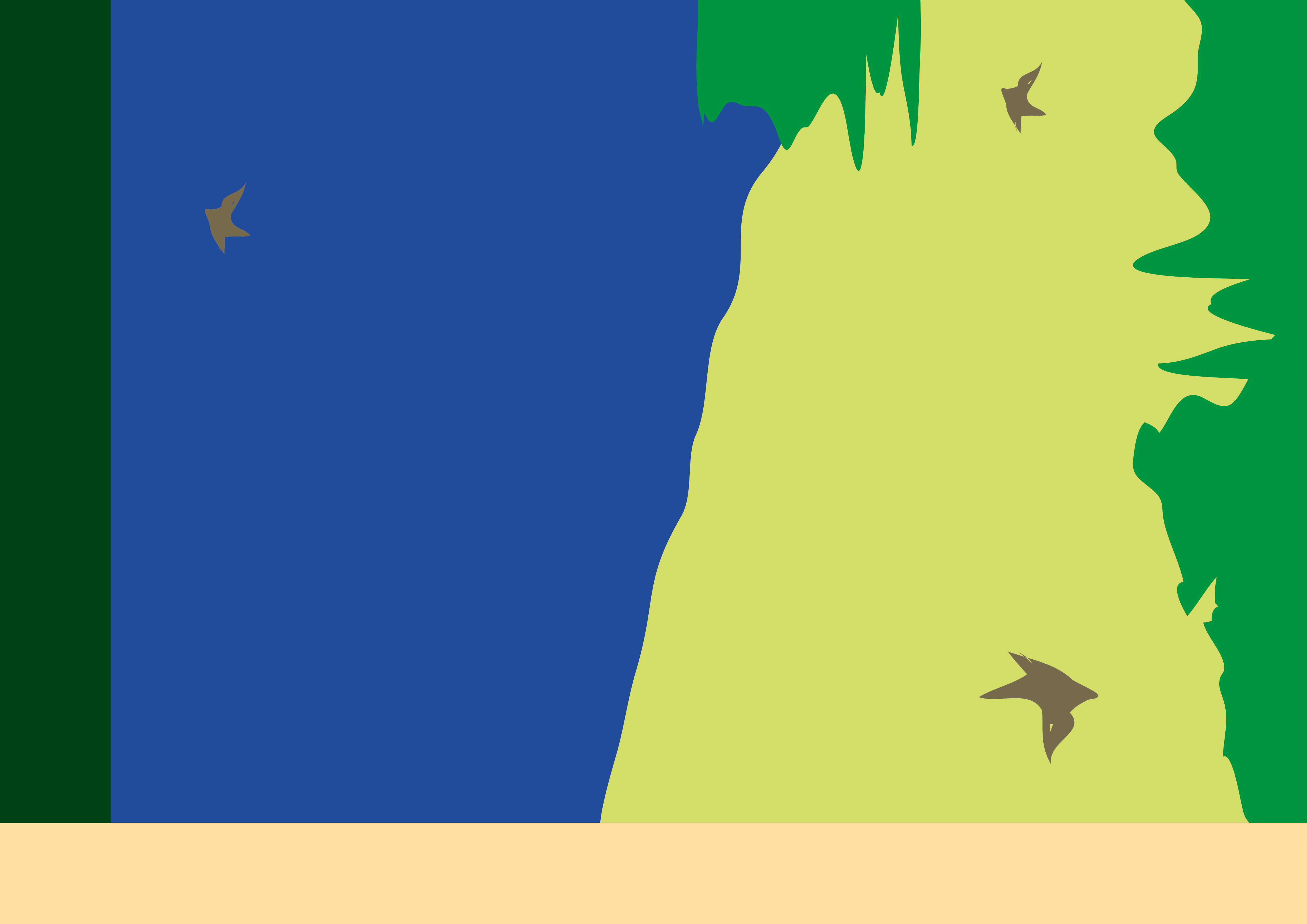
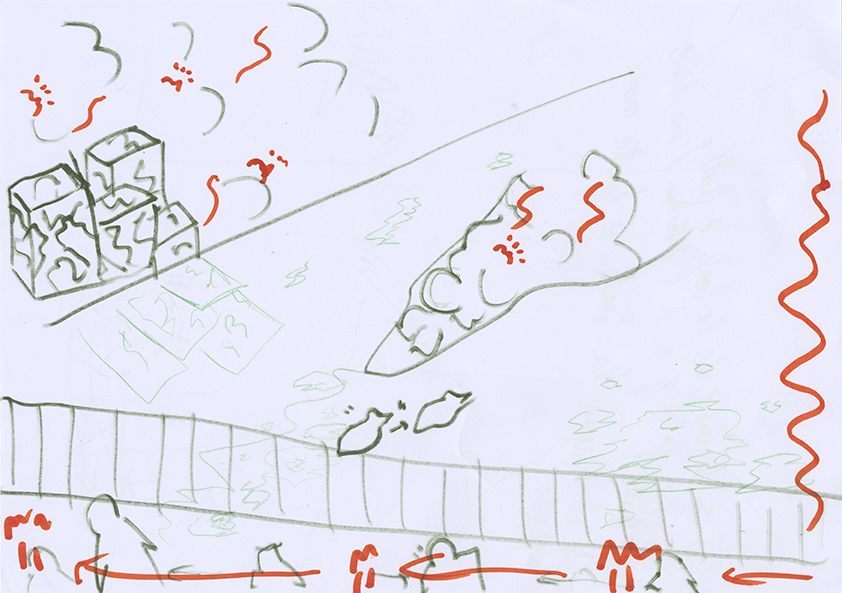
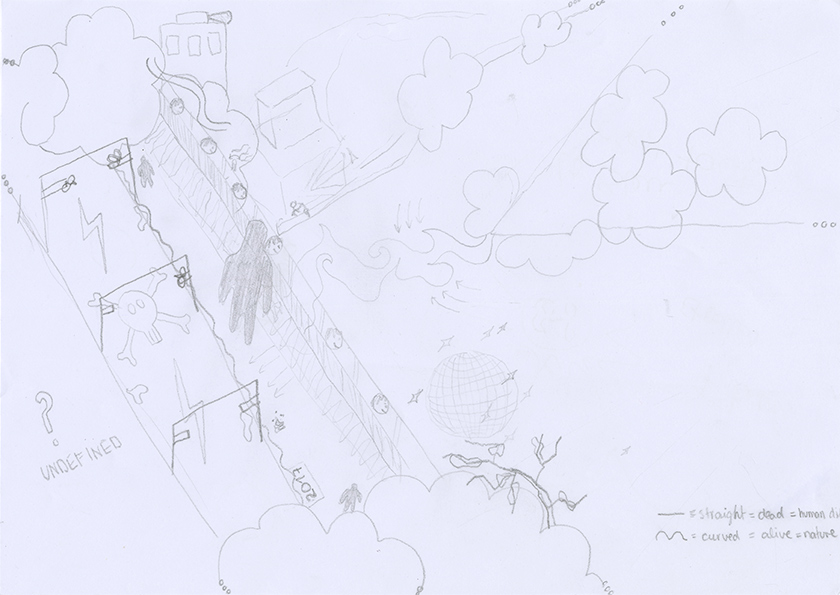
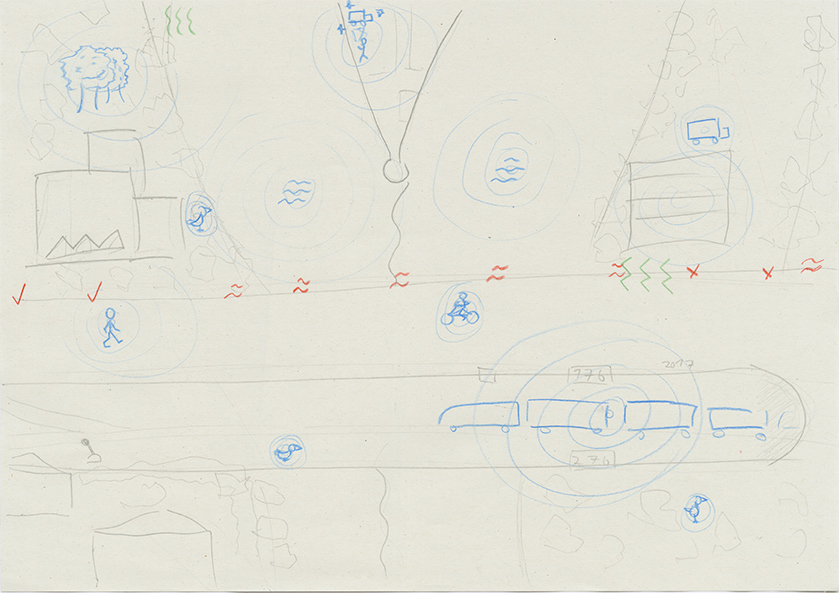
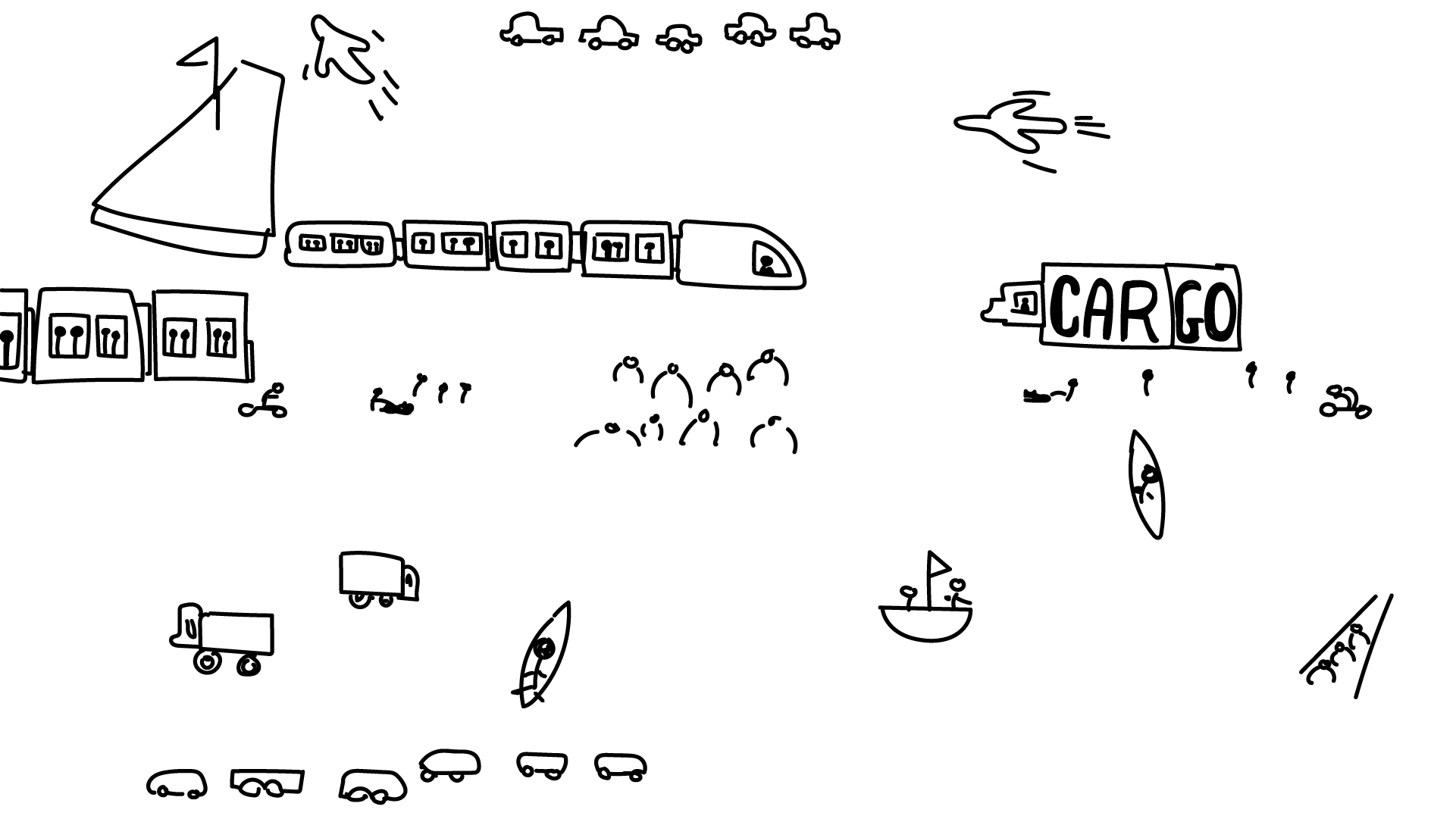
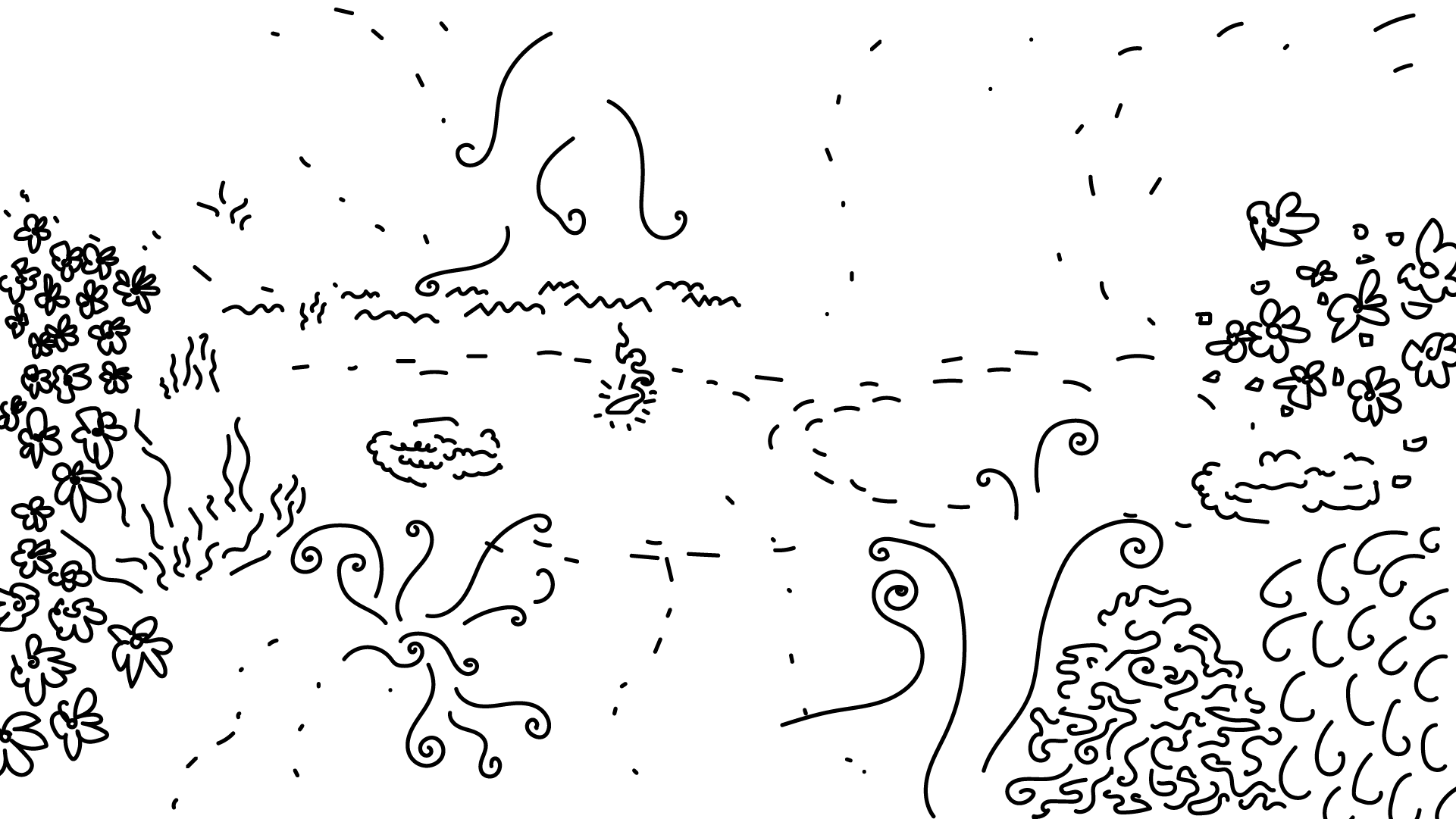
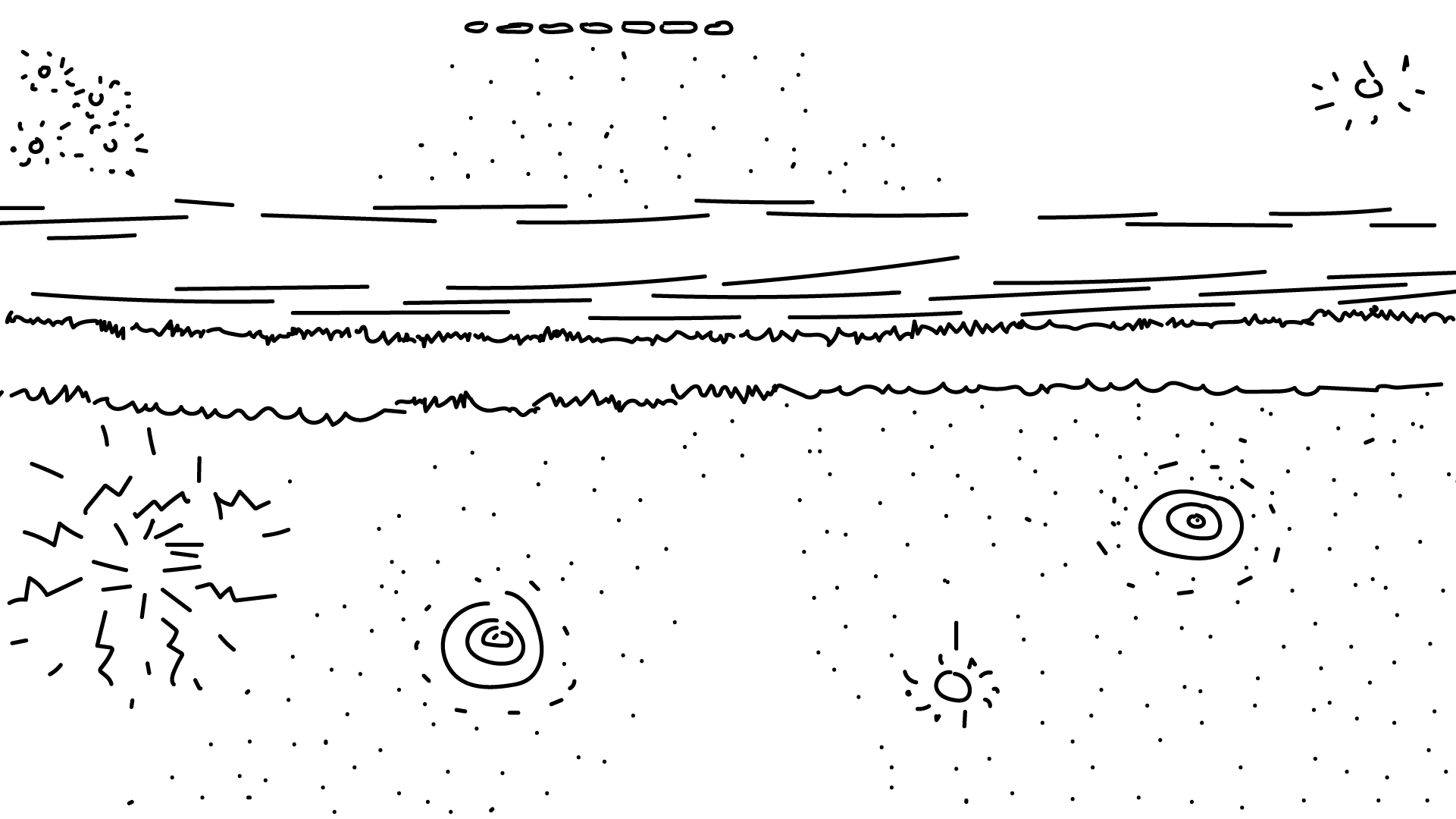
Giving Voice to Rivers
Bringing nature forward by letting its own agency come into view
Personhood
There is a growing movement in favour of granting rights to rivers around the world. One of the earliest successful cases invoking the Rights of Nature was the 2011 Vilcabamba River decision in Ecuador. Under Ecuador’s 2008 constitution—which recognizes the Rights of Nature—the court ruled that the river had the right to exist and to be protected.81 As a result, people were legally allowed to petition on the river’s behalf whenever its rights were violated.
In addition to constitutional Rights of Nature, some rivers have also been granted legal personhood, such as the Whanganui River in New Zealand and the Magpie River/Muteshekau Shipu in Canada.82 The distinction is that a river, as a legal person, is regarded as an entity that holds subjective rights—legal entitlements assigned to a specific rights-holder.83 But these rights should not be confused with subjective experience; they do not answer the question of “what it is like to be a river, ” a perspective that remains inaccessible to us. As Thomas Nagel argues in “What Is It Like to Be a Bat?”, we can never fully grasp the inner experience of another being; our understanding is always filtered through our own senses, assumptions, and point of view.84
As Anila Srivastava explains, “Legal personhood…connotes legal autonomy, that is, the ability to act, rather than be acted upon, within the legal system.”85 In this sense, legal personhood gives a river an active “legal voice, ” enabling it to advocate for its interests through appointed guardians. In many cases, these guardianship structures are jointly defined by Indigenous communities and government bodies.
A major force behind these movements is Indigenous communities whose ancestral and cultural relationships to the land shape their legal and political demands. In Is a River Alive?, Robert Macfarlane travels to my home country, Canada, to meet with the Innu people involved in the effort to grant legal rights to the Muteshekau Shipu. He cites the words of Lydia Mestokosho-Paradis:
It seems crazy that we give a corporation that’s ten years old rights, but we won’t give rights to a ten-thousand-year-old river. Water is life. Water is the medicinal plants. Water is the berries, the fish, and all the other animals that drink the water. If you don’t have water, everything else dies around it. The river is life—it’s like when you see a place, but the colours there are not bright. But when we see the river, when we’re near the water, the colour is…popping! You know—that’s how we feel. When we go to the river, I feel more alive. I see the people more brightly. The land is healthier.86
As Mestokosho-Paradis notes, we rarely question the legal status of corporations87—a point that Jens Kersten, a Public Law and Governance professor in Germany, also agrees that:
The recognition of nonhuman actors as legal persons with subjective rights is nothing peculiar. We do it all the time in the economic sphere. Over centuries, we have gotten accustomed to the idea that firms or trusts are legal persons with rights and obligations. Nobody questions this.88
While legal scholars and Indigenous communities work together to shape the future of environmental law elsewhere, what does this look like in places where there are no Indigenous communities acting as custodians of the land? In such a context, who is able to speak on behalf of the rivers? In the case of the Rhône, the advocacy came from id-eau, an association based in Lausanne, Switzerland. The group was created to bring people together and to encourage public participation in protecting water as an essential and vital resource.89
In 2021, id-eau launched an experiment called the Assemblée Populaire du Rhône, in which 25 residents from across the Rhône watershed in Switzerland and France met over two years. The process consisted of six sessions, each lasting three days. The goal was to identify key issues affecting the river and to imagine forms of collective governance. Among the main takeaways were the importance of long-term thinking, prioritizing biodiversity, and recognizing the river’s inherent value beyond its economic utility to industry.90 In addition to this initiative, id-eau also launched a petition to grant legal personhood to the Rhône. However, the effort was unsuccessful, and the association is no longer pursuing this endeavour.91
Prosopopoeia
Advocacy is one way of giving voice to rivers, but artistic and design practices offer another—through the device of prosopopoeia. While personification merely attributes human form or qualities to nonhuman entities, prosopopoeia goes further: it grants them the capacity to speak or act within a narrative. In this sense, it parallels legal personhood, which similarly enables a nonhuman entity to take action and be represented, rather than simply being described or adorned with human traits. Pierre Fontanier offers a useful distinction between the two concepts. He writes:
Prosopopeia, that must not be confused with personification, apostrophe or dialogism, which however do almost always occur with it, consists in staging, as it were, absent, dead, supernatural or even inanimate beings. These are made to act, speak, answer as is our wont. At the very least these beings can be made into confidants, witnesses, accusers, avengers, judges, etc.92
What I find compelling in Fontanier’s definition is that prosopopoeia is fundamentally about activity—about enabling an entity to act, speak, or intervene. This aligns with Carlson’s call to bring nature back to the foreground, as it shifts our stance from passive appreciation to a more active, participatory form of engagement. Crucially, prosopopoeia does not depend on projecting human qualities onto the nonhuman; rather, it grants a “voice” to the voiceless, allowing nonhuman beings to appear as agents in their own right.
If prosopopoeia grants the voiceless a mode of appearing, then certain sound artists enact this almost literally. I spoke with Ludwig Berger—a French sound artist, researcher, and educator whose work explores the sonic qualities of species and landscapes—about his practice and one of his ongoing projects. His long-term project Crying Glacier began at ETH Zurich as an assignment with his students and has since developed into a decade-long engagement with the Morteratsch Glacier in the Swiss Alps, the very source of the Ova da Morteratsch river. Using hydrophones and geophones, he records the acoustic activity of this non-biological entity, capturing vibrations and resonances that would otherwise remain inaudible. For Berger, the project functions both as environmental advocacy and as an archive: a way of preserving the glacier’s voice in a moment when its future is uncertain.
While Berger’s recordings do not obviously contain human speech, we inevitably interpret them through a human perspective. Yet for Berger, this limitation does not stop him from forming a relationship with the glacier. He approaches the glacier not as a mere location, but almost as a person—an entity he returns to, listens to, and forms a connection with over time. When I asked him to describe the glacier’s personality, he responded:
Yeah, I think it has many different personalities in a way, as it has, like many different voices, that I can hear. So, I have a lot of respect from this personality. I mean, it’s obviously very large. It has a very large scale, and so it’s intimidating in some ways. And I mean, just the sheer scale of it is very intimidating, but also the sounds that you can hear. I mean, when I’m standing on it, and sometimes they’re like these super deep [sounds], you know, and then you realize you’re really standing on something that is moving, and you’re like this small [being], and you could just like fall down a crevice or whatever.
So, there’s this whole thing of like fear and respect that I have to towards this glacier person, if you will. But yeah, there are also like in these little air bubble sounds. They’re all so funny and quirky, and yeah, they make me laugh sometimes, you know. And there’s a tenderness even to these very delicate ice sounds. And it also has something lamenting. Yeah, so it’s really a mix of this. How do you say fearsome, like, fear inducing, and funny and sad, and many, many things at the same time.93
It is clear that, for Berger, the glacier is not merely a mass of slowly shifting ice but an animate presence in its own right. His project has since attracted public interest from journalists and even government bodies such as the Green Party of Switzerland. This response demonstrates the power of making the invisible perceptible: by conducting field recordings and presenting them through documentaries, installations and playlists, Berger enables the glacier to appear—to be heard—in ways that resonate beyond the scientific domain. Whether any of this will actually slow the retreat of the glaciers remains debatable, since climate change cannot be mitigated through awareness alone—although awareness is a step in the right direction. Instead, the project functions as an archive of what may soon be lost, a reminder that these vast, seemingly immovable and often forgotten formations possess a kind of ‘life’ of their own.
Proxy A.I. Poet
Up until now, I have sidestepped the obvious question, but for a media design thesis, it feels necessary to address it: how does artificial intelligence shape, mediate, or influence our appreciation of nature? Two projects illustrate this emerging inquiry: Matteo Loglio’s Natural Networks (2017) and Superflux’s Nobody Told Me Rivers Dream (2025). In both cases, river data serves as input to an AI system that expresses itself in a poetic tone.
Loglio’s project centres on London’s canals, where he collected environmental data using floating buoys that transmitted their readings over the internet to a neural network. This data was then processed by a machine-learning model trained on 20th-century poetry, enabling the system to generate poetic responses shaped by the conditions of the waterways.94 An excerpt from the resulting text reads:
The hazy river full of leaves,
churned the Somerset Coal Canal.
The icy travelers washing their
Necks and disappearing into
The morning walk…95
The project was exhibited at the London Design Festival, featuring several outputs, one of which was a video installation in which the generated poetry appeared alongside the data that shaped it—weather readings, time of day, and geographic coordinates. Rather than presenting raw data directly, Loglio translates these shifting conditions into a more accessible and affective form. The aim is to foreground the dynamic qualities of the canals and to encourage the audience to imagine the waterway as something more than infrastructure—perhaps even as a voice in its own right. Viewers are prompted to ask what the London canals might sound like if they could speak, and whether the poetic register Loglio uses aligns with their own sense of the river’s character. This act of questioning invites reconsideration of one’s relationship to the canals and, more broadly, helps bring the city’s natural elements back into awareness.
Superflux’s project Nobody Told Me Rivers Can Dream was exhibited at the Design Museum as part of More than Human: Making with the Living World. For this work, the studio designed three sensor-sculptures positioned along the landscape of the River Thames, each dedicated to capturing a different aspect of the river’s ecology: one records birdsong, another measures water flow, and a third monitors weather conditions. Each sculpture is fitted with an LED display that transforms the collected data into short poetic prompts for passersby, generated through an AI system. Superflux describes their use of AI in the project as follows:
Through these AI-powered sensor-objects, the project draws audiences into a renewed intimacy with place, where ecological intelligence—long marginalised or dismissed—might once again guide our senses and actions. Rather than asking humans to prompt AI, the project flips this relationship: the environment itself prompts the AI, which in turn prompts humans. It is an inversion that speaks to Superflux’s interest in shifting the dominant narratives of technology. The work asks what it might mean to build AI systems not for prediction or control, but for reciprocity, perception, and care.96
We may be quick to dismiss AI because it is the latest technological presence in our lives and feels far removed from nature. Yet we have always relied on various media to represent the natural world, and these representations have consistently shaped how we perceive and relate to it. For Superflux, AI becomes a means of revealing patterns or conditions we might never perceive ourselves, especially when working at large scales or with complex datasets. The poetic prompts generated by their system echo Loglio’s approach, using poetry not as an instructive medium but as a reflective one: a way to encourage viewers to rethink their relationship to nature rather than prescribing what that relationship should be. Their approach also aligns with Carlson’s Natural Environment Model by drawing on multiple data points that monitor the shifting ecology, and by situating their sensor-objects directly within the environment, allowing them to become part of the landscape they observe.
Poiesis
In a way, through their respective processes of making, both Loglio and Superflux animate a non-biological entity, allowing the river to appear as something alive through their work. Poiesis is often associated with Heidegger’s reflections on technology—bringing-forth as a mode of revealing. But is this not also what occurs when we attempt to give voice to nature? When we create conditions in which a river, glacier, or landscape can manifest itself through shape, colour, sounds and actions, we participate in a kind of poietic revealing. Through the process of making, we bring forth aspects of nature that may have been ignored or forgotten, revealing them to ourselves anew.
I kept this understanding of poiesis in mind when I was invited to Flux #1, a four-day research-creation initiative led by Benoît Renaudin and Marion Nielsen, where artists, designers, and researchers gathered at La Maison de la Rivière in Morges to conduct a series of field observations along the Boiron River. Day 1 of Flux #1 | In the Ballens Forest The aim was to translate these observations into creative outputs that could express and communicate our experiences of the site. We were guided by Jean-François Rubin, Head of Research, and Damien Robert-Charrue, Director of the association, who took us to various locations spanning from the river’s source[fig
They described several issues affecting the river, such as the practice of channelling it underground through pipes[fig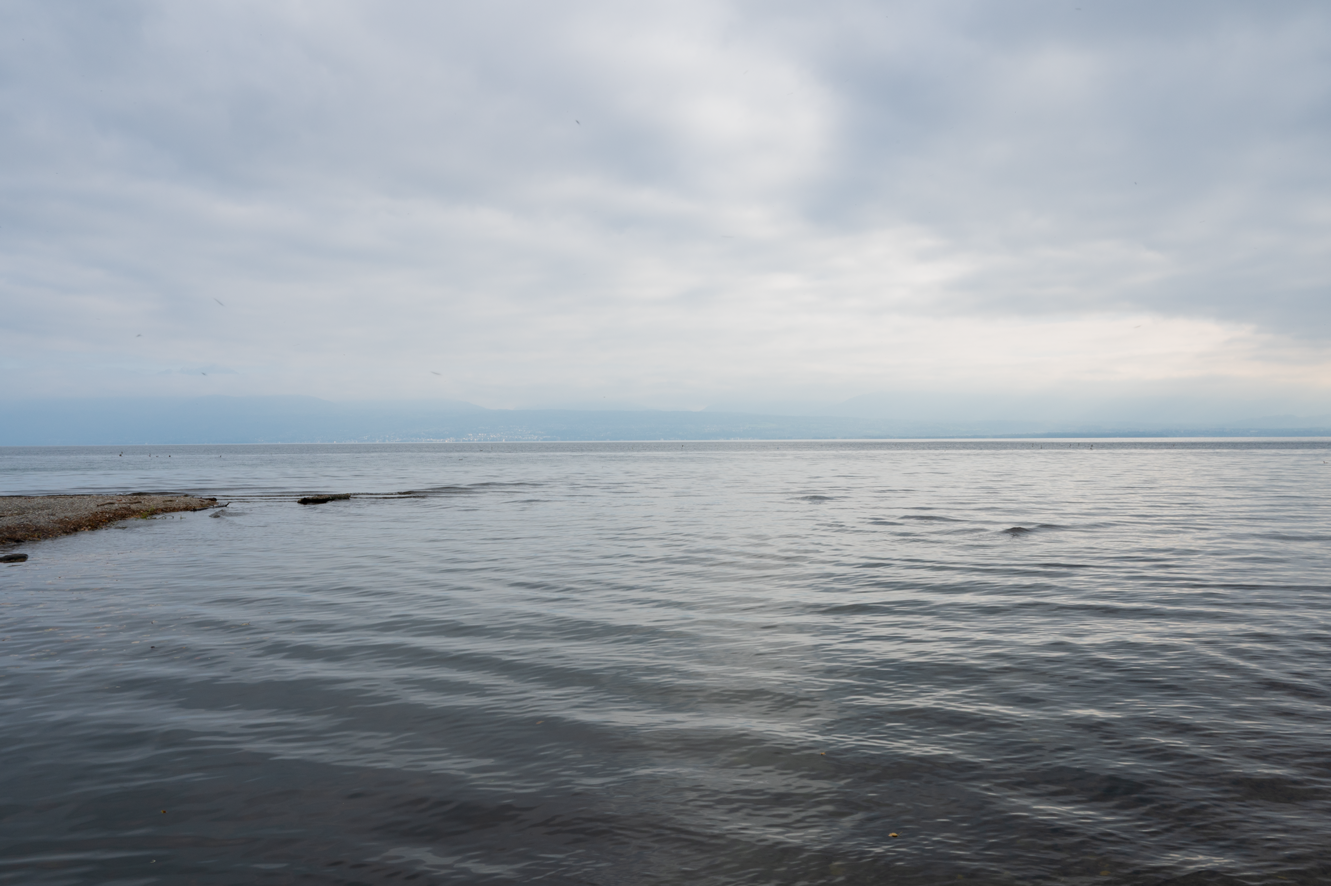 Lac Léman print, carrying these compounds with it.
This made me think about how we often describe the Rhône River in terms of its origins in the Rhône Glacier in Valais, and how its sediments settle in Lac Léman before the river reaches Geneva in a clarified form. Yet we rarely acknowledge the smaller tributaries—such as the Boiron—that also feed the lake and quietly contribute to the Rhône’s composition, even if only in small amounts.
What struck me most, however, was a comment from Rubin: “This is a magical place.” He regarded the Source du Boiron as something special, even though, when you stand there, it appears rather unassuming—a quiet spot you could easily overlook without someone to guide you. Its discreet location and limited accessibility only added to this sense of hidden significance. Despite his scientific background, Rubin sensed that there was something more at play. This intuition eventually led him to create a fictional world around the river—a story about a fairy named Gouttelette, born near the source, who wanders along the Boiron and encounters the various inhabitants of the place.
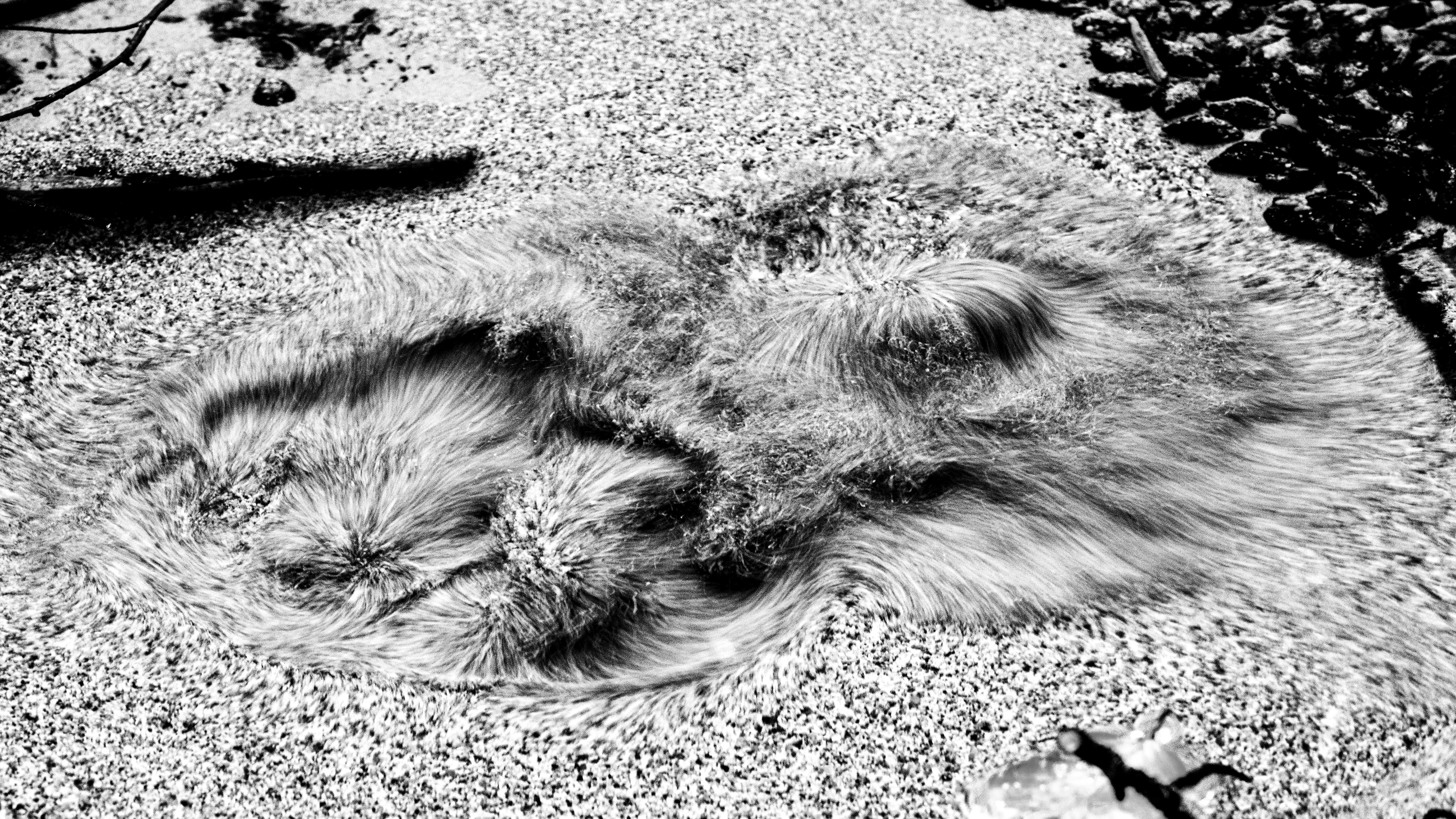
This led me to build upon his fictional world. I knew I wanted to create a story for the Boiron River to endow it with a voice, but I didn’t want to anthropomorphize it; instead, I wanted the narrative to be grounded in what I had learned throughout the week. I began by conducting a locomotion study[fig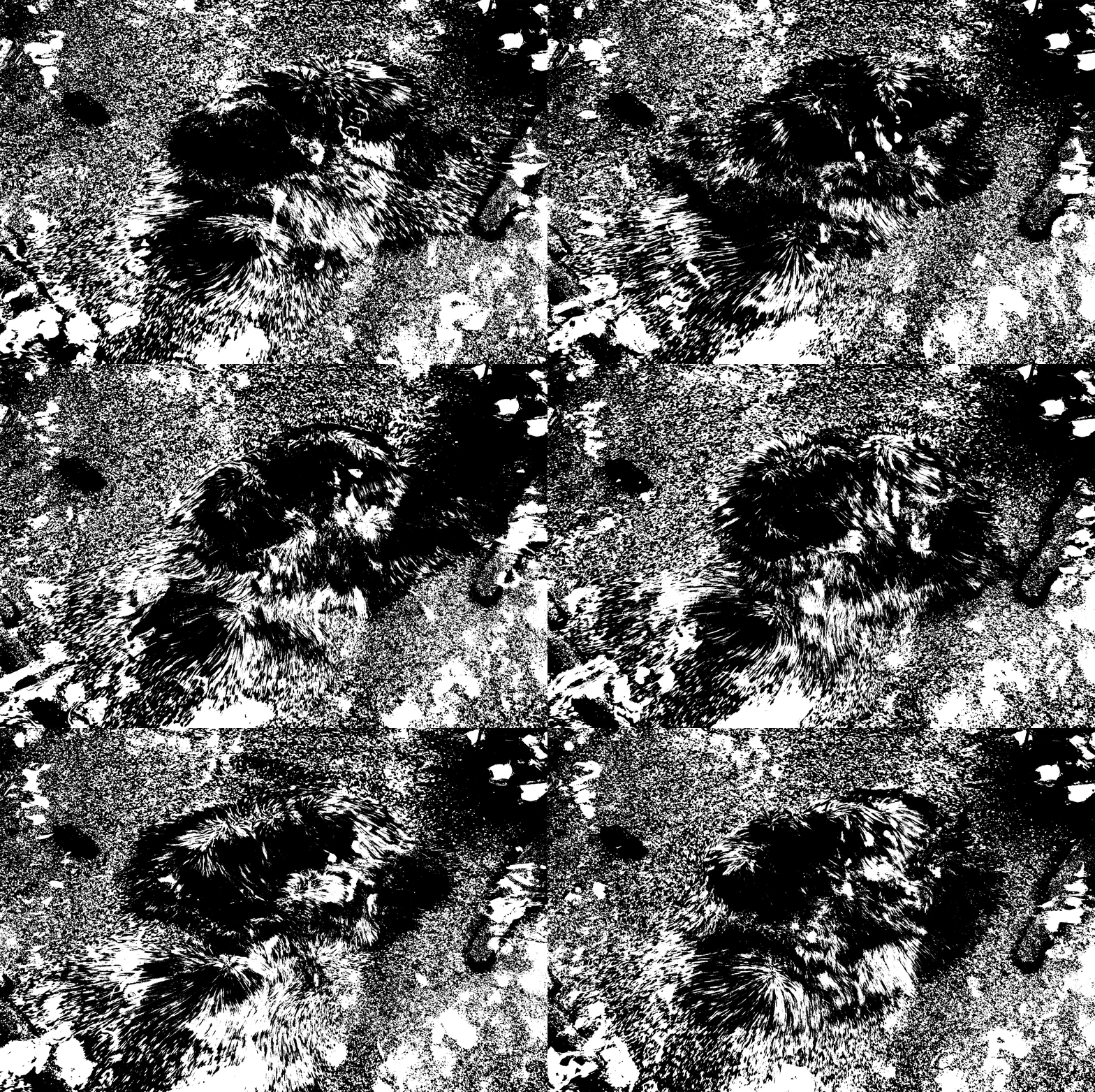 Locomotion Study, observing its movements and flows to imagine its form and personality. I was also inspired by the river’s mouth, where I encountered a creature-like presence that felt almost like a guardian overseeing the river’s passage into the lake. From these impressions, I developed two characters: Bébé Boiron
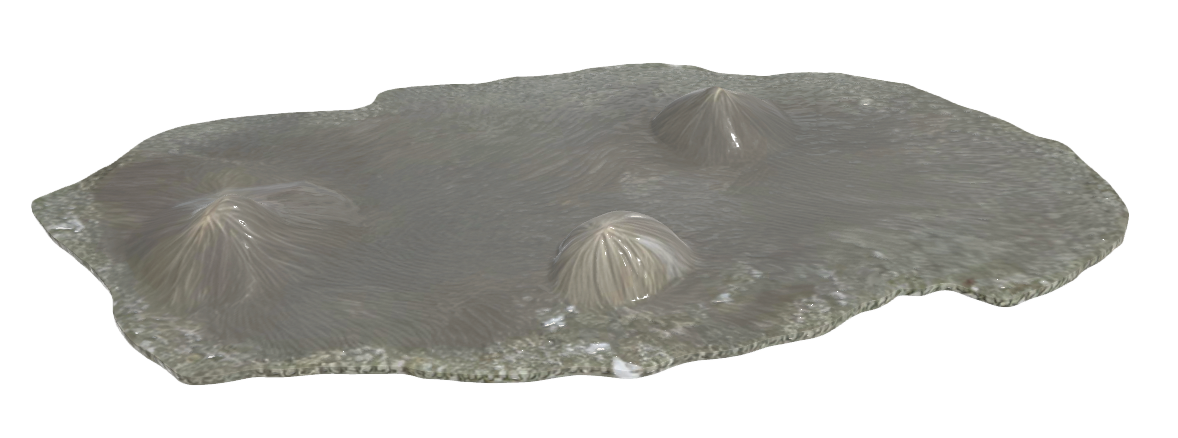 Bébé Boiron and Boiron the Beast
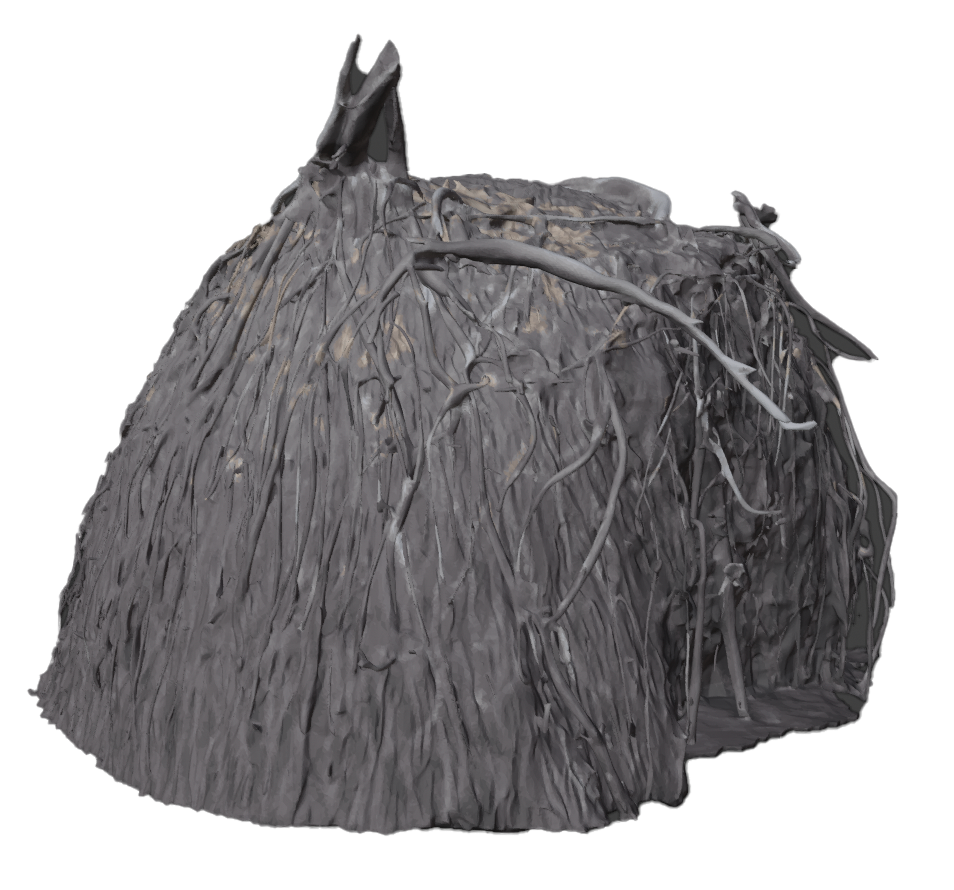 Boiron Beast.
Based on what I learned from the researchers, I created a tale to accompany the characters I made.
Bébé Boiron emerges from the surface. He’s desperate to escape the underground world and frees himself through tiny portals to the above world. Born from a mysterious place, we didn’t know what to make of him. So, we locked him up in a cage and forced him back to the subterranean world. We used and poisoned him. When he resurfaced, he was no longer his bubbly self. He became Boiron the Beast.
For Rubin, his story is aimed at children, offering a magical and accessible way to imagine the river. My approach, however, tries to align more closely with the ecological problematics we encountered and to communicate these issues through a narrative form.
After I presented my findings and creative output, Rubin remarked that we have lost our ability to connect with nature—that the “magic” has faded. I interpret this as an expression of our growing separation from the natural world, a separation so deep that connection becomes difficult even when nature is directly before us. Hepburn, writing decades earlier, captured this tension in his reflections on our struggle with nature. For him, appreciating nature aesthetically requires a kind of ease or reconciliation:
To attain, and sustain, the relevant detachment from such an environment in order to savor it aesthetically is in itself a fair achievement, an achievement that suffuses the aesthetic experiences themselves with that sense of reconciliation. A cease-fire has been negotiated in our struggle with nature.97
Hepburn suggests that to truly appreciate nature, we must momentarily relinquish the impulse to overcome it—to stop fighting, resisting, or mastering it—and allow the wilderness itself to become part of the aesthetic experience. In contrast, the “magic” Rubin refers to seems, for me, to have been displaced by the “mobile.” Our sense of rapprochement, of feeling unified with nature, has been eroded by technological acceleration and the demands of a fast-paced life. Perhaps this distancing began when we moved indoors and built environments that protect us from the elements; perhaps it has intensified with each step of technological progress that diverts our attention.
Instead of encountering nature directly, we now encounter it through screens and symbols. We surround ourselves with digital wallpapers, OS names, and tech products that gesture toward the natural world, as if to reassure us that it still exists—while, at the same time, implying that technology matters more. The “magic” has not disappeared so much as it has been replaced by a mediated simulation of nature, one that keeps us connected only at a distance.
Ultimately, this loss of “magic” signals a broader disconnection: a diminishing capacity to appreciate and be moved by nature. It gestures toward those rare moments when a place surprises us, unsettles us, or stirs something we didn’t expect. Perhaps what we call “magic” is simply nature trying to speak—if only we are willing to listen.
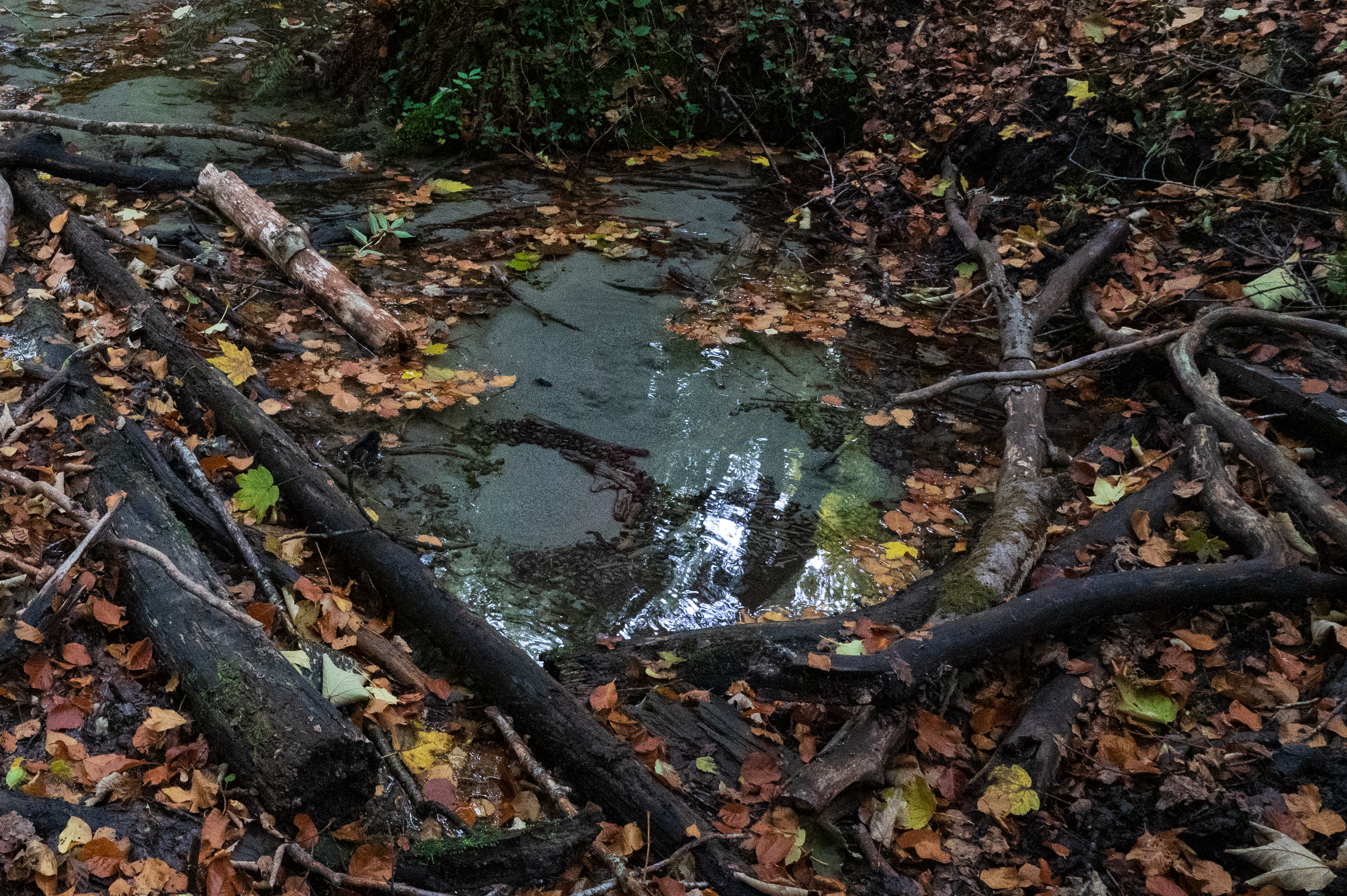
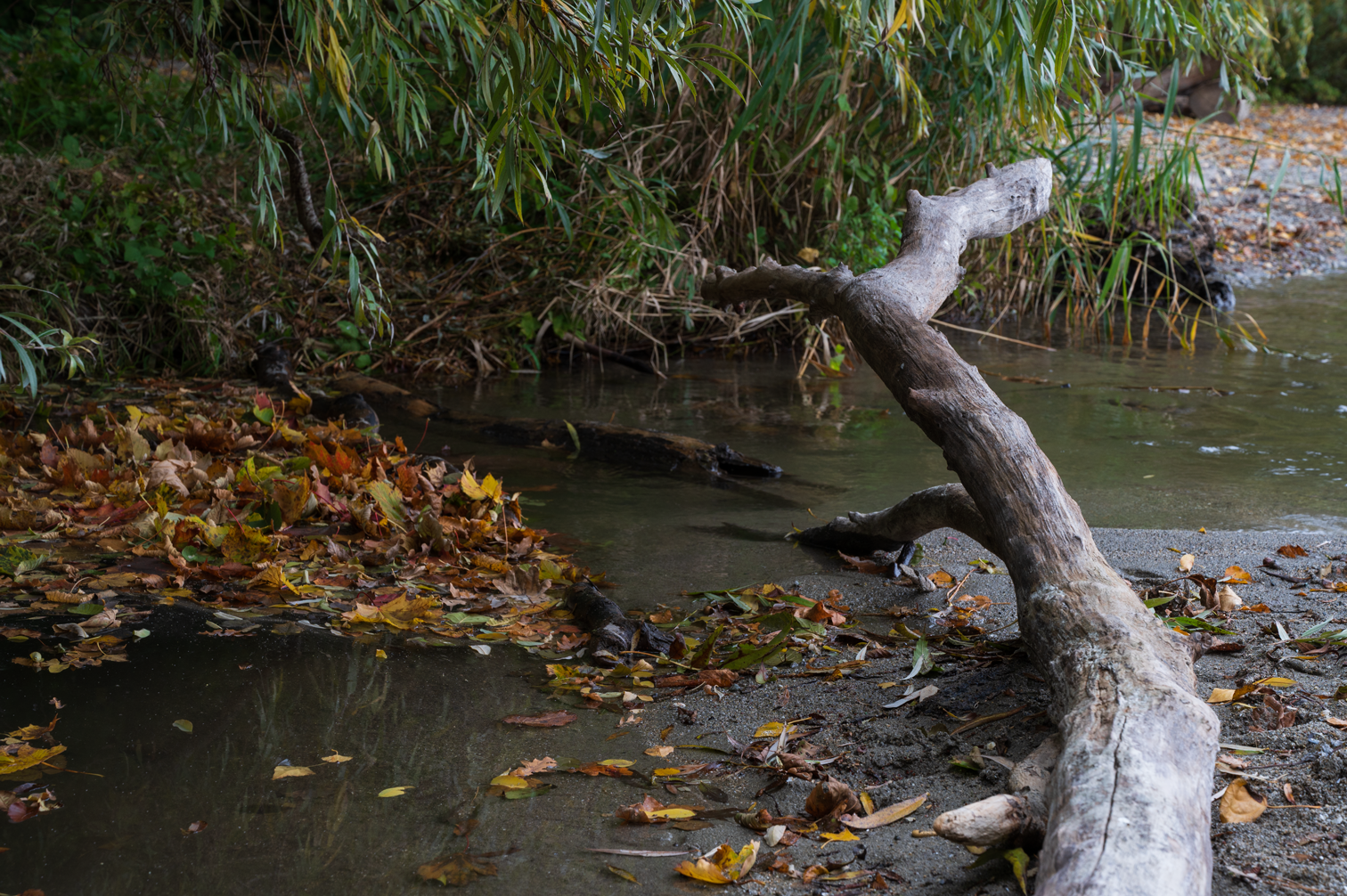
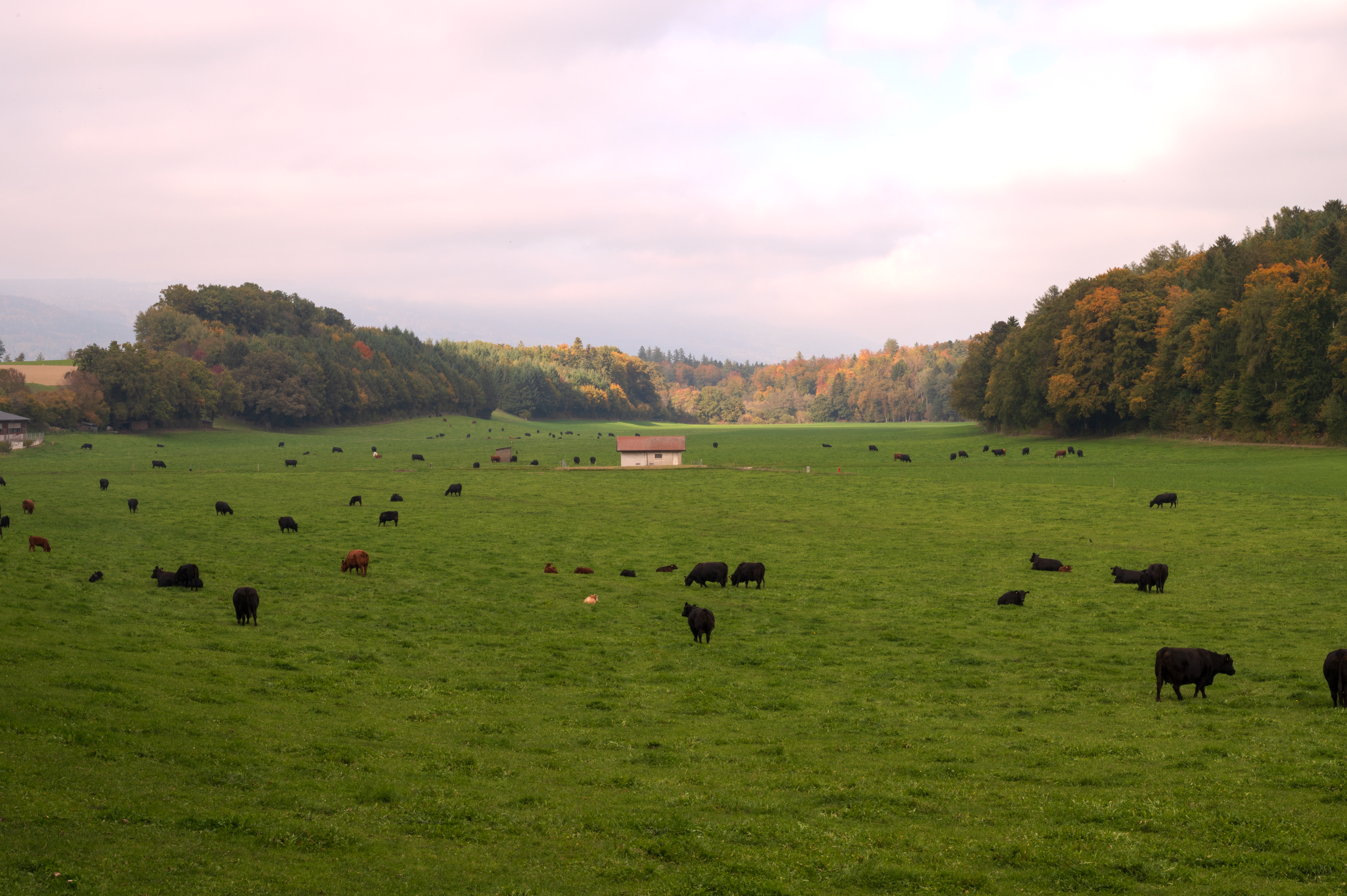
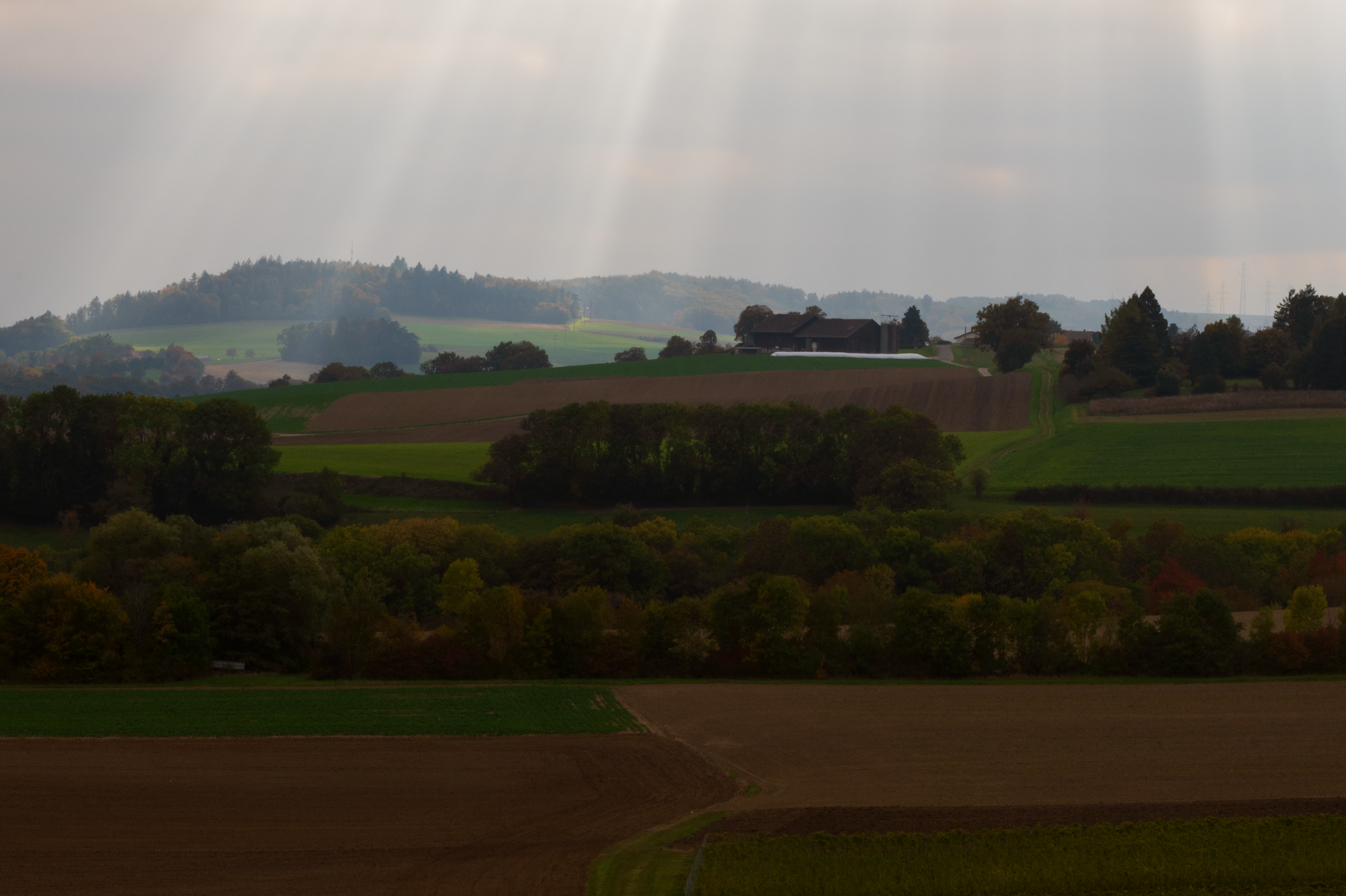
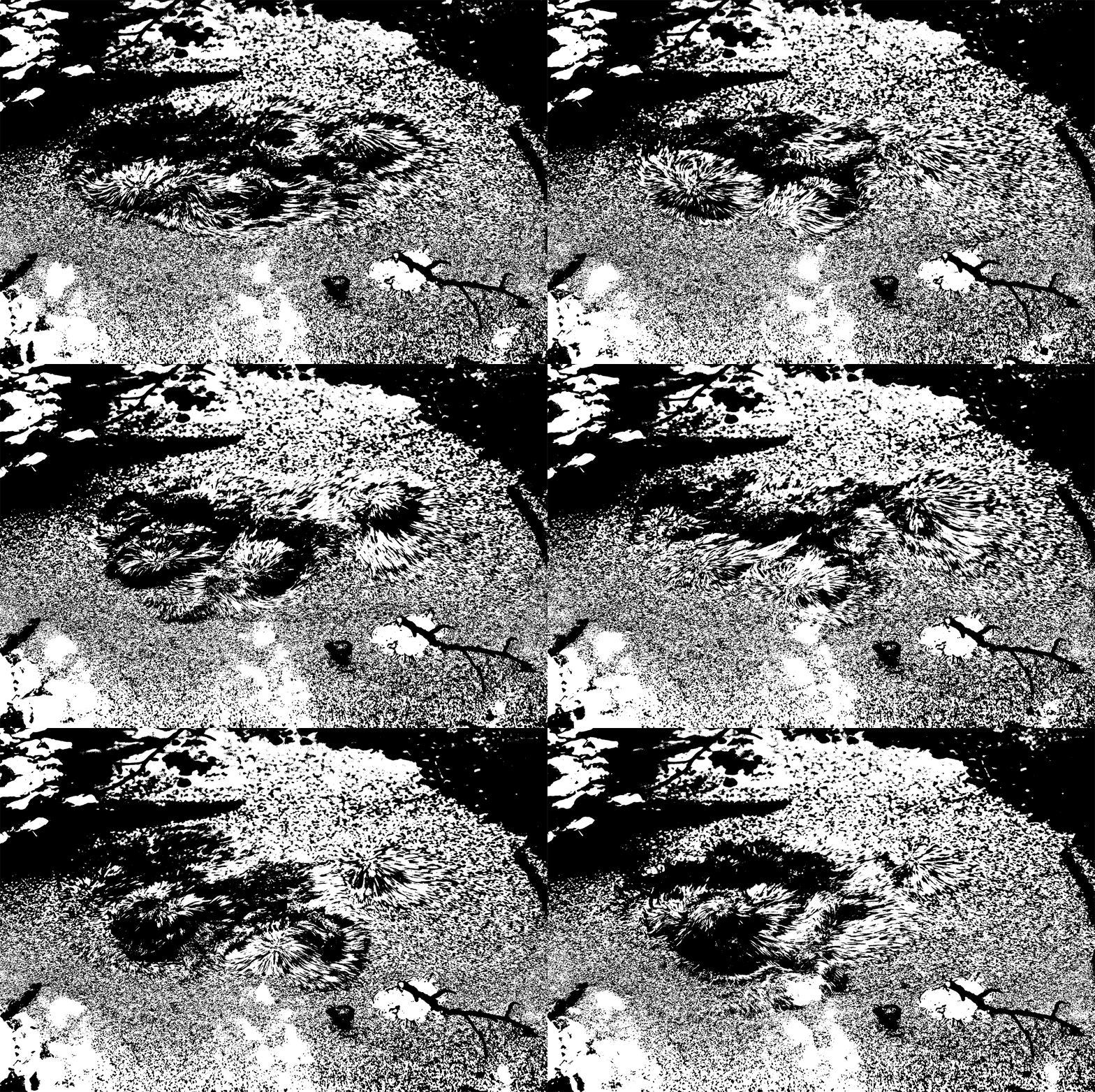
Conclusion
The end, but also the beginning of what comes next
If you’ve made it this far, thank you. I know the path has not always been linear—there were small meanderings, much like a river itself. When I began this thesis, I had no clear sense of where it would lead. What started as a simple, personal fascination with the confluence of the Rhône and the Arve gradually unfolded into a broader inquiry. That initial spark grew into an exploration of environmental aesthetics and the many ways it can deepen our appreciation of nature through sensory, conceptual, and mediated engagements.
This thesis has also laid the groundwork for my diploma project. Having already explored visual mediation through photography, mapping, and motion studies, I now want to shift my focus toward sound—not to exclude the visual entirely, but to foreground a modality that often sits in the background of design practice. Sound can resonate in ways that bypass our visual habits, allowing us to sense what is otherwise invisible or overlooked.
In conversations with sound artists, a recurring theme was an almost obsessive attention to sonic detail, and the way field recording had trained them to become more attuned to their environments. Geneva-based sound artist Didier Bouchon, for instance, always carries a recorder with him, sometimes capturing sounds opportunistically, sometimes with a more deliberate intention. As he explains:
[Recording is] a little bit like fishing. You say, “Today I need sounds—I want drone bass sounds, I need water sounds because I want to include water in my set, or birds, etc.”98
This idea of fishing resonated with me as well. During my own field recordings, I noticed that I, too, began wanting to capture more and more sounds. I was already imagining how this impulse could translate into a project. I started thinking about a low-tech device called a listening stick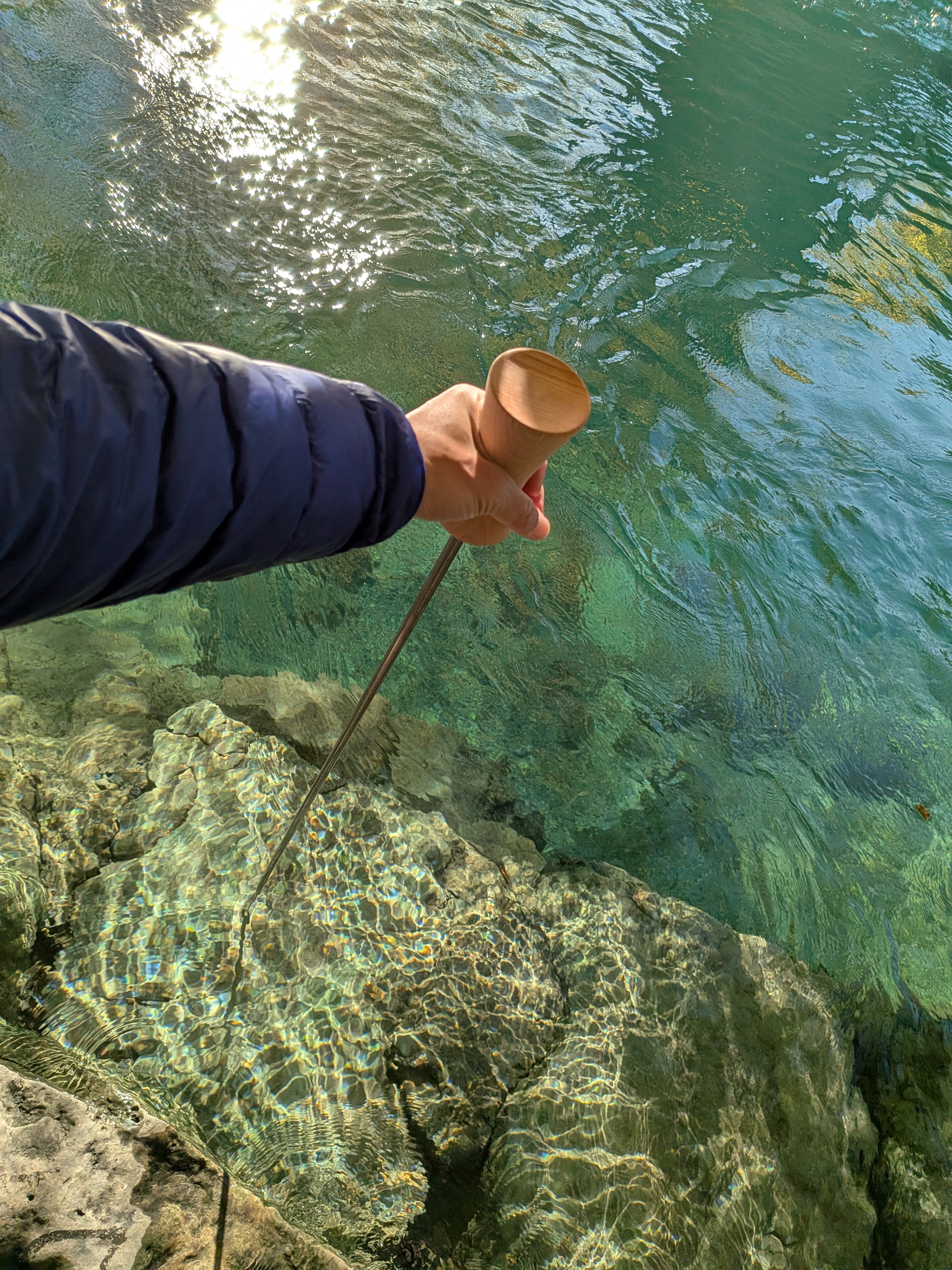 Listening stick made out of steel and beech wood, originally used to detect leaks in pipes. You place its metal tip against a metal surface, and if there’s a leak, you hear a faint hissing transmitted through the material. The device works best when sound travels through the structure by vibration.
What interests me is how this desire might be reinterpreted: how such an object could become a means of exploring a site’s sonic qualities, or even a tool for inviting local inhabitants or passersby to engage more closely with their surroundings. However, the listening stick ultimately functions as a one-way device—sound travels from the environment to the listener, but not the other way around, nor does it enable a collective listening experience. As I move forward with the diploma project, I want to frame my making through a new research question: How can we cultivate a symbiotic sonic relationship with nature to reacquaint ourselves with parts of an environment often overlooked in everyday life?
Peter Ha | Advised by Daniel Pinkas
Interviews
Interviews
A collection of interviews with sound artists exploring their practice and process
Interview with Flavien Gillié
Flavien Gillié has been a practicing sound artist for over twenty-five years. His work has included installations and performances, but his current practice focuses primarily on field recordings of urban environments, as well as workshops conducted through BNA/BBOT. While exploring field recordings of Geneva on Aporee, I encountered several of his contributions—particularly recordings of the Arve River. As I was planning to spend some days in Brussels towards the end of my summer holiday, the timing aligned well, allowing me to meet him in person. We met at Smart Cooperative, a co-working space near Gare du Midi, where I was able to better understand what motivated him to record the Arve and how his practice has evolved over time.
Peter Ha: To kick things off, what compelled you to go to Geneva and why did you decide to record at the Arve and upload it to Aporee?
Flavien Gillié: It was in 2016 and it was a cultural trip. I come from France initially and I used to live in Lyon, not far from Geneva, but I’ve been in Brussels for 20 years now. My stepdaughter is an actress and was playing in a theatre play. She was staying in Geneva for a residency and we went to see the play at Comédie Genève.
Wherever I go, I’ve always been recording. This is something that comes from really far back. I’ve always been interested in sound. I would say one of my first memories as a child was having a small tape recorder. I could record some sheep in a farm and I would have the opportunity to listen to the recordings again and again and again and this really came from here. I started sound after I had been involved in music and recording.
For Aporee, it made immediate sense to upload all my recordings to this sound map because I was already making a lot of field recordings. It was more of a personal archive used for sound installations and making music with the recordings through electronic treatments. But I missed the idea of creating something common and sharing it for free. So there was really this idea of creating a common audio sound scheme and Aporee was the perfect tool for this because it’s a community which is at the crossroads of many things: used by artists, universities, and whoever is starting field recording. It’s really been a way to have a backup outside of my own personal archive and I would say personally it’s a way for me to create my own memory.
You said you don’t always have a good memory, I’m also the same. There are two ideas: this idea to make it publicly available and this idea that it’s my own personal journal. I can always go back to Aporee and have my memory of where I was at that specific time and what I was doing.
And the choice of the river, when I’m making the recordings, there is no previous intention, unless for a specific project. If I’m working in Brussels, I can work on specific recordings and make something quite intensive. But for this, it was just my daily routine. I’m on a trip and wanted to explore.
I wouldn’t say I’m a recorder of nature things. I’m not a naturalist. I lived a lot in cities and I mostly make trips to cities. I always like to record the interactions between people and everything else living. So I try to find the liminal places. I mean going to the bank of rivers, you’re in the city, yet somehow you have to be a bit outside. I found a walk on a bank and I just had a long walk along the bank of the river. It was close to where we were staying at the time. It was a Sunday morning, if I’m not mistaken, and I was looking for this quiet place—a bit to be in Geneva, but a bit out of Geneva.
Everything is built around and I’m looking for the possibility to record different atmospheres of the river. I wanted to record a lot more subtleties of the river and I was always interested in the fact that I could record the river but the city was also not far away with the police or ambulance sirens. This isn’t the river per se, but these are all the interactions that I could hear from the bank of the river.
PH: Yeah, it’s difficult to isolate natural sounds, especially when you’re in a city—you’ll capture whatever is in the vicinity.
FG: I think it’s useless but I’m not saying all the audio naturalists are. Even being on the most isolated island, there will always be a plane flying by. We have to accept the fact that humans colonized everything and that there’s a strong input on every landscape.
PH: It’s very interesting that you mention this because there’s a term which you might be familiar with, the Anthroposcene, where it’s used to signify a new geological period on Earth, and how humans have altered the atmosphere, the environment, and that we’re all connected. It’s interesting that it’s also filtered into sound, and that you can’t just isolate natural sounds anymore. You’ll hear human-produced sounds, wherever you are.
FG: This is an ecological point of view, or at least a critical listening of the Anthropocene in the context of capitalism. You can have a series and show how the influence of humans really made strong changes in the soundscape. I have some recordings from 30 years ago.
PH: 30 years ago?
FG: Yeah, yeah. I’m 53 now and I think I started recording in the 80s. I have some recordings and I can hear lots, lots more birds than I hear now. And when I go back to places, I just have a few that I will never have again. For example, I have many old recordings of starling colonies. Even in Lyon, where I was living, and from the people I know who still live there, they just tell me, "No, we don’t hear. They don’t come anymore.” The huge numbers of massive birds have been dispersed.
PH: How has your approach to field recording changed over the years?
FG: I think I pay more attention now to the facts. When I first started, I wanted to record something singular. I would say, "Oh come on, I’m here to record the bells, the sirens because it’s 12 and there will be sirens from the firemen or whatever, ” whilst also looking for something quite specific. The more I recorded, the more I would say, “I can record wherever I am because in the moment it’s important to just be.” For example, let’s say I make a recording here in the courtyard, it will be quiet but I know it will tell something about the city because now we have more and more electric cars. I try to not to disappear but to be more objective. It’s not possible because I’m always here and I decide to record. But I try more and more to let something appear.
PH: In previous works, you’ve described it as “brutalizing sounds”. What do you mean exactly when you brutalize a sound?
FG: I think it was from a very specific description. I think it’s a bit outdated. It’s when I was doing concerts with all these recordings. I used to have an experimental concert practice. I wrote it because I didn’t want to be too respectful with the sounds since I would treat them electronically. When I was playing live with the sound, I included all the errors in my recording, like a microphone going dead or all of these crashing sounds. This is what I meant by brutalizing. I haven’t played live recently. I played live one year ago, but it was after a workshop of field recording with people. It was not brutalizing at all, but rather empowering people to see the possibilities for the recordings. So yeah, brutalized should be removed from my description. I think it’s kind of a young punk attitude.
PH: No, I think it’s still interesting because of how you maintain authenticity within the sound. And do you even want to do that with some field recordings? Are you using it more for the medium itself or the content?
FG: That’s a tricky question.
PH: Because as you said, it’s hard to be objective. You are deciding to record something. And then you’re also editing by deciding what to put into the forefront for people to hear. In some way, you are altering the sound. It’s no longer a pure recording.
FG: On Aporee it should be. There are guidelines on Aporee and normally, you shouldn’t edit it too much, but we all did a bit by trying to make a recording that should be good to listen to. It’s not a piece of audio art.
PH: Going back to workshops, you teach people how to conduct field recordings. What has surprised you from participants? What have you learned from people through teaching?
FG: It’s the organization where I work. We work as an “éducation permanente”, we say in French, which is teaching for adults. All along your life you can still learn things.
PH: Continuing education.
FG: Yeah, exactly. We always have this and we have a strong impulse to support and help people. When I conduct a field recording workshop, I’m not the big specialist telling participants how they have to do it. I always try to work with what people already know. With smartphones, people know how to make a recording now. Especially with young adults, sometimes they know a bit more because they are more technically savvy, and of course, I have my technical skills but things change a lot. Sometimes I have people making podcasts and they use things I don’t use. The workshop is more of a conversation, bringing people together and making things clearer for everyone, but it’s not a general course I facilitate. Things that have surprised me are that I always have to remember that people know a lot of things and I’m not there to teach.
PH: Yeah, you’re there to help them out, to guide them if they have some questions.
FG: The thing that I usually teach to people is how society is going—we are into fast things. With field recordings, if I can teach one thing, it’s this: when you are making them, you have to take your time.
I usually talk about John Cage and the 4 minutes 33 seconds of nothing and I tell people not to think that you can just make a one-minute recording because it won’t be enough. I always try to tell people to take time. Because you’re not limited if you record with your smartphone, you’re not limited by time. So start with making a 5-minute recording or a 10-minute recording and just listen.
I also teach collective listening. When we are doing workshops, I try to be a lot in the collective things and we often start by just going outside, not bringing anything technical, just making a collective listening, coming back and let everybody tell what he or she heard and how these collective things can emerge. With this new listening, most of the time somebody will say, “Oh, I didn’t hear what you heard”. This is how the act of listening and the act of recording can bring you collectivities and this is what I try to pass on in the workshops.
PH: Do you have different thoughts or memories when you listen to your recordings or is it a different experience each time?
FG: When I listen back to a recording, I think of the memories. The recording is a strong reenactment of the scene. I’m sure that if I had taken the picture, I wouldn’t have felt the same sense of presence. When I listen back to the recording, it’s just as if I were back again on the bank of the Arve River on this Sunday morning, and I just listen to it, and I can remember the landscape. It’s strong with voices too. With all the interviews I’ve been doing for my work, if I just listen back to a voice, it’s just like their presence. For me, sound is stronger than image. Well, they’re always interacting.
PH: Why do you think we’ve lost our ability to focus on sounds?
FG: I think that it goes back to capitalism because visual triggers a lot of things so it can keep your attention. It also says something about how we design cities. For example, in Brussels, it’s clear that even in public spaces with the absence of benches. You cannot sit anymore. The city is just something you have to walk past. You go to one point to buy something, and then to another. By listening, you somehow get out of capitalism. When you are listening, you cannot be doing something; you can just be yourself, listen, and be available to what happens. This is just how our society is going, I would say.
There is a book by Alexandre Galand, Field recording : l’usage sonore du monde en 100 albums (Field recording: the sonic use of the world in 100 albums). It’s a book about film recording that we’ve learned in production and there are 100 field recording albums in three categories: The Sound of the Earth, The Sound of People, and The Sound of Manipulation.
I had the opportunity to meet Galand at a conference where he broadcasted an old recording from the 1910s. A final recording was taken of a farmer with his cow in the field. The recording included a song that interacted with the cow. We could lose this if we didn’t have this recording. And maybe with industrialization, we lost this connection with the living. To be in connection with the living, you have to listen and you have to take time. This is what we lose of yesterday. That’s where we are at now.
More interviews coming soon…
Peter Ha | Advised by Daniel Pinkas
References
References
Bibliography
Ancient Courses: Harold Fisk’s Meander Maps of the Mississippi River (1944). The Public Domain Review [online]. Available from: https://
Appel du Rhône. 2024. Droits De La Nature | Appel du Rhône [online]. Retrieved from: https://
Association id·eau. id·eau Association [online]. Retrieved from: https://
BRIDLE, James, 2022. Ways of being: animals, plants, machines: the search for a planetary intelligence. New York: Farrar, Straus and Giroux.
CARLSON, Allen, 1979. “Appreciation and the Natural Environment”. The Journal of Aesthetics and Art Criticism. Vol. 37, no. 3, p. 267. DOI 10.2307/430781.
CARLSON, Allen. 2005. Aesthetics and the Environment. New York: Routledge.
CARLSON, Allen and BERLEANT, Arnold, 2004. The aesthetics of natural environments. Peterborough: Broadview Press.
CARROLL, Noël, 1999. Philosophy of art: a contemporary introduction. London: Routledge.
CERONI, Andrea et al, 2015. “To Keep or Not to Keep: An Expectation-Oriented Photo Selection Method for Personal Photo Collections.” In: Proceedings of the 5th ACM International Conference on Multimedia Retrieval, pp. 187–194. DOI 10.1145/2671188.2749372.
COVERLEY, Merlin, 2018. Psychogeography [online]. London: Oldcastle Books. Retrieved from: https://
FRANÇOIS, Laura, et al., eds., 2025. Imagine: embracing chaos and possibility in a planetary emergency. Karlsruhe: Slanted Publishers.
FRANSSEN, Maarten, LOKHORST, Gert-Jan and VAN DE POEL, Ibo, 2024. Philosophy of technology. The Stanford Encyclopedia of Philosophy [online]. Retrieved from: https://
FRIDAY, Jonathan, 1999. “Looking at Nature through Photographs”. Journal of Aesthetic Education. Vol. 33, no. 1, pp. 25–35. DOI 10.2307/3333733.
HALL, Peter A., 2022. Critical Visualization: Rethinking the Representation of Data. London: Bloomsbury Publishing USA.
Harmony With Nature – Law List, [online]. Available at: http://
HEPBURN, Ronald, 2004. “Contemporary aesthetics and the neglect of natural beauty”. In: CARLSON, Allen and BERLEANT, Arnold, eds. The aesthetics of natural environments. Peterborough: Broadview Press, pp. 43–62.
HEPBURN, Ronald, 2004. “Landscape and the Metaphysical Imagination”. In: CARLSON, Allen and BERLEANT, Arnold, eds. The aesthetics of natural environments. Peterborough: Broadview Press, pp. 127–140.
HENRIKSON, Alan K., 1979. “All the World’s a Map”. The Wilson Quarterly (1976-). Vol. 3, no. 2, pp. 164–177.
ID·EAU. Donner une voix au Rhône: Assemblée populaire du Rhône. Lausanne: Association id·eau, 2024. PDF Available at: https://
International Commission on Large Dams. [online]. Retrieved from: https://
IRONS, William, 1998. “Adaptively relevant environments versus the environment of evolutionary adaptedness”. Evolutionary Anthropology: Issues, News, and Reviews. Vol. 6, no. 6, pp. 194–204. DOI 10
KAPP, Ernst et al., 2018. Elements of a philosophy of technology: on the evolutionary history of culture. Minneapolis: University of Minnesota press. Posthumanities, 47.
KERSTEN, Jens, 2017. “Who Needs Rights of Nature?” Can Nature Have Rights? Legal and Political Insights. p.9. DOI 10.5282/RCC/8164.
KING, Alexandra. Aesthetic Attitude | Internet Encyclopedia of Philosophy, [online]. Retrieved from : https://
KINGDON, Amorina, 2024. Sing Like Fish: How Sound Rules Life under Water. New York: The Crown Publishing Group.
KOMAR, Vitaly, et al., eds., 1999. Painting by numbers: Komar and Melamid’s scientific guide to art. Berkeley: University of California Press.
KUGLER, Jolanthe and LONGFELLOW, Scott, 2023. Objectif Terre – Le design de notre planète. Les presses du réel and le MUDAC.
LIPKOWITZ, Gabriel E., 2019. “The Problem with Calling Something 'Aesthetic.'” Nassau Weekly [online]. 3 March 2019. Retrieved from: https://
LOGLIO, Matteo. Natural Networks [online]. Retrieved from: https://
MACFARLANE, Robert, 2025. Is a river alive? New York: W.W. Norton & Company.
MCLUHAN, Marshall and LAPHAM, Lewis H., 1995. Understanding media: the extensions of man. Cambridge: The MIT press.
NAGEL, Thomas, 1974. “What Is It Like to Be a Bat?” The Philosophical Review. Vol. 83, no. 4, pp. 435–450. DOI 10.2307/2183914.
NOVA, Nicolas, 2022. Exercices d’observation: dans les pas des anthropologues, des écrivains, des designers et des naturalistes du quotidien. Paris: Premier parallèle.
PARSONS, Glenn and CARLSON, Allen, 2024. Environmental aesthetics. The Stanford Encyclopedia of Philosophy [online]. Retrieved from: https://
PARSONS, Glenn, 2007. “The Aesthetics of Nature”. Philosophy Compass. Vol. 2, no. 3, p. 9. DOI 10.1111/j.1747–9991.2007.00073.x.
PATER, Ruben, 2021. The politics of design: a (not so) global manual for visual communication. Amsterdam: BIS Publishers.
PINKAS, Daniel, 2024. “Santayana at the Harvard Camera Club”. Limbo: boletín internacional de estudios sobre Santayana. No. 44, pp. 5–41.
PINKER, Steven, 1999. How the mind works. London: Penguin.
PRIMROSE, S. B., 2020. Biomimetics: nature-inspired design and innovation. Hoboken: Wiley.
RIDDER, Jeroen de, PEELS, Rik and VAN WOUDENBERG, René, eds., 2018. Scientism: prospects and problems. New York: Oxford University Press.
RIFFATERRE, Michael, 1985. “Prosopopeia”. Yale French Studies. No. 69, p. 107. DOI 10.2307/2929928.
SADLER, Simon, 1998. The situationist city. Cambridge: the MIT press.
SHAFER, E. L. and MIETZ, J., 1970. It seems possible to quantify scenic beauty in photographs. Upper Darby, PA: USDA Northeastern Forest Experiment Station.
SIG. Sites et patrimoine : le barrage du Seujet [online]. Retrieved from : https://
SUPERFLUX, 2025. Nobody Told Me Rivers Dream [online]. Retrieved from: https://
SRIVASTAVA, Anila, 2007. “‘Mean, dangerous, and uncontrollable beasts’: Mediaeval Animal Trials”. Mosaic: An Interdisciplinary Critical Journal. Vol. 40, no. 1, pp. 127–143.
STOLNITZ, J., 1960. Aesthetics and Philosophy of Art Criticism: A Critical Introduction [online]. Houghton Mifflin. Retrieved from: https://
SUMMA, Laura Di, 2022. “Collecting What? Collecting as an Everyday Aesthetic Act”. In: CHEYNE, Peter (ed.), Imperfectionist Aesthetics in Art and Everyday Life. New York: Routledge. pp. 255–267. DOI: 10.4324/9781003251361–24.
TOBIN, Richard, 1975. “The Canon of Polykleitos”. American Journal of Archaeology. Vol. 79, no. 4, pp. 307–321. DOI 10.2307/503064.
TUFTE, Edward R., ed., 2013. Envisioning information. Cheshire: Graphics Press.
WALTON, Kendall L., 1984. “Transparent Pictures: On the Nature of Photographic Realism”. Critical Inquiry. Vol. 11, no. 2, pp. 246–277. DOI 10.1086/448287.
WOHL, Ellen and INAMDAR, Shreeram, 2025. “Beaver Versus Human: The Big Differences in Small Dams”. WIREs Water. Vol. 12, no. 2, DOI 10.1002/wat2.70019.
Images
Confédération suisse, swisstopo (n.d.). Cartes de la Suisse. map
DARTON, William and GARDNER, John, 1823. New and Improved View of the Comparative Heights of the Principal Mountains and Lengths of the Principal Rivers in the World. [online]. Retrieved from: https://

Genève, jonction du Rhône et de l’Arve | Bibliothèque de Genève Iconographie, [online]. Retrieved from: https://
Genève, jonction du Rhône et de l’Arve | Bibliothèque de Genève Iconographie, [online]. Retrieved from: https://
Genève, jonction du Rhône et de l’Arve | Bibliothèque de Genève Iconographie, [online]. Retrieved from: https://
Genève, jonction du Rhône et de l’Arve | Bibliothèque de Genève Iconographie, [online]. Retrieved from: https://
Google Trends. Google Trends [online]. Available from: https://
Komar & Melamid—Most Wanted Paintings, [online]. Retrieved from: http://
Louisiana State University, Center for Biomedical and Health Policy (n.d.). The Climate Change and Public Health Law Site. [online]. Available at: https://
MEISTERDRUCKE. Vue de Genève depuis la confluence du Rhône et de l’Arve, gravée par Friedrich Salathé (1793–1860). MeisterDrucke [online]. Retrieved from: https://
Savanna, 2025. Wikipedia [online]. Retrieved from: https://
Savanna, 2025. Wikipedia [online]. Retrieved from: https://
SHAFER, E. L. and MIETZ, J., 1970. It seems possible to quantify scenic beauty in photographs. Upper Darby, PA: USDA Northeastern Forest Experiment Station.
TUFTE, Edward R., ed., 2013. Envisioning information. Cheshire: Graphics Press.
UNSPLASH, 2018. Photo signée David Clode sur Unsplash. [online]. 3 September 2018. Retrieved from: https://
Interviews
BERGER, Ludwig. 2025. Conversation on Berger’s practice. Interview by Peter Ha, Online, 29 Sep 2025. [Unpublished interview].
BOUCHON, Didier, 2025. Conversation on Bouchon’s practice. Interview by Peter Ha, Geneva, 4 Oct 2025. [Unpublished interview].
FASCHING, Jonas, 2025. Conversation on Fasching’s practice. Interview by Peter Ha, Bern, 18 Sep 2025. [Unpublished interview].
GILLIÉ, Flavien, 2025. Conversation on Gillié’s practice. Interview by Peter Ha, Brussels, 5 Sep 2025. [Unpublished interview].
Podcasts
DHANESHA, Neel. “Solve me a river: Unexplainable” [podcast episode]. Unexplainable. 29 October 2025. Retrieved from: https://
WARD, Alie. “Acoustic ecology (nature recordings) with Dr. Eddie Game” [podcast episode]. Ologies [online]. 4 May 2024. Retrieved from: https://
Videos
FASCHING, Jonas, 2025. Field Recording At A River In Switzerland [online]. 18 February 2025. Retrieved from: https://
LOGLIO, Matteo, 2020. Natural Networks Poems. [online]. 11 January 2020. Retrieved from: https://
NOT JUST BIKES, 2025. They Tore Down a Highway and Made it a River (and traffic got better) [online]. 25 May 2025. Retrieved from: https://
Peter Ha | Advised by Daniel Pinkas
Acknowledgements
Acknowledgements
Thank Yous
Thank you to Benoît Renaudin, whose talk encouraged me to follow my passion and helped inspire this thesis topic. I am also grateful for your input and references throughout the journey.
I would also like to thank my interviewees—Flavien Gillié, Ludwig Berger, Jonas Fasching, and Didier Bruchon—for their time and for generously allowing me to delve into their practices. Their openness and insights have greatly enriched this work.
To my classmates—Antonin Ricou, Ayoub Azzouzi, Bruno Da Cruz Costa, Charkir Ali, Elisa Bernard, Haneul Lee, Karina Wolff, Lise Mendez, Liuliu Zhu, Polina Fihman, Tara Hächler—who contributed their maps and for listening to me talk about my thesis.
Thank you to Joël Vacheron and Félicien Goguey for providing structure, feedback, and references during the theory seminars.
My deepest gratitude goes to Daniel Pinkas, who opened up a whole new world for me and sparked my interest in environmental aesthetics. I am especially grateful for his diligent and thoughtful feedback.
Lastly, I would like to thank all those who listened and showed interest throughout this process. This includes—but is not limited to—Mashqurur Rahman, Daniel Tapper, Rhodi Iliadou and Kimberly Liao.
Typography
Various fonts were used to shape the text. All fonts are available on Google Fonts.
Headers Averia Serif Libre designed by Dan Sayers
Body Copy Newsreader designed by Production Type
UI, Footnotes, Captions Karla designed by Jonny Pinhorn
AI Disclaimer
ChatGPT assisted with explanations and editorial refinement. Grammarly was used for additional copy suggestions. Interview transcripts were initially generated with MacWhispher and Google Recorder.
Citation
References are cited with ISO 690 standard. List of readings were tracked with Zotero.
Development
Built with PageTypeToPrint by Julien Bidoret with custom edits by Peter Ha.
HEPBURN, Ronald, 2004. “Contemporary aesthetics and the neglect of natural beauty”. In: CARLSON, Allen and BERLEANT, Arnold, eds. The aesthetics of natural environments. Peterborough: Broadview Press, p. 51. ↩︎
TAFALLA, Marta. “From Allen Carlson to Richard Long: The Art-Based Appreciation of Nature”. In: BERTINETTO, Alessandro, DORSCH, Fabian and TODD, Cain (eds.). Proceedings of the European Society for Aesthetics. Vol. 2. 2010, p. 506. ↩︎
CARLSON, Allen, 2016. “Environmental aesthetics”. In : Routledge Encyclopedia of Philosophy. London : Routledge. DOI 10.4324/9780415249126-M047–1. ↩︎
A collection of field recordings hosted on Aporee. This is a sound map project created by German artist Udo Noll as a way to document the soundscapes of places around the world. There’s a standard and quality they uphold to ensure a good listening experience and to represent a location’s soundscape accurately.
Listen to Recordings ↩︎FRANSSEN, Maarten, LOKHORST, Gert-Jan and VAN DE POEL, Ibo, 2024. Philosophy of technology. The Stanford Encyclopedia of Philosophy [online]. Retrieved from: https://
plato [accessed 24 April 2025]. ↩︎.stanford .edu/archives/fall2024/entries/technology/ PRIMROSE, S. B., 2020. Biomimetics: nature-inspired design and innovation. Hoboken: Wiley. ↩︎
International Commission on Large Dams, [online]. Retrieved from : https://
www [accessed 23 October 2025]. ↩︎.icold ‑cigb .org/ WOHL, Ellen and INAMDAR, Shreeram, 2025. “Beaver Versus Human: The Big Differences in Small Dams”. WIREs Water. Vol. 12, no. 2, DOI 10.1002/wat2.70019. ↩︎
Heidegger: The Question Concerning Technology [online]. Retrieved from: https://
www [accessed 6 October 2025]. ↩︎.english .hawaii .edu/criticalink/heidegger/guide5 .html SIG. Sites et patrimoine : le barrage du Seujet [online]. Retrieved from : https://
ww2 [accessed 18 September 2025]. ↩︎.sig ‑ge .ch/en/node/99 KAPP, Ernst et al., 2018. Elements of a philosophy of technology: on the evolutionary history of culture. Minneapolis: University of Minnesota press. Posthumanities, 47. ↩︎
MCLUHAN, Marshall and LAPHAM, Lewis H., 1995. Understanding media: the extensions of man. Cambridge: The MIT press. ↩︎
NOT JUST BIKES, 2025. They Tore Down a Highway and Made it a River (and traffic got better) [online]. 25 May 2025. Retrieved from: https://
www [accessed 31 October 2025]. ↩︎.youtube .com/watch ?v=wqGxqxePihE LIPKOWITZ, Gabriel E., 2019. “The Problem with Calling Something 'Aesthetic.'” Nassau Weekly [online]. 3 March 2019. Retrieved from: https://
nassauweekly [accessed 30 September 2025]. ↩︎.com/the ‑problem ‑with ‑calling ‑something ‑aesthetic/ PARSONS, Glenn and CARLSON, Allen, 2024. Environmental aesthetics. The Stanford Encyclopedia of Philosophy [online]. Retrieved from: https://
plato [accessed 15 June 2025]. ↩︎.stanford .edu/entries/environmental ‑aesthetics/ KING, Alexandra. Aesthetic Attitude | Internet Encyclopedia of Philosophy, [online]. Retrieved from : https://
iep [accessed 27 October 2025]. ↩︎.utm .edu/aesthetic ‑attitude/ Ibid. ↩︎
The “aesthetic attitude” remains contested in contemporary aesthetics. Jerome Stolnitz famously defends it as a mode of “disinterested and sympathetic attention” directed at an object for its own sake. George Dickie, in contrast, rejects the idea that a special mental state distinguishes aesthetic from ordinary attention, arguing that even evaluative or critical viewing can count as aesthetic. Nonetheless, Dickie concedes that the aesthetic attitude may help reduce prejudice and facilitate shared, less subjective modes of appreciation. For a more comprehensive overview, see:
STOLNITZ, J., 1960. Aesthetics and Philosophy of Art Criticism: A Critical Introduction [online]. Houghton Mifflin. Retrieved from: https://books ..google .ch/books ?id=1pIfAAAAIAAJ
DICKIE, George, 1964. “The Myth of the Aesthetic Attitude”. American Philosophical Quarterly. Vol. 1, no. 1, pp. 56–65. ↩︎PARSONS, Glenn and CARLSON, Allen, 2024. Environmental aesthetics. The Stanford Encyclopedia of Philosophy [online]. Retrieved from: https://
plato [accessed 15 June 2025]. ↩︎.stanford .edu/entries/environmental ‑aesthetics/ Ibid. ↩︎
CARLSON, Allen, 1979. “Appreciation and the Natural Environment”. The Journal of Aesthetics and Art Criticism. Vol. 37, no. 3, p. 267. DOI 10.2307/430781. ↩︎
HEPBURN, Ronald, 2004. “Contemporary aesthetics and the neglect of natural beauty”. In: CARLSON, Allen and BERLEANT, Arnold, eds. The aesthetics of natural environments. Peterborough: Broadview Press, pp. 43–62. ↩︎
PINKAS, Daniel, 2024. “Santayana at the Harvard Camera Club”. Limbo: boletín internacional de estudios sobre Santayana. No. 44, p. 11. ↩︎
STOLNITZ, Jerome, 1960. “The Aesthetic Attitude”. In: Aesthetics and Philosophy of Art Criticism: A Critical Introduction. Boston: Houghton Mifflin, p. 47. ↩︎
CARLSON, Allen, 1979. “Appreciation and the Natural Environment”. The Journal of Aesthetics and Art Criticism. Vol. 37, no. 3, p. 274. DOI 10.2307/430781. ↩︎
PARSONS, Glenn and CARLSON, Allen, 2024. Environmental aesthetics. The Stanford Encyclopedia of Philosophy [online]. Retrieved from: https://
plato [accessed 15 June 2025]. ↩︎.stanford .edu/entries/environmental ‑aesthetics/ Friday concludes with a “no” and explains more in depth than what I am able to do within this thesis context. FRIDAY, Jonathan, 1999. “Looking at Nature through Photographs”. Journal of Aesthetic Education. Vol. 33, no. 1, p. 25. DOI 10.2307/3333733. ↩︎
SUMMA, Laura Di, 2022. “Collecting What? Collecting as an Everyday Aesthetic Act”. In: CHEYNE, Peter (ed.), Imperfectionist Aesthetics in Art and Everyday Life. New York: Routledge. p. 261. DOI: 10.4324/9781003251361–24. ↩︎
CERONI, Andrea, et al. “To keep or not to keep: An expectation-oriented photo selection method for personal photo collections”. In: Proceedings of the 5th ACM International Conference on Multimedia Retrieval. New York: Association for Computing Machinery, 2015, pp. 187–194. DOI 10.1145/2671188.2749372. ↩︎
Author directly quotes Nguyen from “Autonomy and Aesthetic Engagement”. SUMMA, Laura Di, 2022. “Collecting What? Collecting as an Everyday Aesthetic Act”. In : CHEYNE, Peter (ed.), Imperfectionist Aesthetics in Art and Everyday Life. Routledge. p. 261 ↩︎
HEPBURN, Ronald, 2004. “Contemporary aesthetics and the neglect of natural beauty”. In: CARLSON, Allen and BERLEANT, Arnold, eds. The aesthetics of natural environments. Peterborough: Broadview Press, p. 50. ↩︎
PARSONS, Glenn and CARLSON, Allen, 2024. Environmental aesthetics. The Stanford Encyclopedia of Philosophy [online]. Retrieved from: https://
plato [accessed 15 June 2025]. ↩︎.stanford .edu/entries/environmental ‑aesthetics/ WALTON, Kendall L., 1984. “Transparent Pictures: On the Nature of Photographic Realism”. Critical Inquiry. Vol. 11, no. 2, pp. 246–277. DOI 10.1086/448287. ↩︎
PINKAS, Daniel, 2024. “Santayana at the Harvard Camera Club”. Limbo: boletín internacional de estudios sobre Santayana. No. 44, pp. 5–41. ↩︎
FRIDAY, Jonathan, 1999. “Looking at Nature through Photographs”. Journal of Aesthetic Education. Vol. 33, no. 1, p. 27. DOI 10.2307/3333733. ↩︎
Ibid. ↩︎
Ibid. ↩︎
CARROLL, Noël, 1999. Philosophy of art: a contemporary introduction. London: Routledge. ↩︎
HEPBURN, Ronald, 2004. “Contemporary aesthetics and the neglect of natural beauty”. In: CARLSON, Allen and BERLEANT, Arnold, eds. The aesthetics of natural environments. Peterborough: Broadview Press, pp. 43–62. ↩︎
HEPBURN, Ronald, 2004. “Landscape and the Metaphysical Imagination”. In: CARLSON, Allen and BERLEANT, Arnold, eds. The aesthetics of natural environments. Peterborough: Broadview Press, pp. 127–140. ↩︎
TOBIN, Richard, 1975. “The Canon of Polykleitos”. American Journal of Archaeology. Vol. 79, no. 4, pp. 307–321. DOI 10.2307/503064. ↩︎
See study to view the details of each zone and how they calculated the results. SHAFER, E. L. and MIETZ, J., 1970. It seems possible to quantify scenic beauty in photographs. Upper Darby, PA: USDA Northeastern Forest Experiment Station. ↩︎
Ibid. ↩︎
KOMAR, Vitaly, et al., eds., 1999. Painting by numbers: Komar and Melamid’s scientific guide to art. Berkeley: University of California Press. ↩︎
Ibid. ↩︎
Ibid. ↩︎
RIDDER, Jeroen de, PEELS, Rik and VAN WOUDENBERG, René, eds., 2018. Scientism: prospects and problems. New York: Oxford University Press. ↩︎
PARSONS, Glenn and CARLSON, Allen, 2024. Environmental aesthetics. The Stanford Encyclopedia of Philosophy [online]. Retrieved from: https://
plato [accessed 15 June 2025]. ↩︎.stanford .edu/entries/environmental ‑aesthetics/ CARLSON, Allen, 2005. Aesthetics and the Environment. p. 90 ↩︎
PARSONS, Glenn, 2007. “The Aesthetics of Nature”. Philosophy Compass. Vol. 2, no. 3, p. 9. DOI 10.1111/j.1747–9991.2007.00073.x. ↩︎
John Bowlby introduced the idea of the (EEA) as the ecological context in which a species’ traits evolved and functioned effectively. For humans, he located the EEA in the two million years of ancestral life preceding recent historical changes. IRONS, William, 1998. “Adaptively relevant environments versus the environment of evolutionary adaptedness”. Evolutionary Anthropology: Issues, News, and Reviews. Vol. 6, no. 6, pp. 194–204. DOI 10
.1002/(SICI)1520–6505(1998)6:6 . ↩︎%3C194::AID ‑EVAN2 %3E3 .0 .CO;2 ‑B PINKER, Steven, 1999. How the mind works. London: Penguin. ↩︎
Ibid. ↩︎
Ibid. ↩︎
Ibid. ↩︎
HENRIKSON, Alan K., 1979. “All the World’s a Map”. The Wilson Quarterly (1976-). Vol. 3, no. 2, p. 173. ↩︎
A few projection types are: “equal-area projection, used by atlases, which respects areas; conformal projection, used by topographic and marine maps, which preserves angles; aphylactic projection, which keeps the distances on the meridians and constitutes a compromise between area and shape.” Original translation: la projection équivalent, utilisée pour les atlas, qui respect les surfaces ; la projection conforme, utilisée pour les cartes topographiques et marines, qui conserve les angles ; la projection aphylactique, qui garde les distances sur les méridiens et constitute un compromis entre surface et forme. KUGLER, Jolanthe and LONGFELLOW, Scott, 2023. Objectif Terre – Le design de notre planète. Les presses du réel and le MUDAC. ↩︎
HENRIKSON, Alan K., 1979. “All the World’s a Map”. The Wilson Quarterly (1976-). Vol. 3, no. 2, pp. 164–177. ↩︎
PATER, Ruben, 2021. The politics of design: a (not so) global manual for visual communication. Amsterdam: BIS Publishers. ↩︎
HALL, Peter A., 2022. Critical Visualization: Rethinking the Representation of Data. London: Bloomsbury Publishing USA. ↩︎
Ibid. ↩︎
HENRIKSON, Alan K., 1979. “All the World’s a Map”. The Wilson Quarterly (1976-). Vol. 3, no. 2, p. 165. ↩︎
DHANESHA, Neel. “Solve me a river: Unexplainable” [podcast episode]. Unexplainable. 29 October 2025. Retrieved from: https://
open . [Accessed: 14 November 2025]. ↩︎.spotify .com/episode/0QT1r24qlDNYQNqJNUuN6L ?si=fdf7a4b8797d4bb6 TUFTE, Edward R., ed., 2013. Envisioning information. Cheshire: Graphics Press. p. 12. ↩︎
Ibid., p. 62. ↩︎
“Ancient courses: Harold Fisk’s meander maps of the Mississippi River, 1944”. The Public Domain Review [online]. Retrieved from: https://
publicdomainreview [accessed 14 November 2025]. ↩︎.org/collection/maps ‑of ‑the ‑lower ‑mississippi ‑harold ‑fisk/ Ibid. ↩︎
Ibid. ↩︎
Ibid. ↩︎
FRANÇOIS, Laura, et al., eds., 2025. Imagine: embracing chaos and possibility in a planetary emergency. Karlsruhe: Slanted Publishers. ↩︎
Ibid. ↩︎
COVERLEY, Merlin, 2018. Psychogeography [online]. London: Oldcastle Books. Retrieved from: https://
books ↩︎.google .ch/books ?id=QyxHDwAAQBAJ SADLER, Simon, 1998. The situationist city. Cambridge: the MIT press. ↩︎
NOVA, Nicolas, 2022. Exercices d’observation: dans les pas des anthropologues, des écrivains, des designers et des naturalistes du quotidien. Paris: Premier parallèle. ↩︎
HEYD, T., 2001. “Aesthetic Appreciation And The Many Stories About Nature”. The British Journal of Aesthetics. Vol. 41, no. 2, p. 126. DOI 10.1093/bjaesthetics/41.2.125. ↩︎
KINGDON, Amorina, 2024. Sing Like Fish: How Sound Rules Life under Water. New York: The Crown Publishing Group. ↩︎
GILLIÉ, Flavien, 2025. Conversation on Gillié’s practice. Interview by Peter Ha, Brussels, 5 Sep 2025. [Unpublished interview]. ↩︎
WARD, Alie. “Acoustic ecology (nature recordings) with Dr. Eddie Game” [podcast episode]. Ologies [online]. 4 May 2024. Retrieved from: https://
www [accessed 14 November 2025]. ↩︎.alieward .com/ologies/acousticecology FASCHING, Jonas, 2025. Field Recording At A River In Switzerland [online]. 18 February 2025. Retrieved from: https://
www [accessed 21 November 2025]. ↩︎.youtube .com/watch ?v=whOwXNC5HWE FASCHING, Jonas, 2025. Conversation on Fasching’s practice. Interview by Peter Ha, Bern, 18 Sep 2025. [Unpublished interview]. ↩︎
BRIDLE, James, 2022. Ways of being: animals, plants, machines: the search for a planetary intelligence. New York: Farrar, Straus and Giroux. ↩︎
Harmony With Nature – Law List, [online]. Available at: http://
www [accessed 18 November 2025]. ↩︎.harmonywithnatureun .org/rightsOfNature/ KERSTEN, Jens, 2017. “Who Needs Rights of Nature?” Can Nature Have Rights? Legal and Political Insights. pp.9–14. DOI 10.5282/RCC/8164. ↩︎
NAGEL, Thomas, 1974. “What Is It Like to Be a Bat?” The Philosophical Review. Vol. 83, no. 4, pp. 435–450. DOI 10.2307/2183914. ↩︎
SRIVASTAVA, Anila, 2007. “‘Mean, dangerous, and uncontrollable beasts’: Mediaeval Animal Trials”. Mosaic: An Interdisciplinary Critical Journal. Vol. 40, no. 1, pp. 127–143. ↩︎
MACFARLANE, Robert, 2025. Is a river alive? New York: W.W. Norton & Company. ↩︎
Historically, we’ve given rights to animals as well but overtime it fell out of fashion. During Medieval Europe it was not unusual for animals to receive legal representation, and in Ways of Being, James Bridle’s chapter “Solidarity” recounts several such cases. One example describes a group of pigs that consumed parts of a five-year-old boy in 1457 in Savigny-sur-Étang, France: the mother pig was sentenced to death, while her piglets were acquitted on account of their age. To us, this may appear farfetched or even comical—easily dismissed as the product of a “pre-modern” mentality. Yet according to E.P. Evans’ comprehensive study The Criminal Prosecution and Capital Punishment of Animals, the last recorded case of an animal being found guilty in court was a dog in Switzerland in 1906. See: BRIDLE, James, 2022. Ways of being: animals, plants, machines: the search for a planetary intelligence. New York: Farrar, Straus and Giroux.; SRIVASTAVA, Anila, 2007. “‘Mean, dangerous, and uncontrollable beasts’: Mediaeval Animal Trials”. Mosaic: An Interdisciplinary Critical Journal. Vol. 40, no. 1, pp. 127–143. ↩︎
KERSTEN, Jens, 2017. “Who Needs Rights of Nature?” Can Nature Have Rights? Legal and Political Insights. p.9. DOI 10.5282/RCC/8164. ↩︎
Association id·eau / eau douce / Lausanne, id·eau Association [online]. Retrieved from : https://
www [accessed 18 November 2025]. ↩︎.id ‑eau .org ID·EAU. Donner une voix au Rhône: Assemblée populaire du Rhône. Lausanne: Association id·eau, 2024. PDF Available at: https://
www . ↩︎.assembleepopulairedurhone .org/ Droits De La Nature | Appel du Rhône | Lausanne, Appel du Rhône [online]. Available at: https://
www [accessed 19 November 2025]. ↩︎.appeldurhone .org This author Micahel Riffaterre quotes Pierre Fontanier from his 1821 book Les Figures du discours. RIFFATERRE, Michael, 1985. “Prosopopeia”. Yale French Studies. No. 69, p. 107. DOI 10.2307/2929928. ↩︎
BERGER, Ludwig, 2025. Conversation on Berger’s practice. Interview by Peter Ha, Online, 29 Sep 2025. [Unpublished interview]. ↩︎
LOGLIO, Matteo. Natural Networks [online]. Retrieved from: https://
matlo [accessed 20 November 2025]. ↩︎.me/natural ‑networks LOGLIO, Matteo, 2020. Natural Networks Poems. [online]. 11 January 2020. Retrieved from: https://
www [accessed 20 November 2025]. ↩︎.youtube .com/watch ?v=FP1IhvmLiJ8 SUPERFLUX, 2025. Nobody Told Me Rivers Dream [online]. Retrieved from: https://
superflux [accessed 20 November 2025]. ↩︎.in/index .php/work/nobody ‑told ‑me ‑rivers ‑dream/ HEPBURN, Ronald, 2004. “Contemporary Aesthetics and the Neglect of Natural Beauty”. In: CARLSON, Allen and BERLEANT, Arnold, eds. The aesthetics of natural environments. Peterborough: Broadview Press, p. 51. ↩︎
Original translation. C’est un peu comme la pêche tu dis allez aujourd’hui j’ai besoin de sons, je veux des sons de drones de basses, j’ai besoin de sons d’eau parce que je veux inclure dans mon set un son d’eau, ou des oiseaux, etc. BOUCHON, Didier, 2025. Conversation on Bouchon’s practice. Interview by Peter Ha, Geneva, 4 Oct 2025. [Unpublished interview]. ↩︎